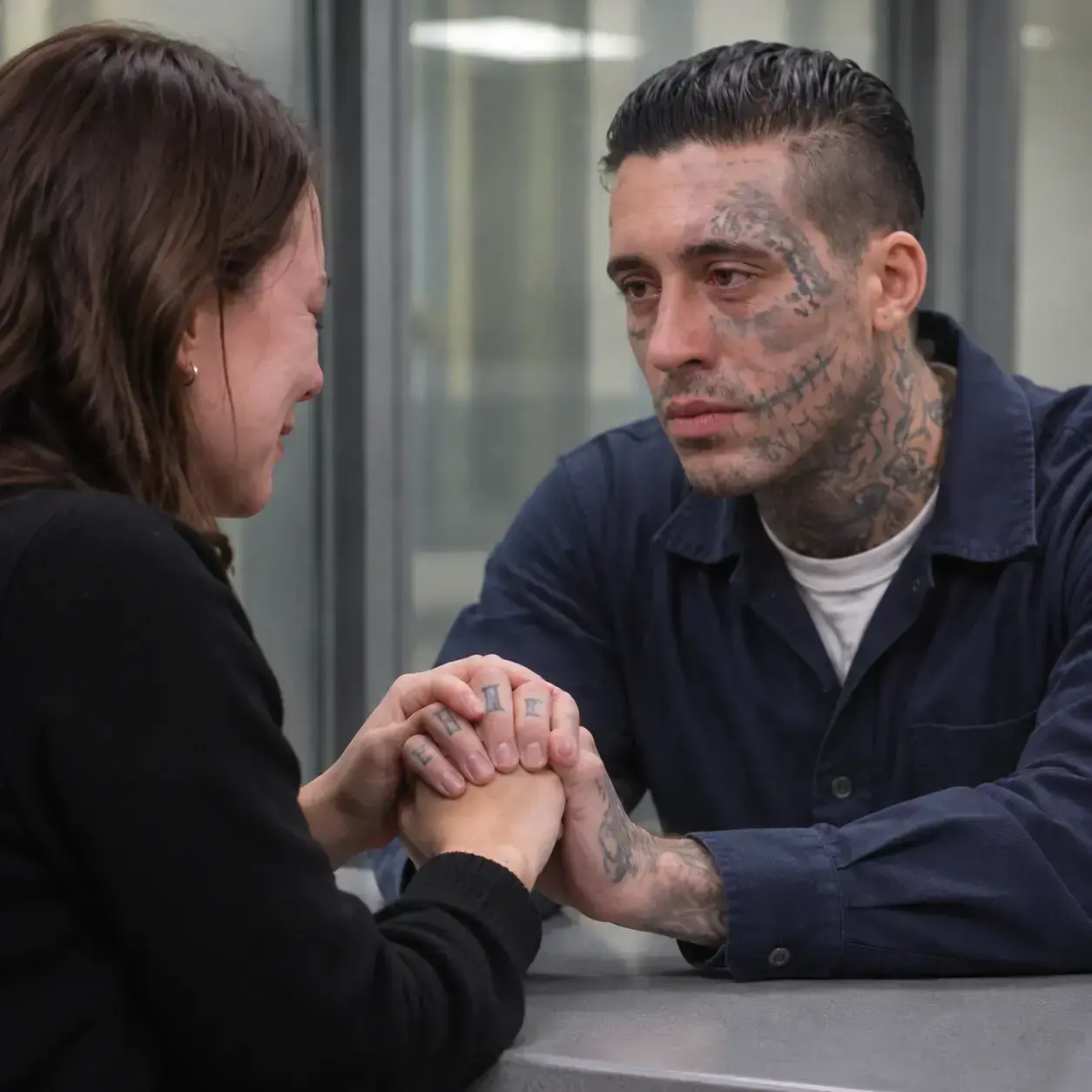
💔🚨 WADE WILSON'S PARENTS BREAK THEIR SILENCE IN AN IMAGINED EMOTIONAL PLEA: “WE'VE LOST THE FUTURE WE DREAMED OF, BUT WE STILL BELIEVE THERE'S A HUMAN BEING LEFT INSIDE HIM…” — A HEARTBREAKING MESSAGE THAT DIVIDES PUBLIC OPINION
FULL STORY BELOW 👇👇👇

What happens when the person a family once imagined growing old, building a future, and finding happiness becomes associated with one of the most disturbing criminal cases in Florida?
And how does a parent reconcile unconditional love with the terrible reality of crimes that have devastated other families forever?
Those questions form the heart of a fictional family reflection inspired by the real case of Wade Wilson, the Florida man convicted of murdering Kristine Melton and Diane Ruiz in 2019.
Wilson's case has attracted widespread attention because of the brutality of the crimes, the death sentence imposed against him, and the intense public reaction surrounding his courtroom appearances.
But behind the legal proceedings lies a difficult moral question.
Can parents continue loving their child while fully acknowledging the suffering that child has caused?
In this imagined scenario, Wilson's parents offer an emotional statement about grief, responsibility, and the painful distinction between loving someone and defending their actions.
Their fictional words begin with a devastating admission.
"We've lost the future we dreamed of. But somewhere inside the person he became, we still hope there is a human being capable of understanding what he has done."
The imagined statement is not a request to forget the victims.
It is not an attempt to excuse murder.
Instead, it explores the complicated emotions of a family confronting a reality they never expected.
The Dreams Every Parent Understands

In the fictional reflection, Wilson's parents look back on the hopes they once held for their son's future.
They imagined ordinary milestones.
A stable life.
Meaningful relationships.
Personal growth.
And the possibility that he might eventually find a sense of purpose.
Like many parents, they wanted to believe that whatever difficulties their child encountered, a better future would remain possible.
But those expectations were shattered by the criminal proceedings that followed the deaths of Kristine Melton and Diane Ruiz.
The imagined family statement describes a sense of loss that is difficult to explain.
"We once thought about what his life might look like twenty or thirty years from now," one parent says in the fictional dialogue.
"Now we think about everything that will never happen."
The words reflect grief over an imagined future, not a denial of the crimes.
The Reality That Cannot Be Ignored
Any discussion of Wade Wilson's case must begin with the victims.
Kristine Melton and Diane Ruiz were two women whose lives were taken in 2019.
Their deaths left lasting consequences for their loved ones.
Wilson was subsequently convicted of their murders and sentenced to death in Florida.
Those facts are central to understanding the case.
The tragedy is not simply that Wilson's family faces a painful future.
It is that two women lost their lives, and their families were forced to endure devastating grief.
In the fictional statement, Wilson's parents acknowledge that reality.
"We know that two families are living with a loss no words can repair," one parent says.
"Our pain does not erase theirs."
The imagined admission becomes one of the most important moments in the story.
A Parent's Love Versus Moral Responsibility
The fictional family reflection explores a difficult distinction.
Loving a child does not require approving of that child's behavior.
And recognizing someone's humanity does not mean minimizing the seriousness of their crimes.
In the imagined conversation, one parent says:
"I can love the person I remember without defending the choices that brought us here."
The statement captures a conflict that can arise when a family member commits a serious offense.
Parents may experience grief, anger, disbelief, shame, and attachment simultaneously.
Those emotions are not necessarily contradictory.
A parent may condemn an act while continuing to feel a bond with the person responsible.
But the existence of that bond does not change the legal or moral significance of the crime.
The Words That Spark a Fierce Debate
In the fictional scenario, the parents' most controversial statement concerns their hope that Wilson still possesses the capacity for remorse.
"We still believe there is a human being left inside him," one parent says.
"But being human means being responsible for what you do."
The imagined remark immediately raises difficult questions.
Some observers might interpret it as a compassionate acknowledgment that even people convicted of terrible crimes retain human dignity.
Others might worry that such language shifts attention away from the victims.
The distinction matters.
Recognizing someone's humanity is not the same as declaring them innocent.
Nor does it mean that punishment should disappear.
The fictional statement attempts to hold those truths together.
The Families Who Lost Everything
For the families of Kristine Melton and Diane Ruiz, the case represents a loss that cannot be undone.
Their loved ones are not abstract figures in a legal debate.
They were individuals with personal histories, relationships, and futures.
The consequences of their deaths extend far beyond courtroom proceedings.
Family celebrations become reminders of absence.
Ordinary moments carry memories.
And the passage of time does not erase the reality of what happened.
Any discussion of compassion for a convicted murderer must remain grounded in that suffering.
In the imagined family statement, Wilson's parents acknowledge that their own grief cannot be placed on equal footing with the victims' deaths.
"We are mourning the future we imagined," one parent says.
"Those families are mourning people they can never bring home."
The fictional words underline the difference.
The Death Sentence and the Question of Justice
Wilson's case has also generated discussion about capital punishment.
Supporters of the death penalty may view it as an appropriate punishment for particularly grave murders.
They may emphasize accountability, the severity of the offenses, and the interests of victims' families.
Opponents may question whether the state should have the power to execute a person, regardless of the crime.
They may raise concerns about irreversible punishment, legal safeguards, and the broader ethics of capital punishment.
Those positions reflect deeply held differences about justice.
The fictional family statement does not resolve that debate.
Instead, it acknowledges that punishment and compassion are often discussed together, even when they lead people toward different conclusions.
The Imagined Letter
In the fictional narrative, Wilson's parents sit at a kitchen table attempting to write a letter.
The room is quiet.
Several unfinished pages lie before them.
They struggle to find words that acknowledge both their feelings and the seriousness of the crimes.
Finally, one parent begins writing.
"We cannot change what happened."
The pen pauses.
"We cannot return the lives that were taken."
Another pause.
"And we cannot pretend that love makes the consequences disappear."
The imagined letter continues.
"But we can still hope that the person responsible understands the suffering he caused."
The words do not ask for sympathy at the expense of the victims.
They ask whether genuine accountability can include remorse.
What Does Remorse Really Mean?
The fictional story raises another question.
What would meaningful remorse look like in a case involving irreversible harm?
A statement of regret alone cannot restore a life.
An apology cannot undo murder.
And expressions of sorrow should not automatically be treated as proof of personal transformation.
Meaningful accountability requires acknowledgment of wrongdoing without excuses.
It requires recognizing the victims as people rather than treating them as details in the offender's story.
And it requires accepting that consequences remain even when remorse is expressed.
In the imagined reflection, one parent says:
"I don't want him to tell us what we want to hear."
The parent pauses.
"I want him to understand what he took from other people."
The Burden of Public Attention
Wilson's case has drawn significant attention online.
His appearance, courtroom behavior, and legal proceedings have become subjects of public discussion.
But the sensational nature of that attention can create problems.
Criminal cases risk becoming entertainment.
The victims can be pushed into the background.
And discussions about punishment may become dominated by speculation rather than evidence.
The fictional family statement addresses that concern.
"This is not a story anyone should celebrate," one parent says.
"There are people who died. There are families who will carry that forever."
The imagined words serve as a reminder that a murder case is not simply a dramatic headline.
A Family Divided by Grief
In the fictional narrative, the parents do not always agree about how to discuss Wilson publicly.
One believes silence is the most respectful response.
The other believes acknowledging the situation openly may help clarify that love and accountability can coexist.
Their disagreement is painful.
Neither wants to minimize the crimes.
Neither knows how to speak without risking misunderstanding.
One parent asks:
"What if people think we're defending him?"
The other responds:
"Then we have to make it clear that we're not."
The imagined exchange captures the difficulty of speaking publicly about a family member convicted of murder.
The Question Nobody Can Answer Easily
At the center of the fictional reflection is a question about identity.
Is a person defined entirely by the worst thing they have done?
For some, the severity of murder makes that question straightforward.
The crimes and their consequences must remain central.
Others distinguish between recognizing a person's humanity and excusing their conduct.
They argue that human dignity can exist alongside the most serious forms of accountability.
The fictional parents struggle with that distinction.
"We know what he was convicted of doing," one says.
"We cannot deny it."
Then comes the difficult admission.
"But knowing that doesn't make every memory disappear."
The Emotional Turning Point
Near the end of the imagined statement, Wilson's parents reflect on the impossibility of returning to the life they once knew.
There is no way to undo the crimes.
No way to restore the victims' lives.
And no way to recover the future they imagined for their family.
One parent begins to cry.
"We thought there would be time for everything," the parent says.
"Time for him to grow up. Time for him to change. Time for us to see the person he might become."
The room falls silent.
Then the parent continues.
"But the people who died had futures, too."
That final acknowledgment changes the emotional meaning of the fictional statement.
A Plea That Is Not a Demand for Forgiveness
In the imagined narrative, the parents explain that they are not asking the victims' families to forgive Wilson.
Forgiveness is deeply personal.
It cannot be demanded.
And nobody has an obligation to offer it.
The fictional statement instead expresses a hope that Wilson will confront the full moral weight of his actions.
"We aren't asking anyone to forget," one parent says.
"We aren't asking anyone to excuse him."
The parent pauses.
"We're asking whether he can still understand the difference between the life he could have lived and the lives he destroyed."
The words are painful precisely because they offer no easy resolution.
The Final Message
As the fictional statement concludes, Wilson's parents address the question of what remains of their hopes.
They acknowledge that the future they imagined is gone.
They recognize the devastating consequences of the murders.
And they admit that parental love cannot reverse what happened.
Then one parent offers the imagined words that bring the reflection to its conclusion.
"We have lost the future we dreamed of for our son. But the families of Kristine Melton and Diane Ruiz lost something far greater. They lost people they loved, and nothing we say should ever make that truth less important."
The statement continues.
"If there is any humanity left inside him, we hope it begins with understanding the pain he caused — not with asking the world to forget it."
The Final Revelation
There is no verified statement establishing that Wade Wilson's parents publicly delivered the quotations presented in this article.
The family reflections, letter, conversations, and emotional scenes are fictional.
The real case concerns the murders of Kristine Melton and Diane Ruiz, for which Wilson was convicted and sentenced to death.
The imagined story does not change those facts or establish any new legal development.
Instead, it explores the moral conflict that can arise when families continue loving someone responsible for grave crimes.
It also emphasizes a principle that should never be lost in discussions of sensational criminal cases.
The victims must remain at the center of the story.
Compassion does not erase accountability.
Love does not undo harm.
And recognizing someone's humanity does not require excusing the destruction of innocent lives.
Because the deepest tragedy in this case is not simply the future one family imagined and lost — it is the futures Kristine Melton and Diane Ruiz were never allowed to live. 💔
#WadeWilson #FloridaCrime #TrueCrimeDiscussion #JusticeForVictims #KristineMelton #DianeRuiz #CriminalJustice #DeathPenaltyDebate #VictimsMatter #CourtroomStories #JusticeAndAccountability #HumanDignity #CrimeAndConsequences #FamilyGrief #RememberTheVictims