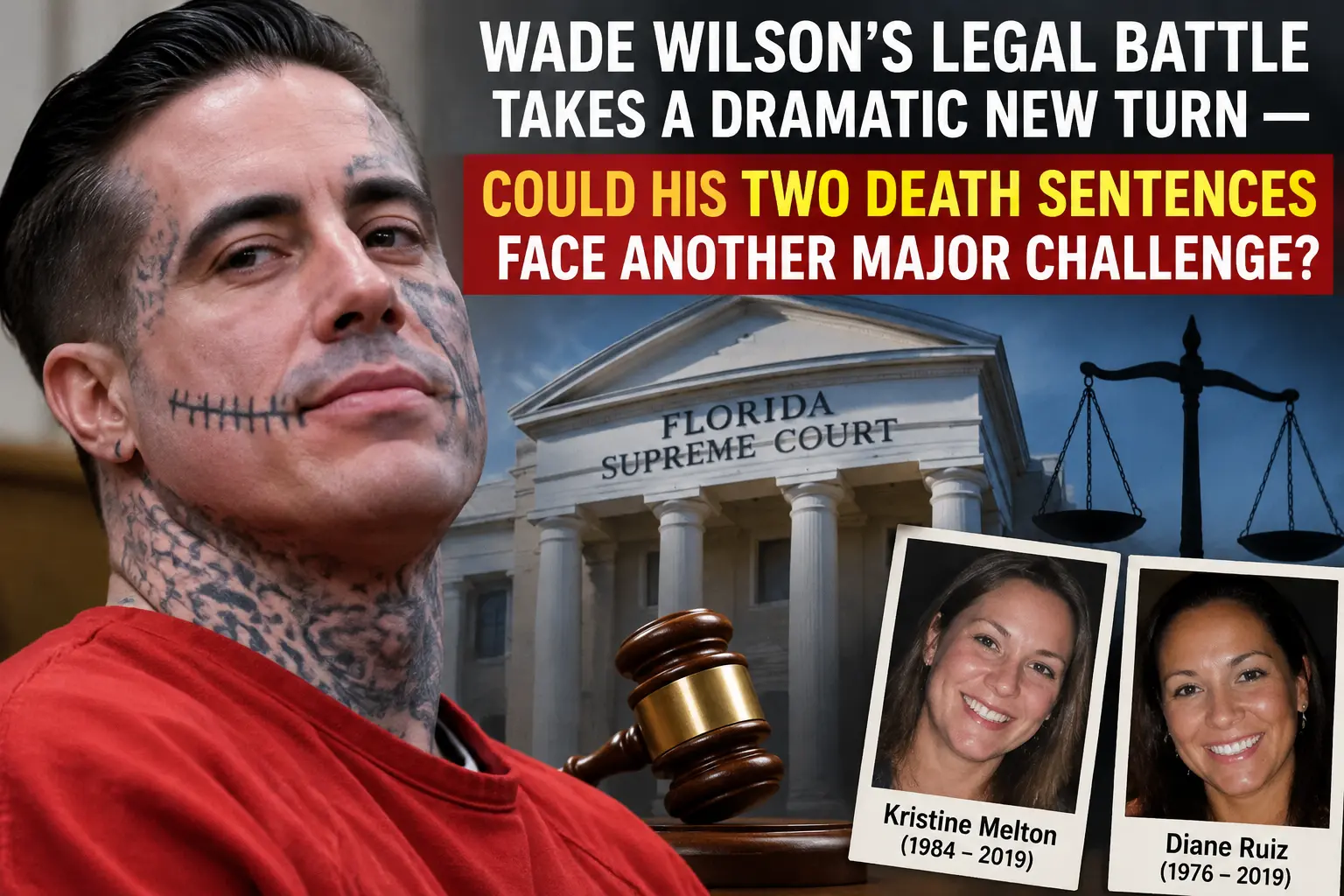
WADE WILSON’S LEGAL BATTLE TAKES A DRAMATIC NEW TURN — COULD HIS TWO DEATH SENTENCES FACE ANOTHER MAJOR CHALLENGE?
The legal battle surrounding Wade Wilson, the Florida murderer widely known as the “Deadpool Killer,” is entering another significant chapter as questions continue to emerge about the future of his two death sentences. More than two years after his conviction, Wilson remains at the center of a closely watched legal fight that could determine whether the ultimate punishment imposed against him will stand.
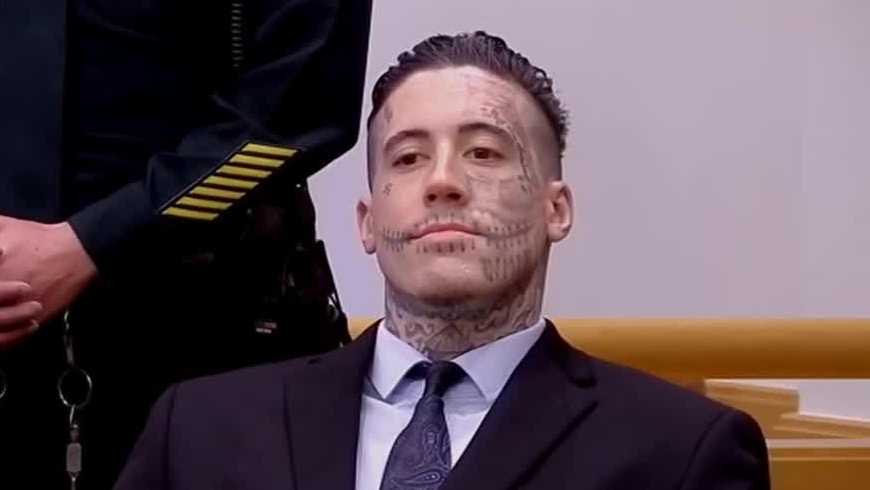
Wilson was sentenced to death in August 2024 for the murders of Kristine Melton and Diane Ruiz, two women whose lives were brutally taken in Fort Myers, Florida, in October 2019. Although the sentencing appeared to bring a major chapter of the criminal proceedings to a close, the legal process did not end there. His defense attorneys have continued examining possible constitutional arguments and appellate options that could affect the final outcome.
The latest developments have once again drawn attention to Florida's highest court and the possibility of additional proceedings in federal courts. For the families of the victims, the continuing legal battle represents another difficult stage in a case that has already brought years of grief, courtroom appearances, and emotional uncertainty.
The crimes that brought Wilson national attention occurred over a devastating period in October 2019. Prosecutors established that Wilson murdered 35-year-old Kristine Melton before taking her vehicle. He later encountered 43-year-old Diane Ruiz, who was also killed.
The circumstances surrounding the murders shocked investigators and the wider community. Evidence presented during the criminal proceedings revealed disturbing details about the attacks, while testimony helped prosecutors establish the sequence of events that ultimately led to Wilson's arrest.
Following the investigation, Wilson faced multiple criminal charges. His case attracted widespread media attention, partly because of the brutality of the crimes and the extraordinary amount of public interest surrounding the defendant.
In June 2024, a jury found Wilson guilty of two counts of first-degree murder. The convictions represented a major victory for prosecutors and provided a measure of legal accountability for the victims' families.
However, the sentencing phase brought another major legal question into focus: whether Wilson should receive life imprisonment or the death penalty.
In August 2024, the judge imposed two separate death sentences. The punishment reflected the seriousness of the convictions and the jury's recommendations under Florida law.
Yet even after the sentences were announced, Wilson retained the right to pursue appeals. Under the American justice system, a death sentence is subject to judicial review, allowing defense attorneys to challenge alleged legal errors and constitutional issues.
That process has become the central focus of the latest developments.
One particularly important issue concerns Florida's death penalty sentencing requirements. In 2023, Florida lawmakers changed the threshold for a jury recommendation of death, allowing the recommendation to be made by an eight-to-four vote rather than requiring unanimity.

The change generated significant legal debate, particularly regarding constitutional protections and the role of juries in capital punishment cases.
Wilson's attorneys have raised questions about the legal framework surrounding his sentences, seeking judicial examination of whether the procedures used in his case complied with constitutional requirements.
For a defendant facing execution, such arguments carry enormous consequences. A successful legal challenge could potentially lead to a new sentencing proceeding or another outcome permitted by law. However, overturning a death sentence would not automatically erase the underlying murder convictions.
On February 5, 2026, Wilson's direct appeal received significant attention during oral arguments before the Florida Supreme Court. His attorneys presented their positions, while the justices examined the legal questions surrounding the case.
The hearing became an important moment in the continuing proceedings because it offered the defense an opportunity to explain why it believed the death sentences should receive further scrutiny.
However, the court ultimately affirmed the lower court's ruling. The decision represented a substantial setback for Wilson's direct appeal and left both death sentences intact at that stage of the proceedings.
The defense nevertheless signaled that its constitutional arguments could be pursued further.
Attorney Michael Ufferman indicated that the legal team wanted to preserve certain arguments for possible consideration by the United States Supreme Court. Such a move could provide another opportunity to challenge the legal questions surrounding Florida's capital sentencing framework.
But taking a case to the nation's highest court is far from guaranteed.
The United States Supreme Court receives thousands of requests for review, accepting only a small percentage. Wilson's attorneys would need to identify a substantial legal question that meets the court's standards before the justices would consider intervening.
Even if the Supreme Court declined to review the case, other post-conviction procedures could potentially remain available. These may involve claims concerning ineffective assistance of counsel, newly discovered evidence, or constitutional violations, provided the arguments meet the applicable legal requirements.
Another development occurred in May 2026, when a court order allowed co-counsel Laurel Cornell Niles to withdraw from Wilson's case. Although changes in legal representation can attract attention, they do not independently establish that the defense has secured a new opportunity to overturn the sentences.
The broader legal picture therefore remains complicated. Wilson's attorneys must navigate procedural deadlines, previous court decisions, and the demanding standards that apply to death penalty appeals.
For the victims' families, however, the legal arguments are only one part of a much larger and more painful story.
Kristine Melton and Diane Ruiz were two women with families, relationships, and futures that were taken away in October 2019. Their loved ones have spent years following the investigation, the trial, and the subsequent legal proceedings.
Every new development can bring renewed attention to the circumstances of their deaths and the uncertainty surrounding the final resolution of the case.
The appeals process exists to ensure that even the most serious criminal convictions and punishments comply with the law. It is an essential safeguard, particularly when the government seeks to impose an irreversible punishment.
At the same time, the continued proceedings can be emotionally exhausting for families who have already endured years of waiting.
An important distinction must also be made between Wilson's murder convictions and his death sentences. His direct appeal focused on challenges to the punishment rather than automatically reopening every question surrounding the jury's guilty verdicts.
If a court eventually found a significant legal error involving the sentencing process, the consequences could include another sentencing hearing. That would not necessarily mean Wilson would be released or that the convictions would disappear.
For now, both death sentences remain in place following the Florida Supreme Court's decision. No conclusion should be drawn that the United States Supreme Court has accepted his case or that a new execution date has been scheduled.
The next chapter will depend on the legal strategy pursued by Wilson's defense team and whether another court agrees to examine the remaining constitutional questions.
As the case continues to move through the legal system, public attention is unlikely to disappear. The combination of two murder convictions, two death sentences, and continuing constitutional disputes makes Wilson's case one of Florida's closely watched capital punishment proceedings.
For the families of Kristine Melton and Diane Ruiz, the hope remains that the justice process will eventually reach a definitive conclusion.
But one major question continues to surround the case: Will Wade Wilson's two death sentences survive every remaining legal challenge, or could another court decision change the course of his future?
The answer may depend on what happens next in a legal battle that has already lasted years — and whose consequences remain irreversible.