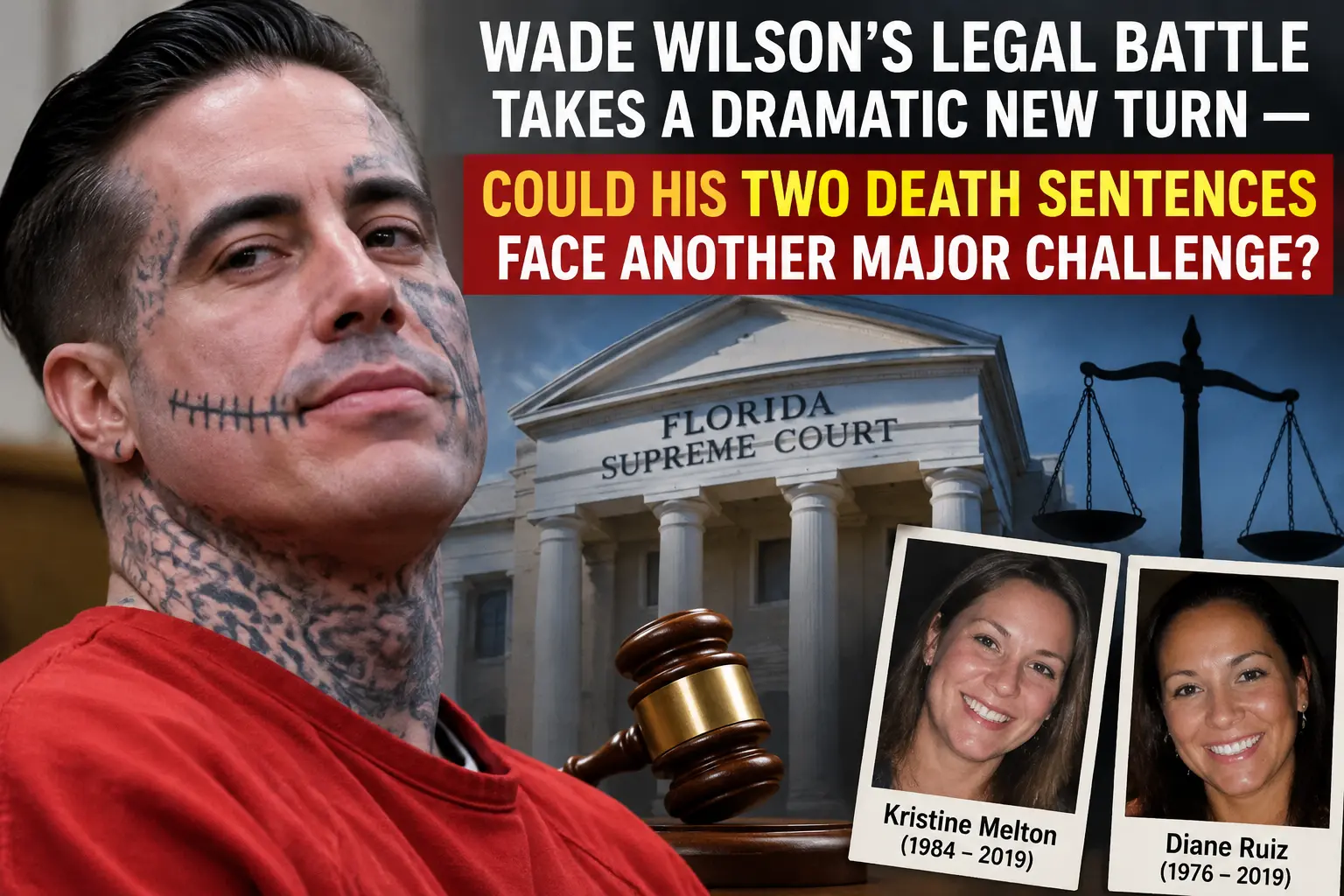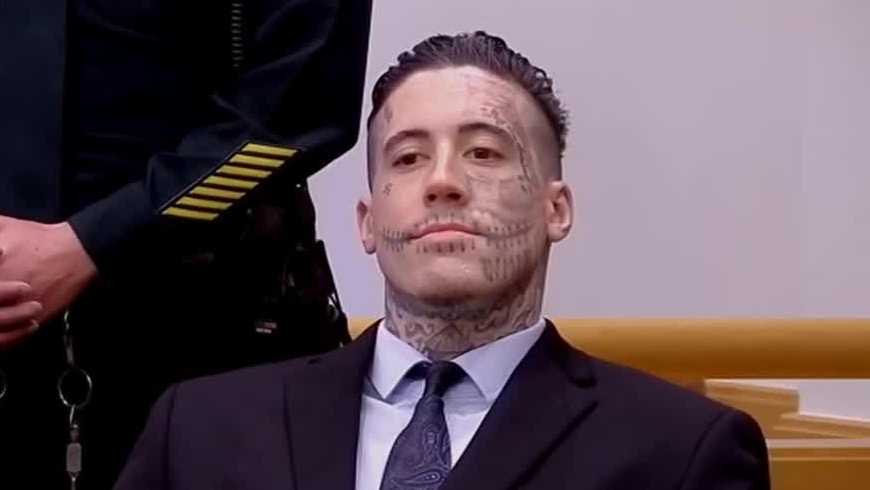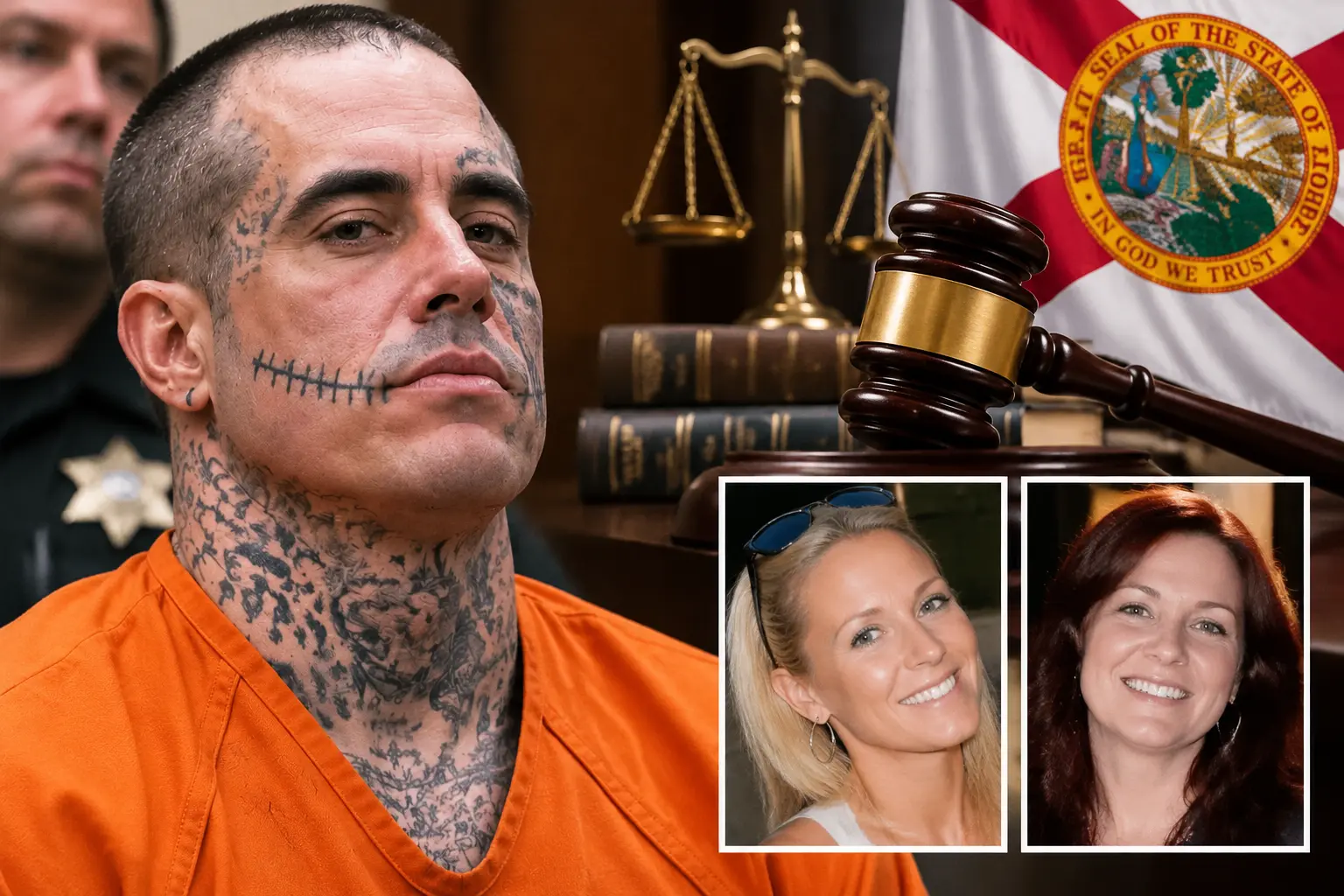
BREAKING WADE WILSON CASE UPDATE: NEW LEGAL DEVELOPMENTS PUT HIS DEATH ROW STATUS UNDER THE SPOTLIGHT — WHAT HAPPENS NEXT?
The case of Wade Wilson, the Florida murderer known to millions as the “Deadpool Killer,” is once again attracting national attention as his legal battle continues. More than two years after receiving two death sentences, Wilson remains on Florida's death row while his attorneys pursue the remaining legal options available to challenge his punishment.
The latest developments have renewed questions about his future, the possibility of additional appeals, and whether the sentences imposed in 2024 will ultimately remain in place. Although his convictions have not been overturned, the legal proceedings surrounding his punishment continue to represent an important chapter in one of Florida's most closely followed criminal cases.

Wilson was convicted in June 2024 of two counts of first-degree murder for the killings of Kristine Melton, 35, and Diane Ruiz, 43. Both women were murdered in October 2019 in the Fort Myers area of Florida. Their deaths shocked the local community and eventually attracted widespread national attention.
Following the trial, the jury recommended the death penalty for both murders. In August 2024, the judge formally sentenced Wilson to death twice, placing him among Florida's death row inmates.
For the victims' families, the sentencing represented a significant moment after years of waiting for the criminal proceedings to reach a conclusion. However, the announcement of two death sentences did not mean the legal process was finished.
Under American law, defendants sentenced to death are entitled to appellate review. This process allows higher courts to examine legal arguments, constitutional questions, and potential errors that may have affected the proceedings.
Wilson's defense team has focused much of its attention on challenging the legality of his death sentences rather than attempting to overturn the underlying murder convictions in his direct appeal.
One of the central issues involves Florida's controversial 2023 change to its capital punishment law. Previously, a jury had to unanimously recommend death before a judge could impose that sentence. The revised law lowered the threshold to an eight-to-four recommendation.
In Wilson's case, jurors voted 9-3 in favor of death for Melton's murder and 10-2 for Ruiz's murder. Both recommendations met the revised legal requirement.

His attorneys have raised constitutional objections concerning the application of this sentencing framework, particularly because the murders occurred in 2019, before the law was changed.
The defense's argument raises broader questions about constitutional protections, the authority of state lawmakers, and whether changes to criminal sentencing rules can be applied to offenses committed before those changes took effect.
These issues became especially important during Wilson's direct appeal before the Florida Supreme Court.
On February 5, 2026, his attorneys appeared before the state's highest court for oral arguments. The hearing attracted considerable attention because it represented an opportunity for the defense to explain why the death sentences should receive further judicial examination.
However, the hearing took an unexpected turn.
Attorney Michael Ufferman acknowledged that recent decisions by the Florida Supreme Court had addressed important arguments raised in Wilson's appeal. Rather than presenting an extended challenge, he delivered a brief argument and indicated that the defense intended to preserve its constitutional objections for possible consideration by the United States Supreme Court.
The development highlighted the difficulties facing Wilson's legal team. Previous court decisions had weakened important aspects of the defense's position, making the prospect of overturning the sentences increasingly challenging.
Nevertheless, the February hearing did not automatically end every possible avenue of legal review.
The official Florida Supreme Court docket identifies the case as SC2024-1345, a mandatory death penalty appeal. The public docket continues to provide information about filings, hearings, and other procedural developments.
As of November 2026, the publicly available docket information reviewed for this article lists the case as open. The February hearing should therefore not be confused with a final ruling affirming or overturning Wilson's sentences.
Another development occurred in May 2026, when the court granted co-counsel Laurel Cornell Niles permission to withdraw from the case. Although the change attracted attention, it does not independently establish that Wilson's legal position has improved or deteriorated.
The possibility of further appeals remains an important part of the broader legal picture. Wilson's attorneys could explore additional constitutional claims or seek federal review if the appropriate legal requirements are met.
However, taking a case to the United States Supreme Court is not a simple process. The justices receive thousands of petitions and accept only a limited number for consideration. Even if Wilson's lawyers submit a petition, there is no guarantee that the court will agree to hear it.
Meanwhile, Wilson remains incarcerated on Florida's death row at Union Correctional Institution in Raiford. His current status does not mean an execution is imminent. No publicly confirmed execution date has been established in the available records reviewed for this report.
For the families of Kristine Melton and Diane Ruiz, the continuing proceedings represent another painful reminder of the events that changed their lives forever.
Their loved ones have endured years of investigation, courtroom proceedings, sentencing decisions, and appeals. Every new legal development can bring renewed attention to the tragedy and prolong the uncertainty surrounding the final resolution of the case.
The appeals process is an essential safeguard in capital cases because the death penalty is irreversible. Even when a defendant has been convicted of particularly serious crimes, courts must ensure that constitutional and legal requirements have been properly followed.
If a future court identifies a significant legal error involving Wilson's sentences, possible consequences could include additional proceedings or a new sentencing hearing. Such an outcome would not automatically erase his murder convictions or result in his release.
For now, the central question remains whether Wilson's defense team can identify a legal argument strong enough to change the outcome of his capital punishment proceedings.
His two death sentences remain a defining part of the case, but the appellate process has not necessarily reached its final chapter.
As the legal battle continues, attention will remain focused on the Florida Supreme Court docket, potential federal proceedings, and any new decisions that could affect Wilson's future.
Will Wade Wilson ultimately face execution, or could another legal challenge change the course of his future?
For the families of the victims, the hope is that the justice system will eventually deliver a final resolution. For the public following the case, the next court developments may determine whether the sentences imposed in 2024 will stand or face another significant legal challenge.
One thing remains certain: despite the passage of time, the Wade Wilson case is still attracting attention, and its legal consequences are far from insignificant.