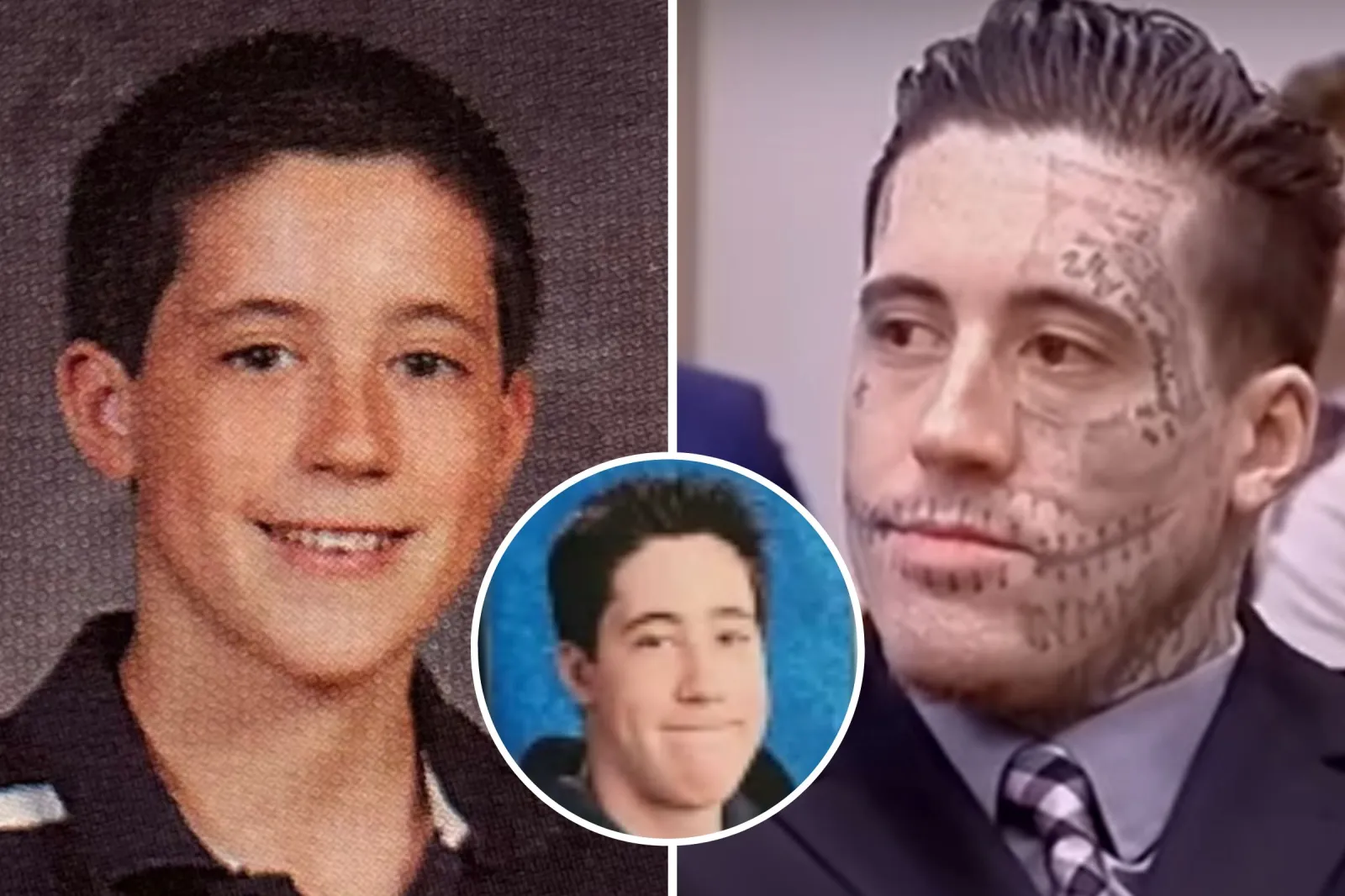
More than two years after receiving two death sentences in Florida, Wade Wilson remains behind bars, facing an uncertain legal future and a question that continues to divide public opinion.
Has the passage of time changed the convicted double murderer, or has imprisonment simply placed him in a different environment without fundamentally altering the person responsible for two devastating crimes?
The question has attracted attention because Wilson's case became widely discussed beyond Florida, generating intense reactions about criminal responsibility, capital punishment, rehabilitation, and the possibility of genuine personal transformation.
Yet there is an important distinction between asking whether someone can change and claiming that change has already occurred. In Wilson's case, reliable public evidence of genuine remorse remains limited.
On August 27, 2024, a Florida judge sentenced Wilson to death for the murders of Kristine Melton and Diane Ruiz, two women killed during a violent sequence of events.
The crimes occurred on October 7, 2019, in Cape Coral, Florida. Their brutality shocked the community and left two families confronting losses that no criminal sentence could ever reverse.
Kristine Melton was thirty-five years old when she was killed. Diane Ruiz was forty-three. Their names remain central to understanding the human consequences of Wilson's actions and subsequent conviction.
According to prosecutors, Wilson strangled Melton inside her home before stealing her vehicle. Later, he attacked Ruiz, strangled her, and repeatedly drove over her after forcing her from the car.
The disturbing circumstances became a major focus of the criminal proceedings, during which prosecutors presented evidence describing the violence and the sequence of events that resulted in both deaths.
In June 2024, a Lee County jury convicted Wilson of two counts of first-degree murder, along with additional offenses connected to the events surrounding the killings that October day.
Following the penalty phase, jurors recommended death sentences for both murders. The trial judge subsequently imposed those sentences, bringing the lengthy trial proceedings to a consequential and widely reported conclusion.
For the victims' loved ones, however, the sentencing did not erase the emotional consequences of the crimes. A courtroom decision cannot restore the lives that were taken from them.
The legal outcome also introduced a new chapter for Wilson, whose future became tied to Florida's capital punishment system, mandatory appellate review, and the complicated procedures governing death penalty cases.

He has been held on Florida's death row at Union Correctional Institution, a facility associated with the state's most serious criminal sentences and the administration of its correctional system.
His incarceration has prompted recurring questions about what extended imprisonment might mean for someone convicted of acts that caused irreversible suffering and attracted widespread public condemnation throughout the country.
Some observers believe that years of confinement may encourage serious reflection, particularly when an individual faces the possibility of spending the remainder of life under a death sentence.
Others question whether the consequences of punishment necessarily produce meaningful regret, arguing that fear, isolation, and restricted freedom cannot automatically establish a genuine change in personal values.
Both perspectives raise difficult questions, but neither provides direct evidence about Wilson's present feelings. His internal emotional state cannot be established through speculation, appearances, or the passage of time.
The distinction matters because remorse is not simply an emotion that outsiders can confidently identify. It involves acknowledgment, responsibility, and an understanding of the harm caused to other people.
Someone may express regret about imprisonment while remaining unwilling to confront the consequences of the underlying crime. Those two responses should not automatically be treated as equivalent forms of remorse.
Genuine remorse, when it occurs, is generally understood as involving more than disappointment over punishment. It requires recognizing the suffering caused and accepting responsibility without minimizing the victim's experience.
Even then, determining sincerity can be difficult. Words may offer insight into a person's perspective, but they do not provide a guaranteed measure of deeply held beliefs or future behavior.
In Wilson's case, publicly available information does not establish that he has undergone a meaningful emotional transformation since sentencing, nor does it prove that such transformation is impossible.
That uncertainty has become especially important as online discussions continue to circulate competing interpretations of his personality, courtroom appearances, and life after the conclusion of his criminal trial.
Some social media users have expressed sympathy for Wilson, while others have strongly criticized efforts to portray him primarily through his appearance, notoriety, or the hardships of incarceration.
The controversy demonstrates how easily attention can shift away from the victims when a criminal defendant becomes a recognizable figure across online platforms and true crime communities worldwide.
For that reason, any discussion about whether Wilson has changed must begin with the seriousness of his convictions and the permanent consequences experienced by the families of Melton and Ruiz.
Their deaths were not abstract events or merely dramatic details within a viral story. They represented the loss of two individual lives, relationships, memories, and futures that cannot be recovered.
Kristine Melton and Diane Ruiz deserve to be remembered as people rather than reduced to supporting details in conversations about the man convicted of killing them in October 2019.
That perspective does not prevent discussion of rehabilitation. Instead, it places the question within a framework that recognizes accountability, human suffering, and the limits of what punishment can accomplish.
The idea that people can change after committing serious crimes has been debated for generations among researchers, legal scholars, correctional professionals, victims' advocates, and those involved in rehabilitation programs.
Some people who commit crimes later acknowledge their wrongdoing and demonstrate meaningful changes in behavior. Others continue to deny responsibility or fail to show convincing evidence of personal transformation.
These different outcomes make broad assumptions unreliable. The experience of one incarcerated person cannot automatically establish what another person feels, believes, or might become after years of confinement.
Researchers studying criminal behavior have examined factors such as age, social environment, psychological development, treatment opportunities, and individual motivation when considering the possibility of long-term behavioral change.
However, general findings about rehabilitation cannot be used to diagnose Wilson's mental state or determine whether he has developed remorse during his time inside Florida's prison system.
Doing so would require credible information about his conduct, statements, and circumstances, interpreted carefully rather than filtered through rumors or emotionally charged discussions circulating across social media.
Another complication involves the difference between observable behavior and private belief. A person may follow prison rules without necessarily experiencing regret for the actions that led to incarceration.
Likewise, an incarcerated individual might privately reconsider past decisions without publicly sharing those reflections. The absence of a public confession does not automatically reveal everything happening internally.
These uncertainties explain why definitive claims about Wilson's supposed transformation should be approached cautiously, especially when they rely on unverified letters, alleged conversations, or sensational online reports.
The question becomes even more complicated when considering the legal proceedings that continue to shape his situation, separate from public debates about punishment, forgiveness, and possible rehabilitation.
Following his sentencing, Wilson's case entered Florida's appellate process, where courts examine legal issues connected to criminal convictions and death sentences under established rules and constitutional requirements.
The Florida Supreme Court docket identifies his case as Wade Steven Wilson versus State of Florida, with proceedings arising from his convictions and sentences in Lee County.
His attorneys challenged aspects of the death penalty proceedings, including legal questions connected to Florida's capital sentencing framework and the application of changes to state law.
During oral arguments in February 2026, his attorney acknowledged that recent court decisions had undermined the arguments presented in the appeal, sharply limiting the issues available for discussion.
Those developments concern the legality of his sentence rather than whether he feels remorse. An appellate court evaluates legal claims, not the sincerity of an inmate's private emotional reflections.
The public docket has continued to identify the matter as an open death penalty appeal, demonstrating that sentencing and the conclusion of all legal proceedings are not necessarily simultaneous events.
No publicly confirmed execution date has been established in the records reviewed for this article. Claims suggesting that an execution has already been scheduled should therefore be independently verified.
The continuing legal process is important, but it does not answer the central question attracting public attention: whether Wilson's time in prison has fundamentally changed his understanding of his crimes.
Two years can represent a significant period in someone's life. Yet time alone is not reliable proof of personal growth, moral reflection, or a newly developed sense of responsibility.
For some incarcerated individuals, long periods of confinement may create opportunities to reconsider previous decisions. For others, the experience may not produce the changes that outside observers expect.
The conditions of incarceration also vary, making it inappropriate to assume that every prisoner experiences isolation, reflection, or emotional development in precisely the same way over comparable periods.
Public discussions sometimes imagine a dramatic turning point when a convicted person suddenly recognizes the full consequences of past actions. Real human change, however, is rarely so easily established.
It may involve gradual acknowledgment, difficult conversations, sustained accountability, or changes in behavior that become visible only through reliable information gathered over an extended period of time.
None of those developments should be attributed to Wilson without evidence. Imagining that he has cried, apologized, confessed privately, or experienced a personal awakening would not make those claims factual.
Similarly, assuming that he is incapable of remorse would go beyond what the available evidence can establish about his present emotional state or potential for personal reflection.
The more responsible approach is to acknowledge the uncertainty while distinguishing between the facts of his conviction and unanswered questions concerning his current beliefs, attitudes, and behavior.
This distinction also protects the public from misleading narratives that transform speculation into apparent news, particularly when stories use dramatic headlines to suggest revelations that have never been documented.
Claims involving secret prison conversations, emotional breakdowns, or sudden expressions of regret should be supported by credible evidence before being presented as developments in an actual criminal case.
Without that verification, readers may be encouraged to believe that meaningful events have occurred when the available information establishes nothing beyond an unconfirmed allegation or an imaginative interpretation.
There is also a moral difference between understanding why people discuss rehabilitation and allowing that discussion to overshadow the harm caused to victims and their surviving loved ones.
Any possible change in Wilson's personal outlook would not undo the murders, erase the criminal convictions, or eliminate the consequences that the families of Melton and Ruiz continue to face.
Remorse, even when genuine, does not reverse death. It may influence how an individual understands wrongdoing, but it cannot restore a victim's future or return someone to their family.
That reality is essential to discussions of forgiveness. Forgiveness is deeply personal, and no victim's relative should be expected to offer it simply because an offender claims to have changed.
Nor does the possibility of rehabilitation require anyone to minimize the severity of a crime. Personal transformation and legal accountability are separate questions that can exist simultaneously.
In Wilson's case, the death sentences remain a defining legal reality while his appellate proceedings continue. Public curiosity about remorse does not alter the verdicts delivered by the jury.
The case therefore raises two distinct questions: what justice requires after devastating crimes, and whether an individual convicted of those crimes can experience genuine moral change during incarceration.
Reasonable people may approach those questions differently, influenced by their experiences, beliefs about punishment, understanding of rehabilitation, and concerns for victims and their families after serious violent offenses.
Yet any responsible conclusion about Wilson personally must remain limited by the evidence. Public attention, emotional reactions, and online speculation cannot substitute for verified information about his conduct.
As more time passes, observers may continue searching for statements or actions that appear to reveal whether his perspective has changed since the judge imposed two death sentences.
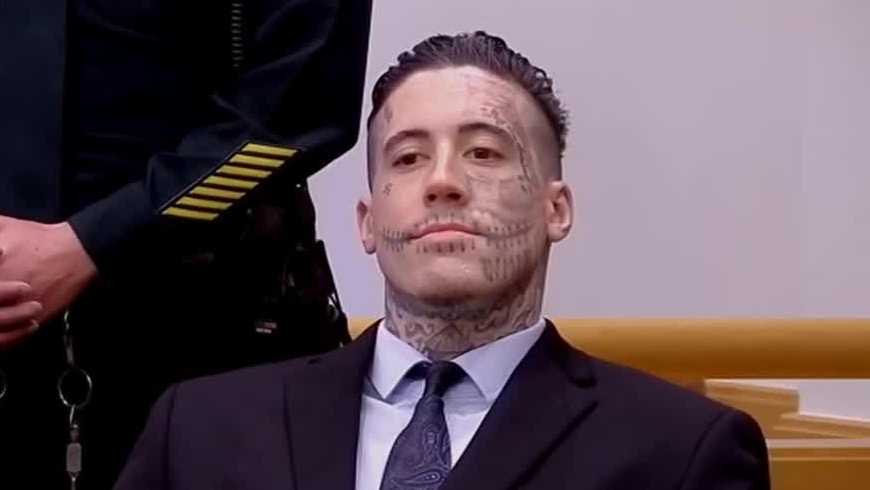
If credible new information becomes available, it should be examined carefully, with attention to its source, context, authenticity, and whether it demonstrates accountability rather than mere dissatisfaction with imprisonment.
Until then, the question of genuine remorse remains unanswered. Neither the seriousness of his punishment nor the number of years behind bars can resolve it on their own.
The enduring tragedy is not the uncertainty surrounding Wilson's emotions, but the permanent absence of Kristine Melton and Diane Ruiz from the lives of those who loved them.
Their stories remain central to understanding why the case matters, why accountability continues to carry such significance, and why discussions of possible redemption must never erase the victims.
More than two years after sentencing, Wade Wilson remains a convicted double murderer facing two death sentences, while questions about his inner life continue to attract public curiosity.
Has he genuinely changed, or has prison merely changed his circumstances? The available evidence does not provide a definitive answer, and claiming otherwise would turn uncertainty into speculation.
Perhaps the more important question is what genuine remorse should look like, how it could be demonstrated, and why accountability to victims must remain central to every conversation about change. 💔⚖️