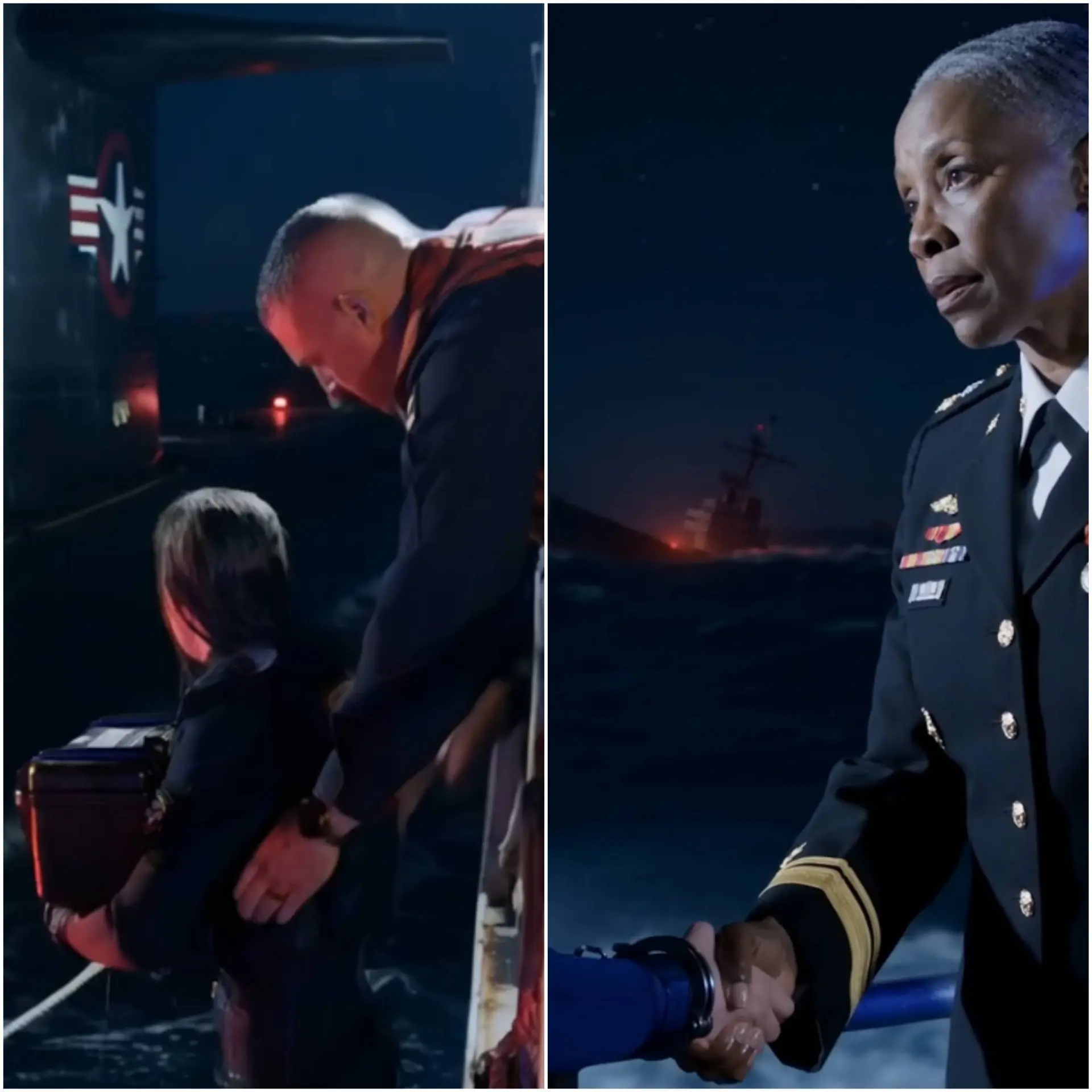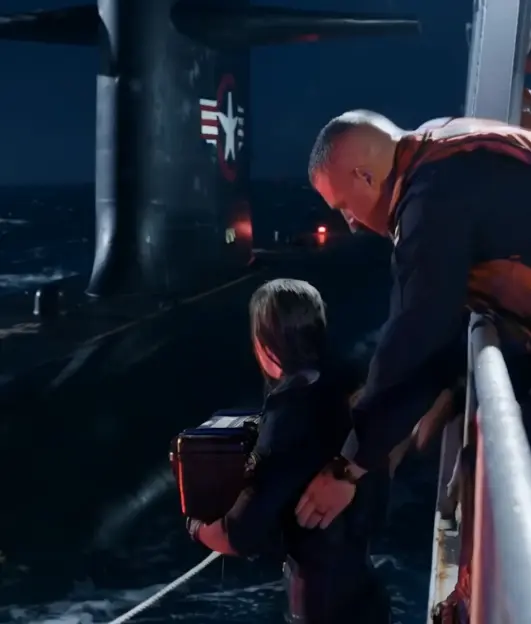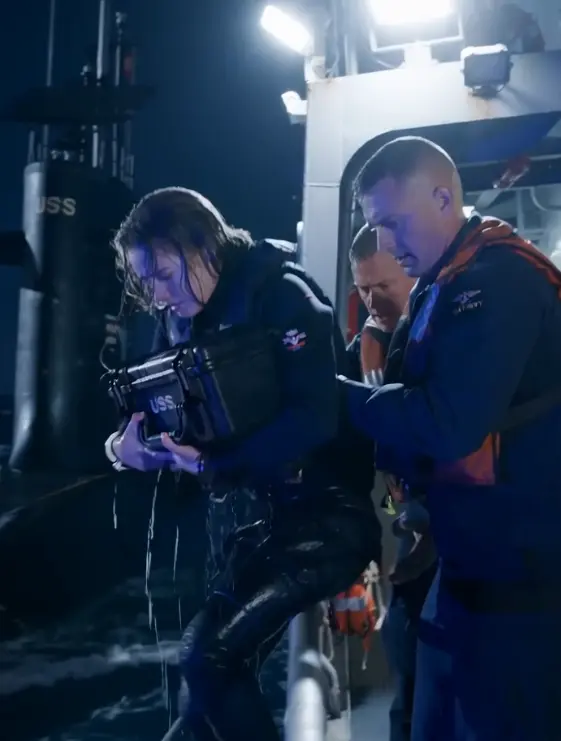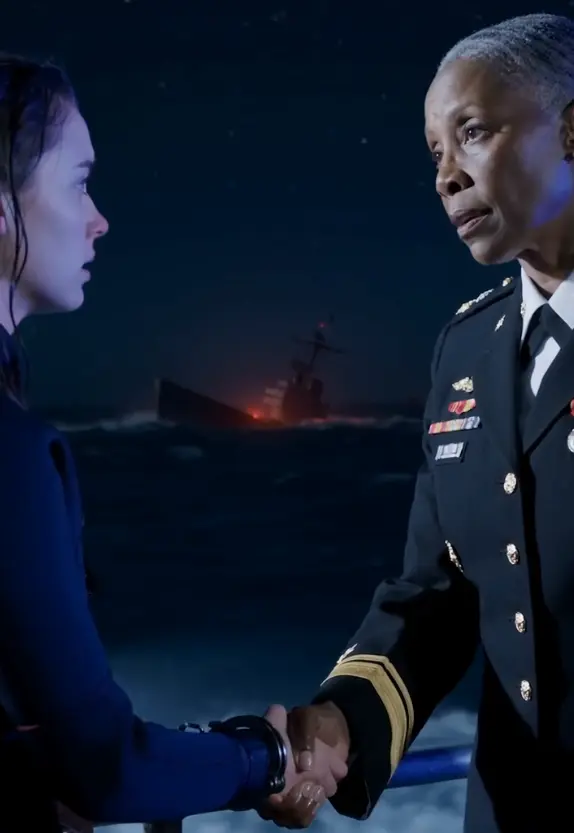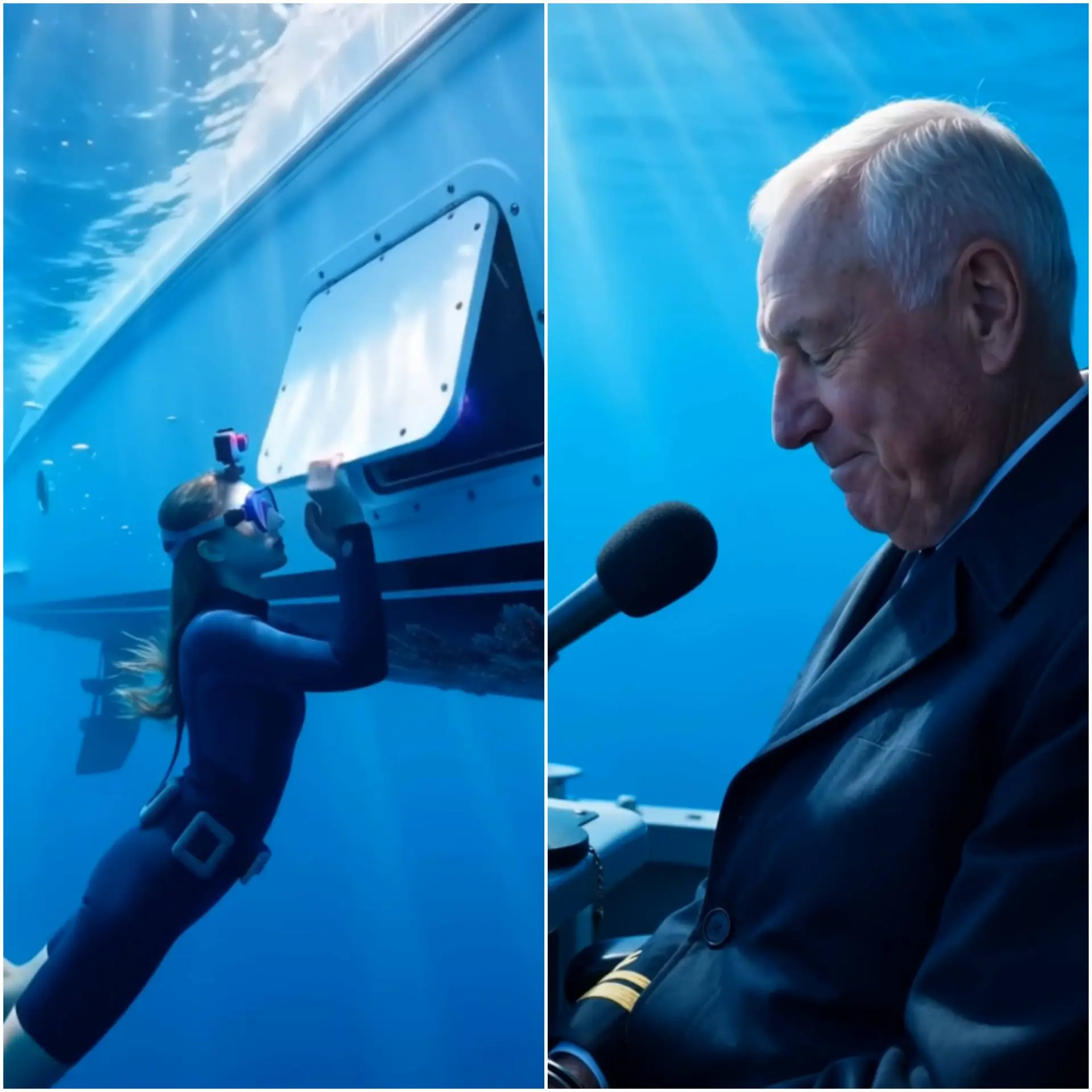
One week later, the flagship rode at anchor in bright water off a busy strait: white, gleaming, and private, a palace that had never once filed a plan with any navy on earth. Its owner stood on its upper deck in a cream suit, watching his empire's last delivery approach, a man so rich that governments returned his calls. He did not know that the diver entering the water from a small gray boat two miles away was wearing a camera on her mask, or that Admiral Ward had opened the feed, by her own order, onto a channel that every one of his buyers, partners, and insurers was watching at that exact moment.
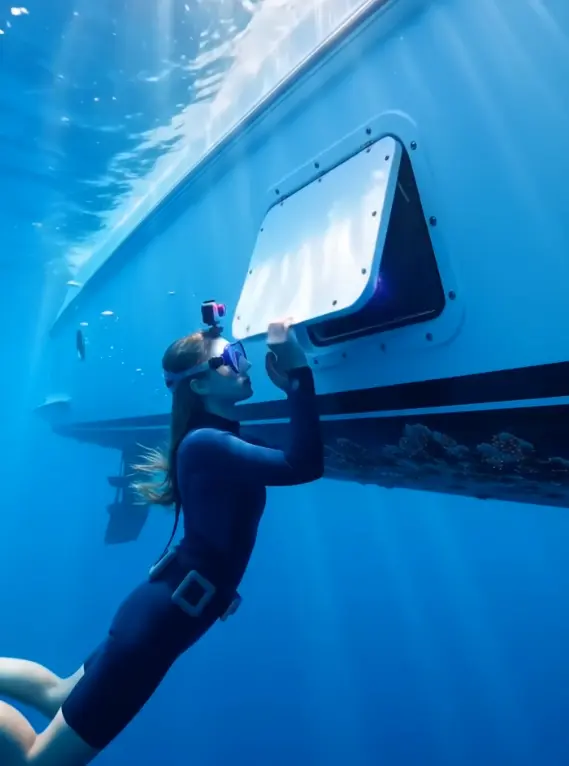
Twelve meters down, Elena's palm found the familiar plating, and her heart did the old arithmetic. Seventy meters. Ninety. One hundred and ten.
The last compartment opened like it had been waiting for her.
She held the final black core up to the camera in clear water and clear light, held it there while empires of lawyers began quietly drowning on three continents, and then she did the most Ghost-like thing she had ever done: she put it back, closed the panel gently, and left the evidence exactly where the whole world had just seen it. No theft. No rumor. No way back. Aboard the rescue ship, Marcus Reed, in custody and in a headset of his own, named the man on the flagship's deck into the record, and kept naming names until the recording light had no more room for mercy. Harlan Voss's name was read into the same record an hour later, in a cell where the sea could not be heard at all.
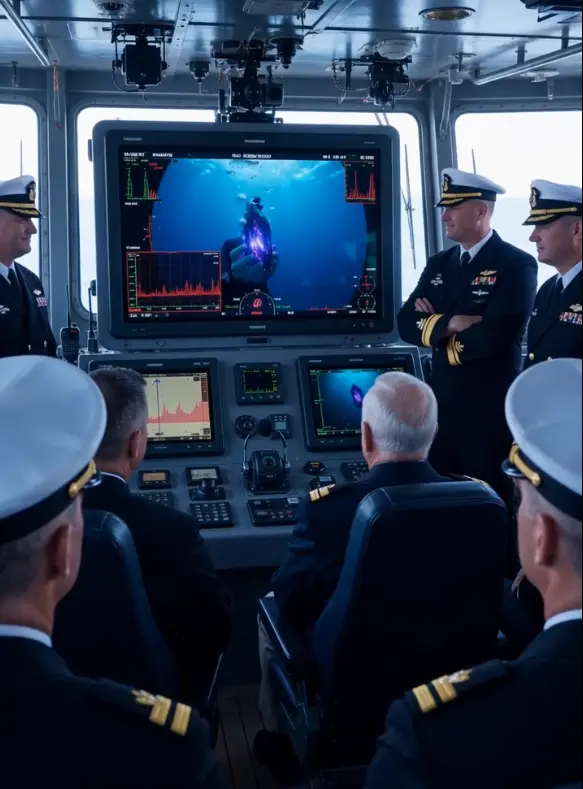
It ended the way deep things end: not with an explosion, but with paperwork, arrests at dawn in four time zones, and a silence where a market used to be.
Fleet Command offered Elena Marlow a unit, a rank, a statue's worth of gratitude, for the second time in her life. For the second time, she refused all of it. "You know where to find me," she told Ward, "if the sea ever lies to you again." Then she took her small boat and her old backpack and went out alone onto a morning ocean so calm it seemed to be apologizing.
She stopped the engine in open water, far from any hull. From her pocket she took the titanium key, the small cold object that had defined three years of her life: every betrayal behind it, every truth inside it. She held it over the side for a moment, feeling its familiar weight, the way you hold a photograph of someone you have finally finished mourning.
Then she opened her hand.
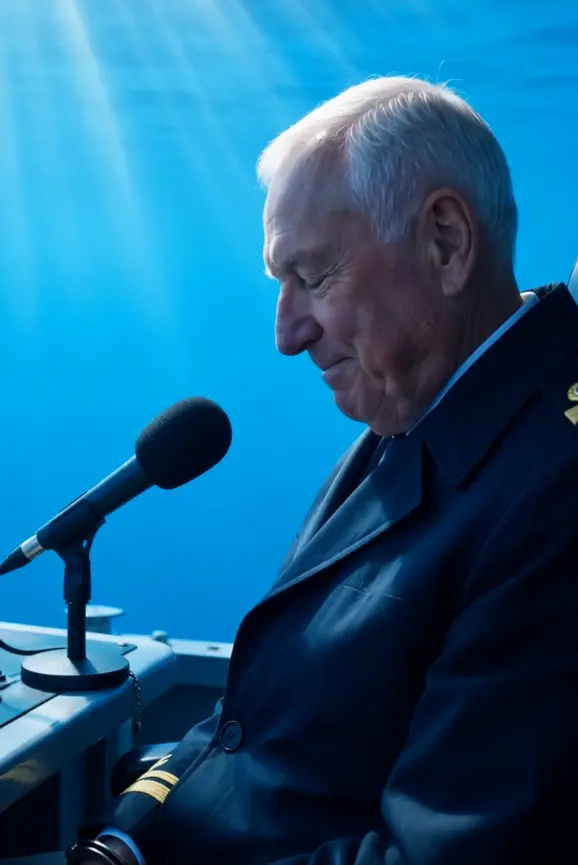
The key turned once in the sunlight, small and bright, and went down slowly through the blue, past twelve meters, past counting, past secrets, until the deep took it the way the deep takes everything, without comment. Elena watched the surface close over it. "Some things belong to the deep," she said, to no one, to everyone.
The giant ships of the world went on crossing the Pacific that day, gray and bright and full of ordinary men doing ordinary work, and not one of them knew that beneath their hulls the water was, at last, only water. Elena Marlow started her engine, turned toward the rising sun, and for the first time in three years, she was not escaping anything, and she was not hunting anything.
She was just going home.
DEEP HULL — THE END.