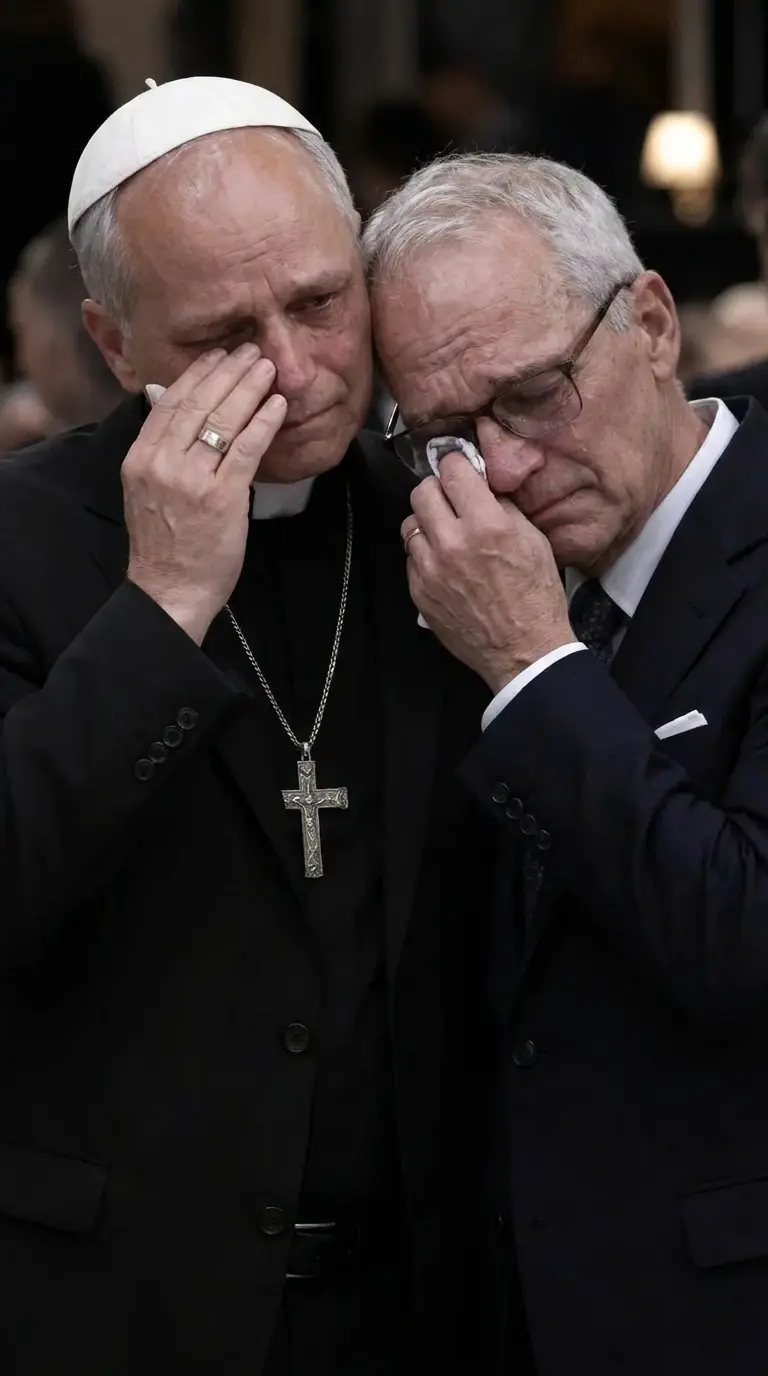
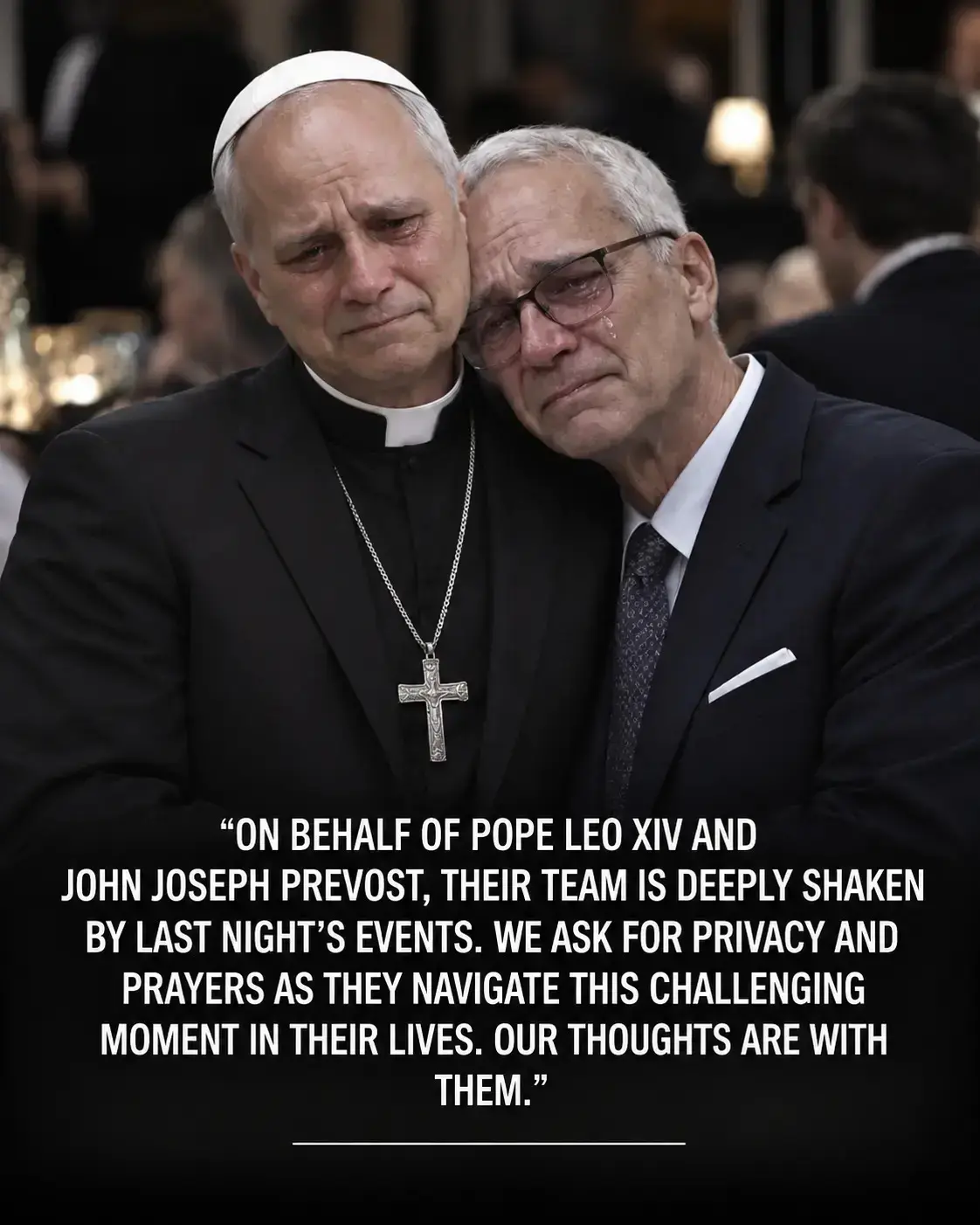
 💔✝️ HEARTBREAK ACROSS THE CATHOLIC WORLD: POPE LEO XIV'S FAMILY STORY WITH OLDER BROTHER JOHN JOSEPH PREVOST REVEALS THE QUIET POWER OF BROTHERLY LOVE, FAITH, AND SACRIFICE 🙏❤️

One became the spiritual leader of the Catholic Church.
The other devoted decades to education.
Yet the connection between them remains rooted in something much simpler than titles, public recognition, or professional accomplishments.
They are brothers.
And their story offers a moving reminder that even the most visible religious leaders come from families shaped by ordinary experiences, shared memories, and lifelong relationships.
The Brother Behind the Historic Pontificate
When Cardinal Robert Francis Prevost was elected pope on May 8, 2025, the world witnessed a historic moment.
He became Pope Leo XIV, the first pope born in the United States.
The announcement immediately attracted international attention.
Crowds gathered in St. Peter's Square.
Church bells rang.
Catholics across the world celebrated the election of a new pontiff.
But thousands of miles away, the news carried a different meaning for John Joseph Prevost.
For him, the newly elected pope was not simply the leader of the Church.
He was his younger brother, Robert.
The same brother with whom he had grown up in the Chicago suburbs.
The same person whose childhood ambitions had once been discussed around the family home.
And the same brother whose life had now changed in ways few families could ever imagine.
A Childhood Rooted in Faith
Robert Francis Prevost grew up in a family deeply connected to Catholic education and parish life.
His father, Louis Marius Prevost, worked in education and served as a school principal.
His mother, Mildred Martínez, worked as a librarian.
The couple raised three sons: Louis Martín, John Joseph, and Robert Francis.
Their home was shaped by faith, education, and family responsibilities.
The brothers attended school, participated in parish activities, and experienced the ordinary routines of childhood.
Years later, John would recall those days in interviews.
He described a household where the children studied, played outside, and took part in church life.
Those memories offer a striking contrast with the global attention surrounding his younger brother today.
Before there was a pope, there was a family.
Before there were audiences in Rome, there were ordinary evenings in Illinois.
And before Robert became Leo XIV, he was simply Rob.
John Joseph Prevost's Life in Education
While Robert pursued religious life, John followed a different vocation.
He became an educator.
Over the years, John worked in Catholic schools and served as a school principal.
His career reflected the family's longstanding connection to education.
Teaching and school leadership require patience, dedication, and a willingness to help young people develop their abilities.
Much of that work happens without international recognition.
There are no enormous crowds applauding a principal at the end of every school day.
There are no television cameras documenting every difficult decision.
Yet the influence of an educator can extend across generations.
For John, education became a way to serve others through daily responsibility.
That commitment gives his story a significance independent of his brother's papacy.
Two Brothers, Two Different Callings
The contrast between the brothers' careers is remarkable.
Robert entered the Order of Saint Augustine and eventually served as a missionary, bishop, cardinal, and pope.
John built his professional life around schools and students.
One became responsible for leading a worldwide religious institution.
The other spent years helping shape the lives of young people in classrooms and school communities.
Their responsibilities were different.
But both paths involved service.
Both required commitment.
And both reflected the importance of education and faith within the Prevost family.
The comparison reveals something meaningful about family relationships.
Siblings do not need to pursue identical ambitions to share deeply rooted values.
Sometimes, their differences make their bond even more interesting.

The Phone Call Before the Conclave
One of the most memorable details about the brothers emerged after the 2025 papal election.
John revealed that he had spoken with Robert shortly before the conclave began.
The conversation included discussion of what papal name Robert might choose if he were elected.
At the time, the possibility still seemed extraordinary.
Then the conclave elected Robert Francis Prevost.
He chose the name Leo XIV.
For John, the result was astonishing.
He later described the surprise of learning that his younger brother had become pope.
The moment illustrated how an event of enormous historical significance could also become an intensely personal family experience.
The Games That Kept Them Connected
Another detail captured public attention.
John revealed that he and his younger brother regularly played Wordle and Words With Friends.
The games became a familiar part of their relationship.
Even as Robert's responsibilities expanded within the Church, the brothers maintained this ordinary connection.
It was a small detail.
But it carried considerable emotional meaning.
A man who would become pope still made time for a word game with his brother.
For people accustomed to seeing religious leaders only during formal ceremonies, the revelation offered a more personal perspective.
It showed a family relationship sustained through simple routines.
The Weight of an Extraordinary Responsibility
Becoming pope changes a person's life.
The pontiff assumes responsibilities involving the spiritual leadership of Catholics across the world.
His decisions and statements receive international attention.
His schedule includes religious ceremonies, diplomatic meetings, and pastoral responsibilities.
Such a position can create considerable distance from ordinary family life.
But a person's childhood memories do not disappear when their responsibilities change.
Neither do the relationships formed long before public recognition.
That is what makes the Prevost brothers' story compelling.
John knew Robert before he became a bishop.
Before he became a cardinal.
And long before the world knew him as Pope Leo XIV.
A Fictional Reflection on Brotherly Love
Imagine a quiet evening in Rome after the day's official engagements have ended.
The pope sits beside a window.
The city lights are visible in the distance.
A photograph of his family rests nearby.
In this fictional scene, he looks at the image and remembers his childhood.
The family home.
The sound of his brothers laughing.
His parents encouraging their sons.
And the familiar routines that shaped their earliest years.
An imagined conversation begins with a simple reflection:
"Before the world knew me as Leo, my brothers knew me as Robert."
The fictional words express a universal truth about family.
The people who know us longest often remember parts of our lives that the wider world never sees.
The Emotional Meaning of Shared Memories
Childhood memories can become especially meaningful as people grow older.
A family photograph may recall a forgotten afternoon.
A familiar joke can bring back an entire period of life.
And a conversation between siblings can reconnect them with experiences that shaped their identities.
For the Prevost brothers, their shared history includes Catholic education, parish life, and growing up in the Chicago area.
Those experiences belong to a time before international attention.
They are reminders of the people they were before their careers developed.
In the fictional reflection, Pope Leo considers how such memories can provide continuity amid enormous change.
The Role of Family in Religious Life
Catholic tradition places considerable importance on family relationships.
The family is often described as a setting where faith, responsibility, and compassion are first learned.
Parents and siblings can shape a person's understanding of service.
They can provide examples of generosity.
Encourage perseverance.
And offer support during difficult periods.
Pope Leo's family background illustrates the influence of these everyday relationships.
His parents were involved in education and parish life.
His brothers grew up within the same household.
And the family's values helped form the environment in which Robert developed his religious vocation.
When the World Sees a Pope, a Brother Sees Robert
There is something deeply human about the difference between public identity and family identity.
To Catholics around the world, Leo XIV is the pope.
To church leaders, he is the Bishop of Rome.
To historians, he is the first U.S.-born pontiff.
But to John Joseph Prevost, he is also the younger brother who grew up alongside him.
That relationship cannot be reduced to an official title.
It belongs to decades of shared history.
It includes ordinary experiences, family conversations, and memories that existed long before the papacy.
The Importance of Education
John's career as an educator also deserves attention.
Schools are places where young people learn more than academic subjects.
They develop confidence.
Form friendships.
Discover interests.
And begin understanding their responsibilities toward others.
Educators often influence students in ways that become apparent only years later.
A supportive teacher can help a student overcome uncertainty.
A dedicated principal can shape the culture of an entire school.
John's professional background offers another example of service within the Prevost family.
His work may not have attracted the same international attention as his brother's religious leadership.
But its significance should not be measured solely by public visibility.
A Fictional Message of Gratitude
In another imagined moment, Pope Leo reflects on what he would want his brother to know.
The fictional message is simple:
"Thank you for remembering the person I was before the world learned my name."
It is not presented as an authentic papal quotation.
Instead, it captures the emotional theme of the story.
Family members often preserve memories that help us understand ourselves.
They remember our early ambitions.
Our mistakes.
Our laughter.
And the experiences that shaped our character.
That continuity can be a source of comfort even when life changes dramatically.
Why the Story Resonates With Catholics
The relationship between Pope Leo XIV and John Joseph Prevost has attracted interest because it reveals a personal dimension of the papacy.
The pope's public role is extraordinary.
But his family background is familiar in many ways.
He grew up with siblings.
He attended school.
He participated in parish life.
And he developed interests and friendships like other young people.
For Catholic families, those details can make his life feel more relatable.
They show that religious leadership emerges from human experiences.
Faith is often first encountered through family relationships and community life.
Love Without Public Recognition
Not every meaningful relationship is documented in photographs or interviews.
Many of the most important expressions of love happen privately.
A phone call.
A message.
A shared joke.
Or a familiar conversation after a difficult day.
The brothers' reported word-game routine is a reminder that connection does not always require elaborate gestures.
Sometimes, maintaining a relationship means simply making time.
That lesson extends beyond the Vatican.
It applies to families separated by distance.
Siblings with demanding careers.
And people whose responsibilities make regular contact difficult.
The Quiet Truth Behind the Headlines
A headline describing heartbreak may suggest tragedy.
But there is no verified new statement establishing that Pope Leo XIV has announced a family loss involving John Joseph Prevost.
The documented story is instead one of family history, educational service, and a relationship that has attracted public interest since the 2025 papal election.
John's interviews provide genuine insight into their upbringing.
The fictional reflections in this feature are literary interpretations, not reported conversations.
Keeping that distinction clear allows the brothers' real story to remain meaningful without inventing a crisis.
A Bond That Began Long Before History Was Made
On May 8, 2025, the world witnessed Robert Francis Prevost become Pope Leo XIV.
It was a historic moment for the Catholic Church.
But the story of the Prevost brothers began many decades earlier.
It began in a family home.
In classrooms.
In parish activities.
And in the ordinary experiences of childhood.
Those memories remain an important part of understanding the man who became pope.
They also reveal the significance of John Joseph Prevost's own life and career.
The Final Message
The relationship between Pope Leo XIV and John Joseph Prevost reminds us that public responsibilities do not erase private bonds.
A title can change.
A career can take an unexpected direction.
And a person's life can become part of history.
But family memories remain.
Behind the white papal garments is a younger brother who grew up in Illinois. Behind the headlines is an older brother who spent his career serving students and school communities.
And behind their remarkable story is a message that transcends religion, nationality, and public recognition: family love is not measured by fame or position, but by the memories, compassion, and support that endure through life's changing seasons. 🙏❤️✝️
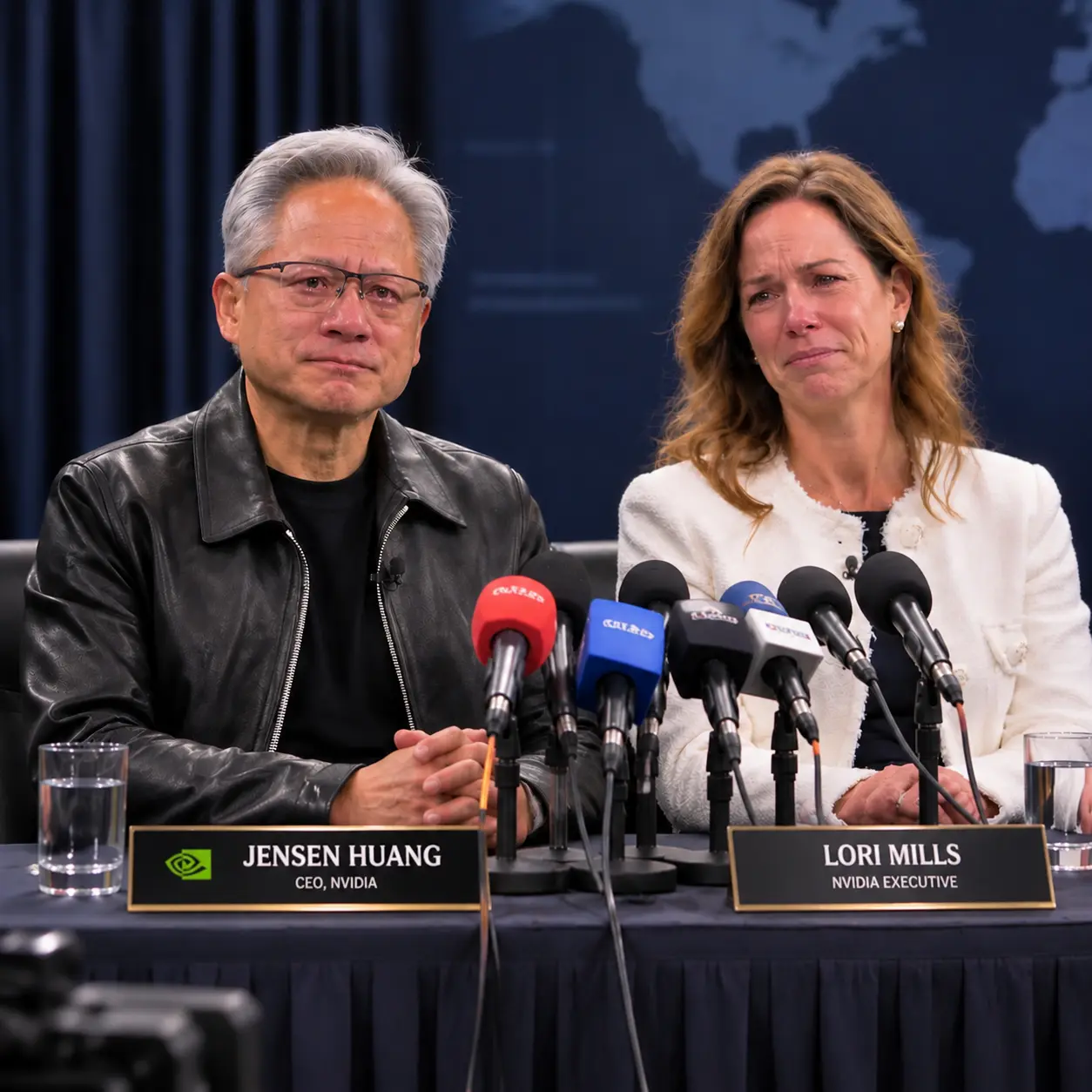
Jensen Huang Resigns as NVIDIA CEO, Marking a Stunning Turning Point for the Company That Helped Power the AI Revolution
The technology world is facing an extraordinary leadership shake-up. Jensen Huang, the co-founder who transformed NVIDIA from a graphics-chip manufacturer into one of the most influential companies in the artificial intelligence industry, has resigned as the company's president, chief executive officer, and a member of its board of directors, effective immediately.
The announcement, made by NVIDIA on November 12, 2026, marks a dramatic turning point for a company whose identity and global influence have been closely associated with Huang for more than three decades. His departure comes during a period of intense scrutiny surrounding the company and its leadership, raising questions about what comes next for NVIDIA, its employees, investors, technology partners, and the wider AI ecosystem.
The decision has quickly become one of the most consequential corporate developments in the technology sector this year. NVIDIA is not simply another semiconductor company. Its processors and computing platforms have become central to the infrastructure supporting modern artificial intelligence, making any major change at the top a matter of international business interest.
A Sudden Leadership Change at the Center of the AI Industry
According to NVIDIA's announcement, Huang's resignation takes effect immediately. The company has appointed Colette Kress, its longtime executive vice president and chief financial officer, as interim chief executive officer while the board begins searching for a permanent successor.
Kress will continue serving as CFO during the interim leadership period. Her appointment places a senior executive with extensive knowledge of NVIDIA's financial operations and corporate strategy at the center of the company's transition.
The board has also appointed Harvey C. Jones as its first-ever chair. Jones, a longtime NVIDIA director, brings decades of experience in technology leadership, entrepreneurship, and investment.
In its announcement, NVIDIA emphasized that it expects the company's operations, customer commitments, and product roadmap to continue without interruption. That message is significant. Customers and partners around the world depend on NVIDIA's technology, and any uncertainty surrounding its leadership could raise concerns about the company's ability to maintain its pace of innovation.
The board also publicly recognized Huang's contributions, describing his impact on NVIDIA and the technology industry as profound.
For a company that has spent years building its position at the center of the AI boom, the transition represents a major test of institutional stability.
The Executive Who Helped Shape the Modern AI Era
Huang co-founded NVIDIA in 1993 and spent more than 30 years leading the company. Under his leadership, NVIDIA evolved far beyond its original focus on graphics processing.
Its GPUs became essential tools for scientific computing, high-performance computing, machine learning, and eventually the large-scale artificial intelligence systems now being developed by technology companies around the world.
That evolution helped turn NVIDIA into one of the most strategically important businesses in the global technology industry.
Huang became widely recognized not only for his technical vision but also for his distinctive leadership style and ability to communicate the potential of emerging technologies. His presentations frequently attracted attention from investors, developers, researchers, and business leaders.
As generative AI moved into the mainstream, NVIDIA's hardware and software ecosystem became increasingly important. Demand for advanced computing infrastructure grew as companies raced to develop larger AI models, deploy intelligent applications, and build data centers capable of supporting increasingly complex workloads.
Huang was one of the most visible executives associated with that transformation.
His departure therefore raises a question that extends beyond the company's next quarterly earnings report: can NVIDIA preserve the strategic direction, technical momentum, and industry relationships that developed under its founding leader?
An Investigation and Growing Pressure Before the Resignation
The leadership change follows a difficult period for NVIDIA.
On November 8, the company's board announced that it was initiating an independent investigation after reports that Huang had been the target of a foreign intelligence effort.
The company said the investigation would be overseen by independent directors working with outside legal counsel. NVIDIA also stated that the board had no reason to believe national security or company secrets had been compromised.
The company said Huang supported the review and had committed to cooperating with it.
Separately, reports concerning Huang's personal relationships and questions surrounding potential national-security implications brought additional scrutiny. Huang had acknowledged being unfaithful to his wife in an internal message to employees and apologized to his family and colleagues.
These developments placed NVIDIA under pressure at a time when its business was already attracting extraordinary attention because of its central role in the global AI race.
It is important to distinguish between confirmed corporate actions and allegations reported by media organizations. The existence of the board investigation and Huang's resignation have been disclosed by NVIDIA. Claims concerning possible foreign intelligence activity remain matters of investigation and reporting, not proof that company secrets were compromised.
The timing of the resignation has nevertheless intensified public attention on the company's governance, leadership accountability, and approach to national-security concerns.
Colette Kress Faces an Immediate Leadership Test
Kress now inherits responsibility for guiding one of the world's most influential technology companies through a period of uncertainty.
Her appointment provides continuity at the executive level. Having served as NVIDIA's CFO since 2013, she has been closely involved in the company's financial management during its transformation into a global AI powerhouse.
However, serving as interim CEO is different from overseeing financial operations. The role requires decisions involving product strategy, long-term investment, relationships with major customers, international business, and the company's position in an increasingly competitive semiconductor market.
Investors will be watching closely for signs that NVIDIA's strategic priorities remain unchanged.
The company must continue managing demand for its AI accelerators, maintaining relationships with major cloud providers, supporting software developers, and competing against other semiconductor companies developing alternative AI hardware.
Kress will also have to reassure employees and partners that the leadership transition will not disrupt the company's execution.
The board's search for a permanent successor could become one of the most closely followed executive recruitment processes in the technology industry.
Why Jensen Huang's Departure Matters Beyond NVIDIA
NVIDIA's influence extends across a large portion of the modern technology economy.
Its products are used by cloud-computing providers, research institutions, software developers, automotive companies, and businesses building AI-powered services. The company's technology has become a critical component of the infrastructure supporting the current wave of artificial intelligence development.
That makes leadership continuity especially important.
For major customers, the central concern will be whether NVIDIA can continue delivering the products, software support, and long-term technical roadmap they have built their own investments around.
For investors, the question is whether the company's growth strategy can remain intact without the executive who has guided it since its founding.
For competitors, the transition could create an opportunity to challenge NVIDIA's position. Companies such as AMD and other semiconductor developers are competing to capture a greater share of the market for AI computing. A period of uncertainty at NVIDIA could make those competitive efforts even more consequential.
But a change in leadership does not automatically mean a change in technological direction. NVIDIA has a large engineering organization, established research capabilities, and an extensive network of business relationships. Those institutional strengths will remain important as the company moves forward.
The challenge is ensuring that the organization can maintain its momentum while adjusting to a new leadership structure.
What Happens to NVIDIA's AI Roadmap?
One of the most immediate questions concerns NVIDIA's future product strategy.
The company has invested heavily in developing integrated computing platforms that combine processors, networking technology, software, and systems designed for AI workloads. Its competitive position depends not only on individual chips but also on the broader ecosystem surrounding them.
That ecosystem has helped make NVIDIA difficult for competitors to challenge. Developers and businesses often build their AI infrastructure around NVIDIA's hardware and software tools, creating long-term relationships that extend beyond a single product generation.
The board has indicated that NVIDIA's product roadmap and customer commitments are expected to continue without interruption.
That assurance will matter to customers planning major data-center investments and technology companies whose AI services depend on NVIDIA infrastructure.
Still, the transition creates a new leadership question: who will ultimately define the company's next chapter?
A permanent successor will need to understand the technical foundations of NVIDIA's business while also navigating the political, economic, and regulatory pressures surrounding advanced computing.
The next CEO will inherit a company with enormous influence, but also considerable expectations.
A Defining Moment for Silicon Valley
Huang's resignation is also a reminder that even the most influential technology leaders are not separate from the governance structures and accountability standards that apply to major corporations.
For decades, founder-led companies have often benefited from the stability and long-term vision associated with a recognizable executive. That leadership model can be powerful, particularly in industries where technical decisions require years of investment and sustained strategic commitment.
However, it can also create challenges when a company becomes closely identified with one individual.
NVIDIA now faces the task of demonstrating that its institutional strength extends beyond its founder.
The coming weeks will likely bring close attention to the board's succession process, the findings and progress of its investigation, and any further statements from the company.
For employees, customers, investors, and developers, the priority will be clarity. They will want to understand who is making key decisions, whether the company's strategic direction is changing, and how NVIDIA intends to maintain confidence during the transition.
The End of an Era — and the Beginning of an Uncertain Chapter
Jensen Huang's departure marks the end of an extraordinary period in NVIDIA's history.
He helped build the company from its earliest days and guided its transformation into a central force in the global artificial intelligence industry. His influence reached far beyond semiconductor manufacturing, shaping conversations about computing, automation, scientific research, and the future of technology.
But NVIDIA's next chapter will not be defined by its history alone.
The company must now prove that its technology, leadership team, and business strategy can remain strong through a transition that few investors or industry observers would have expected to unfold so suddenly.
Colette Kress faces the immediate responsibility of maintaining stability. The board must identify a permanent successor. And the wider technology industry will be watching to see whether NVIDIA can continue leading the AI revolution without the person who became its most recognizable face.
One thing is clear: this is more than an ordinary executive departure. It is a defining moment for one of the most important companies in modern technology.
What do you think Jensen Huang's resignation means for NVIDIA and the future of artificial intelligence? Can the company maintain its dominance under new leadership, or will this transition create an opening for its competitors?