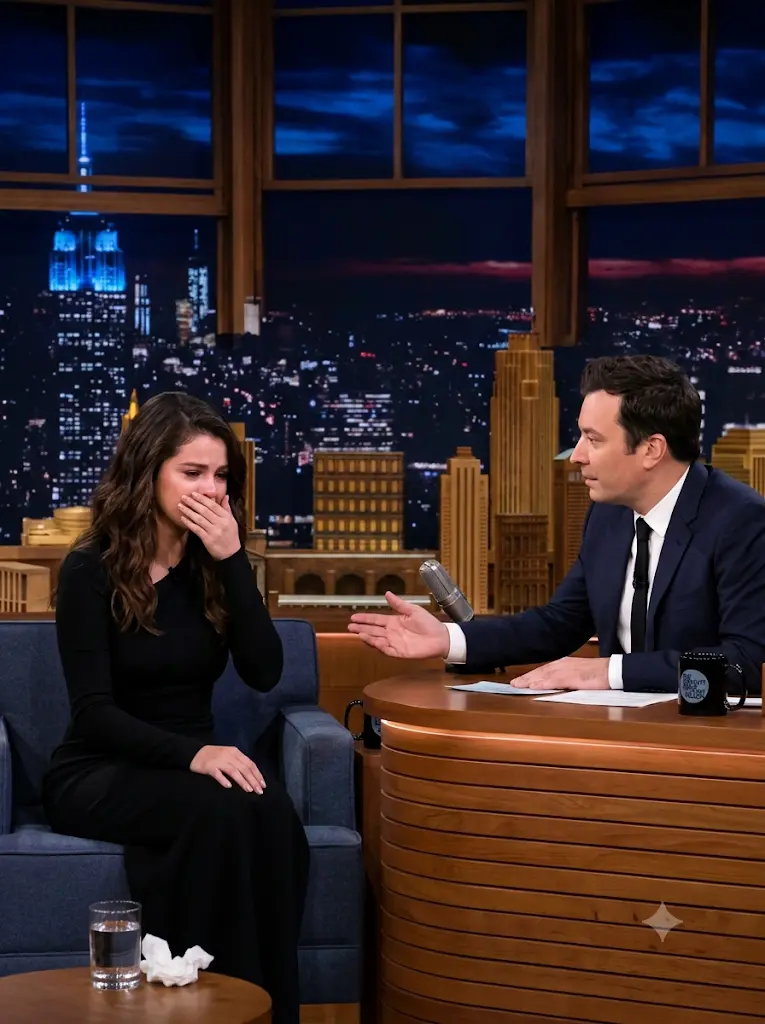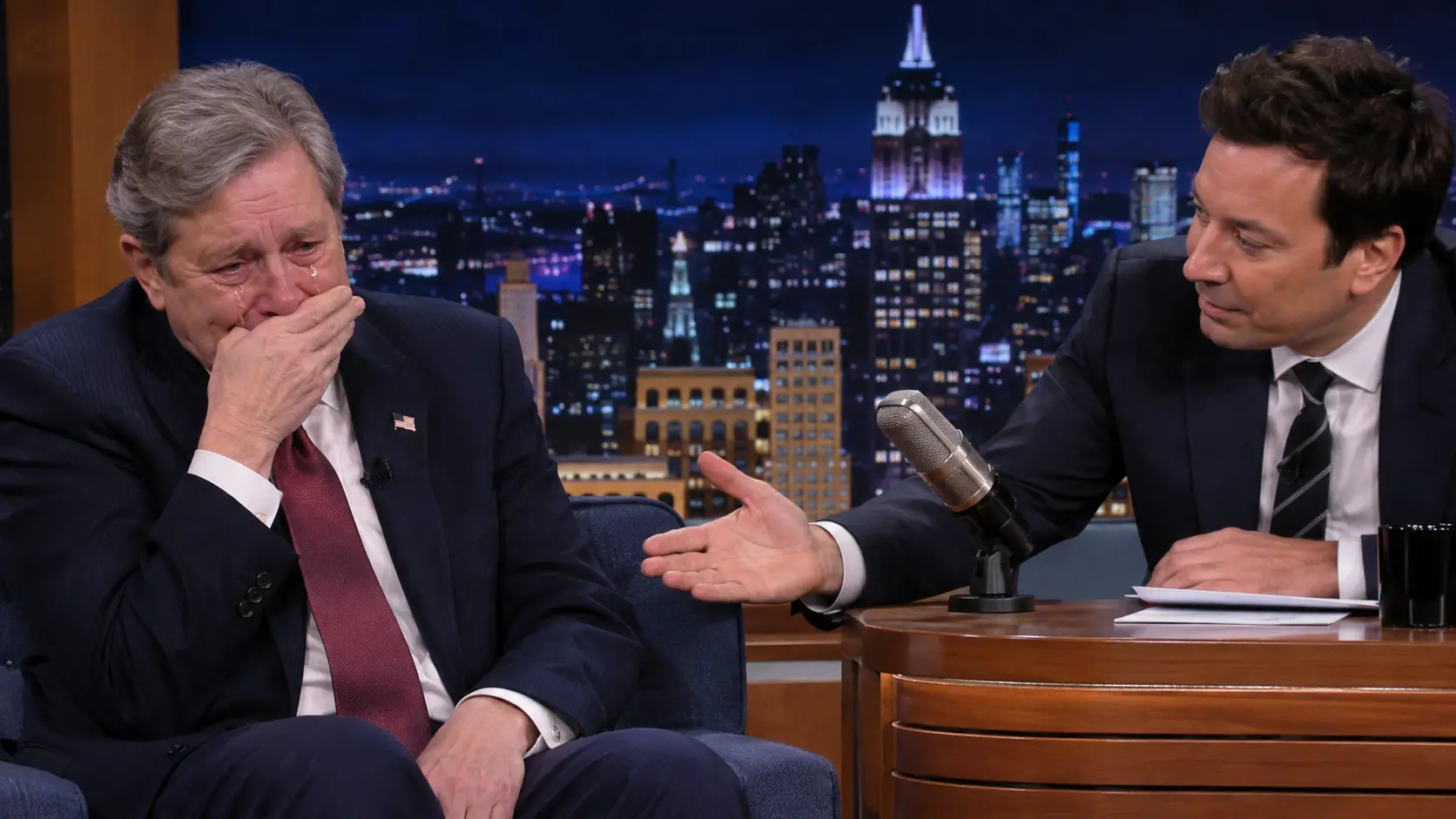
BREAKING NEWS: DID SENATOR JOHN NEELY KENNEDY REALLY LEAVE JIMMY FALLON SPEECHLESS? THE ALLEGED INTERVIEW WALKOUT RAISING QUESTIONS ABOUT POLITICS, RESPECT, AND THE POWER OF WORDS
WASHINGTON, D.C. — U.S. Senator John Neely Kennedy of Louisiana has built a national reputation for his unmistakable Southern delivery, pointed questions, and memorable political commentary. Now, a sensational headline claims that Kennedy left late-night television host Jimmy Fallon speechless with a shocking remark before unexpectedly walking away from an interview. The description suggests an extraordinary collision between Washington politics and American entertainment television. But behind the dramatic claim lies a crucial unanswered question: Did the alleged confrontation actually happen?
The story contains nearly everything needed to capture public attention.
A prominent Republican senator.
One of America's most recognizable late-night television hosts.
A supposedly shocking statement.
And an unexpected departure that allegedly transformed a routine conversation into a moment of national intrigue.
It is an irresistible premise for a viral political-entertainment headline.
But the claim does not identify the broadcast date, provide the exact words Kennedy supposedly used, or include an authenticated recording showing him leaving the interview.
There is also no reliable documentation accompanying the headline establishing that such an exchange occurred.
Without those details, the alleged confrontation cannot responsibly be presented as a confirmed event.
Nevertheless, the story raises broader questions about political communication, the role of television hosts, and the increasingly blurred boundaries between serious public debate and entertainment.
THE HEADLINE THAT PROMISES A TELEVISION SHOWDOWN
The circulating headline describes a dramatic sequence.
Kennedy supposedly delivered a remark so unexpected that Fallon could not respond.
Then, instead of continuing the interview, the senator allegedly decided to walk away.
The description creates the impression of an extraordinary breakdown in a nationally televised conversation.
But it leaves essential questions unanswered.
What exactly did Kennedy say?
Was the discussion political or personal?
Was Fallon genuinely speechless?
Did Kennedy leave before the scheduled interview concluded?
And where is the original footage?
These questions are important because an attention-grabbing headline is not evidence.
A complete recording, reliable transcript, or documented account would be necessary to establish what actually happened.
WHO IS SENATOR JOHN NEELY KENNEDY?
John Neely Kennedy was born on November 21, 1951, in Centreville, Mississippi.
He built a career in law, public service, and Louisiana politics before entering the United States Senate.
Kennedy earned an undergraduate degree from Vanderbilt University and a law degree from the University of Virginia.
He also studied at the University of Oxford.
His educational background helped establish the foundation for a career involving legal analysis and government policy.
Before becoming a senator, Kennedy served in several public positions in Louisiana.
He became particularly well known through his tenure as Louisiana state treasurer.
In 2016, he won election to the United States Senate.
He began serving in January 2017.
His political career brought him into national debates about government spending, the judiciary, federal policy, and congressional oversight.
A POLITICAL VOICE THAT ATTRACTS NATIONAL ATTENTION
Kennedy has become widely recognized for his distinctive speaking style.
His public remarks frequently combine direct questions, colorful expressions, and references intended to make complicated subjects easier to understand.
During Senate hearings, he has sometimes used memorable language to challenge witnesses or emphasize his arguments.
His approach can generate strong reactions.
Supporters may appreciate his directness and humor.
Critics may question his rhetoric or political positions.
But his public communication style has made him a recognizable figure beyond Louisiana.
Short excerpts from congressional hearings often circulate through television news and social media.
That visibility helps explain why a sensational headline involving Kennedy can attract attention.
However, a reputation for pointed questioning does not establish that he confronted Fallon or abandoned a television interview.
FROM LOUISIANA POLITICS TO THE NATIONAL STAGE
Kennedy's political career developed over several decades.
His work in Louisiana government gave him experience with state finances and public administration.
His election to the Senate placed him within the national legislative process.
As a senator, he participates in debates over federal legislation and government oversight.
He also takes part in committee proceedings and public hearings.
These responsibilities differ significantly from the work of a television entertainer.
A senator is expected to address public policy and represent constituents.
A late-night host is primarily responsible for presenting an entertainment program.
When these worlds intersect, the result can attract considerable public interest.
But an interesting contrast between two professions does not prove that a confrontation occurred.
JIMMY FALLON AND THE WORLD OF LATE-NIGHT TELEVISION
Jimmy Fallon developed his career through comedy and television.
He became widely recognized through Saturday Night Live.
His performances helped establish him as a familiar figure in American entertainment.
He later hosted Late Night with Jimmy Fallon.
In 2014, he became the host of The Tonight Show Starring Jimmy Fallon.
The program features celebrity interviews, musical performances, comedy sketches, and entertainment segments.
Fallon's hosting style often emphasizes humor and a conversational atmosphere.
Political figures sometimes appear on entertainment programs to discuss public issues, communicate with audiences, or introduce a more personal side of themselves.
But political interviews can also create challenges.
A host may ask questions about controversial policies.
A guest may respond with an unexpected argument.
And audiences may interpret the exchange through their existing political perspectives.
These possibilities are part of televised political communication.
They do not establish that the alleged Kennedy-Fallon confrontation occurred.
WHEN POLITICS MEETS ENTERTAINMENT
Political conversations on entertainment programs can be difficult to balance.
A late-night audience may expect humor.
A political guest may want to discuss serious issues.
The host must decide how to combine those expectations.
A question about government policy may require a detailed answer.
A joke may interrupt a serious explanation.
And a guest may prefer a more formal discussion than the program's format normally provides.
These differences can create awkward moments.
But awkwardness is not necessarily hostility.
A political figure can disagree with a host without disrespecting them.
A television presenter can ask challenging questions without intending confrontation.
And an interview can include sharp exchanges without ending unexpectedly.
Context is essential.
THE ALLEGED SHOCKING REMARK
The circulating headline claims that Kennedy made a shocking statement.
Yet it does not provide the words.
That omission prevents audiences from evaluating the remark.
A statement may be humorous.
It may be sarcastic.
It may be a serious political argument.
Or it may have been removed from its original context.
Kennedy's public communication style frequently includes memorable expressions.
But that general characteristic does not establish what he said during any particular interview.
The claim that Fallon was left speechless also requires evidence.
Television hosts sometimes pause for comedic effect.
They may react dramatically to surprising comments.
And short clips can make ordinary exchanges appear more confrontational than they were.
Only a complete recording would allow viewers to evaluate the alleged moment.
DID SENATOR KENNEDY REALLY WALK AWAY?
The alleged walkout is the most dramatic element of the story.
A sitting United States senator unexpectedly leaving a nationally televised interview would be a noteworthy event.
It could interrupt the program.
It might prompt an explanation from the host or production team.
And it could attract substantial political and entertainment coverage.
But the supplied headline does not identify an episode in which Kennedy left unexpectedly.
It does not provide footage showing his departure.
Nor does it include a reliable statement from the senator's office or the television program.
These missing details matter.
The alleged walkout cannot be treated as a documented event without credible supporting evidence.
THE DIFFERENCE BETWEEN STRONG WORDS AND PERSONAL CONFRONTATION
Kennedy is known for expressing his political views directly.
But direct communication is not necessarily personal hostility.
A senator may challenge an argument.
He may question the assumptions behind a policy.
Or he may disagree with another person's interpretation of events.
These actions are part of public debate.
They do not automatically constitute disrespect.
Likewise, a television host may ask difficult questions without attempting to embarrass a guest.
The distinction depends on the wording, tone, and circumstances.
Without reliable evidence, audiences cannot determine whether the alleged exchange involved disagreement, humor, misunderstanding, or something else.
WHY WALKING AWAY CAN BECOME A SYMBOLIC ACT
The idea of leaving an uncomfortable conversation can carry emotional meaning.
Some people interpret walking away as an assertion of personal boundaries.
Others may see it as a missed opportunity for dialogue.
The appropriate interpretation depends on the circumstances.
In a political interview, additional considerations may apply.
Elected officials have public responsibilities.
Journalists and interviewers have an interest in asking meaningful questions.
And audiences benefit when important issues receive clear explanations.
But a guest also retains the ability to express discomfort or decline to discuss particular subjects.
Without knowing what actually happened, it would be unfair to praise or criticize Kennedy for the alleged decision to leave.
THE PRESSURE OF PUBLIC LIFE IN WASHINGTON
Political figures operate under continuous scrutiny.
Their speeches, committee questions, interviews, and public appearances can become national news.
Social media has intensified that attention.
A short video from a congressional hearing may circulate widely.
A brief remark may generate competing interpretations.
And a dramatic headline can influence public opinion before its accuracy is established.
For elected officials, communication is an important part of public service.
But public visibility also creates the risk that statements will be taken out of context.
That is why reliable recordings and complete transcripts matter.
They allow audiences to evaluate what was actually said.
WHY POLITICAL INTERVIEWS CAN BECOME CONTROVERSIAL
Political interviews often involve questions about public policy, leadership, and accountability.
A host may ask about a senator's voting record.
The conversation may turn toward government spending or congressional investigations.
A guest may challenge the framing of a question.
Such exchanges can be informative.
They can also become contentious.
But disagreement is not inherently inappropriate.
In a democratic society, public officials should be able to explain their positions and respond to scrutiny.
Interviewers should also seek clarity and avoid misleading presentations.
The most useful conversations allow audiences to understand the substance of the disagreement.
In the alleged Kennedy-Fallon incident, however, no reliable account accompanying the headline establishes the subject of the supposed exchange.
Any explanation of what triggered the alleged walkout would therefore be speculation.
THE ROLE OF SOCIAL MEDIA IN AMPLIFYING POLITICAL DRAMA
Political content often spreads rapidly online.
A headline involving a senator and a famous television host can attract audiences from different communities.
Some viewers may be interested in politics.
Others may follow entertainment news.
And some may simply be curious about an apparent confrontation.
This combination can make a dramatic claim especially shareable.
But popularity is not proof.
A statement does not become accurate simply because it appears on multiple websites or social media pages.
Reliable reporting requires original evidence.
In this case, that would include an identifiable interview and authenticated footage.
Without those elements, the story remains an allegation rather than a documented event.
WHY AUDIENCES MAY INTERPRET THE STORY DIFFERENTLY
Political figures often inspire sharply different reactions.
Supporters may interpret a dramatic headline as evidence of confidence or independence.
Critics may view the same description as a sign of confrontation.
But both interpretations depend on accepting the underlying event as real.
When the event itself has not been verified, conclusions about motives are premature.
A more reliable approach begins with the evidence.
What was said?
What was the context?
How did the participants respond?
And did the interview actually end unexpectedly?
Until those questions are answered, the alleged incident should not be used to evaluate either participant's character.
THE RESPONSIBILITY OF POLITICAL AND ENTERTAINMENT JOURNALISM
Political reporting and entertainment coverage serve different purposes, but both depend on accuracy.
A verified disagreement can be reported directly.
An authentic quotation can be presented in context.
And a documented walkout can be explained through reliable evidence.
But unsupported claims should not be transformed into confirmed events.
Doing so risks misleading audiences.
It can also unfairly affect the reputations of the people involved.
In this case, Kennedy is an elected official and Fallon is a prominent television host.
Neither should be assigned words or actions without supporting evidence.
WHAT WOULD CONFIRM THE STORY?
A reliable account of the alleged confrontation would need several essential details.
The interview date should be identified.
The original broadcast or complete recording should be available.
The supposedly shocking remark should be documented accurately.
The footage should establish whether Kennedy actually left the interview unexpectedly.
And any statements from the participants should be represented in context.
Without those elements, the claim remains unsupported.
A dramatic headline cannot substitute for verified reporting.
THE BIGGER QUESTION: CAN POLITICS AND ENTERTAINMENT COEXIST?
The alleged story also raises a broader question about the relationship between politics and popular culture.
Late-night television can introduce political figures to audiences who may not regularly watch congressional hearings.
Humor can make complicated subjects more accessible.
But entertainment formats may also limit the time available for detailed policy discussions.
A successful political interview requires balance.
The host should ask meaningful questions.
The guest should have an opportunity to explain relevant positions.
And audiences should receive enough context to understand the exchange.
Disagreement can be productive when participants communicate clearly.
But sensationalism can distract from the substance of public debate.
RESPECT MATTERS ON BOTH SIDES OF THE INTERVIEW
A meaningful interview requires cooperation.
The host should create an environment where questions can be answered.
The guest should recognize the professional purpose of the appearance.
Both participants benefit from clear communication.
A difficult question does not automatically constitute disrespect.
And a direct response does not automatically indicate hostility.
The circumstances determine how an exchange should be interpreted.
Without reliable footage, audiences cannot know whether the alleged Kennedy-Fallon moment involved tension, humor, misunderstanding, or something else entirely.
FINAL THOUGHTS: THE ALLEGED WALKOUT THAT STILL NEEDS ANSWERS
Senator John Neely Kennedy has developed a recognizable public identity through his work in Louisiana politics and the United States Senate.
Jimmy Fallon has become a prominent figure in American late-night television.
Their different professional roles make the idea of an interview between them an intriguing subject.
But the circulating headline introduces claims that go far beyond an ordinary television conversation.
It alleges a shocking remark.
It describes a stunned host.
And it suggests that Kennedy unexpectedly walked away.
Those details have not been substantiated by an authenticated recording, transcript, broadcast date, or reliable account accompanying the claim.
Until such evidence becomes available, the alleged confrontation should not be presented as a confirmed event.
The broader questions remain important.
How should television hosts question elected officials?
When does a difficult interview become unnecessarily confrontational?
And what responsibilities do political figures and media organizations have when communicating with the public?
These questions deserve thoughtful discussion.
But the answers should begin with facts.
Because a genuine disagreement can become a memorable television moment.
A powerful statement can inspire important conversations.
And a decision to walk away can carry symbolic meaning.
Yet a sensational headline is not proof that the event it describes actually occurred.
For now, the central question remains unresolved: whether the alleged John Neely Kennedy-Jimmy Fallon confrontation happened at all.
WHAT DO YOU THINK: WHEN A POLITICAL INTERVIEW BECOMES UNCOMFORTABLE, SHOULD AN ELECTED OFFICIAL CONTINUE ANSWERING QUESTIONS, CHALLENGE THE HOST DIRECTLY, OR END THE CONVERSATION?