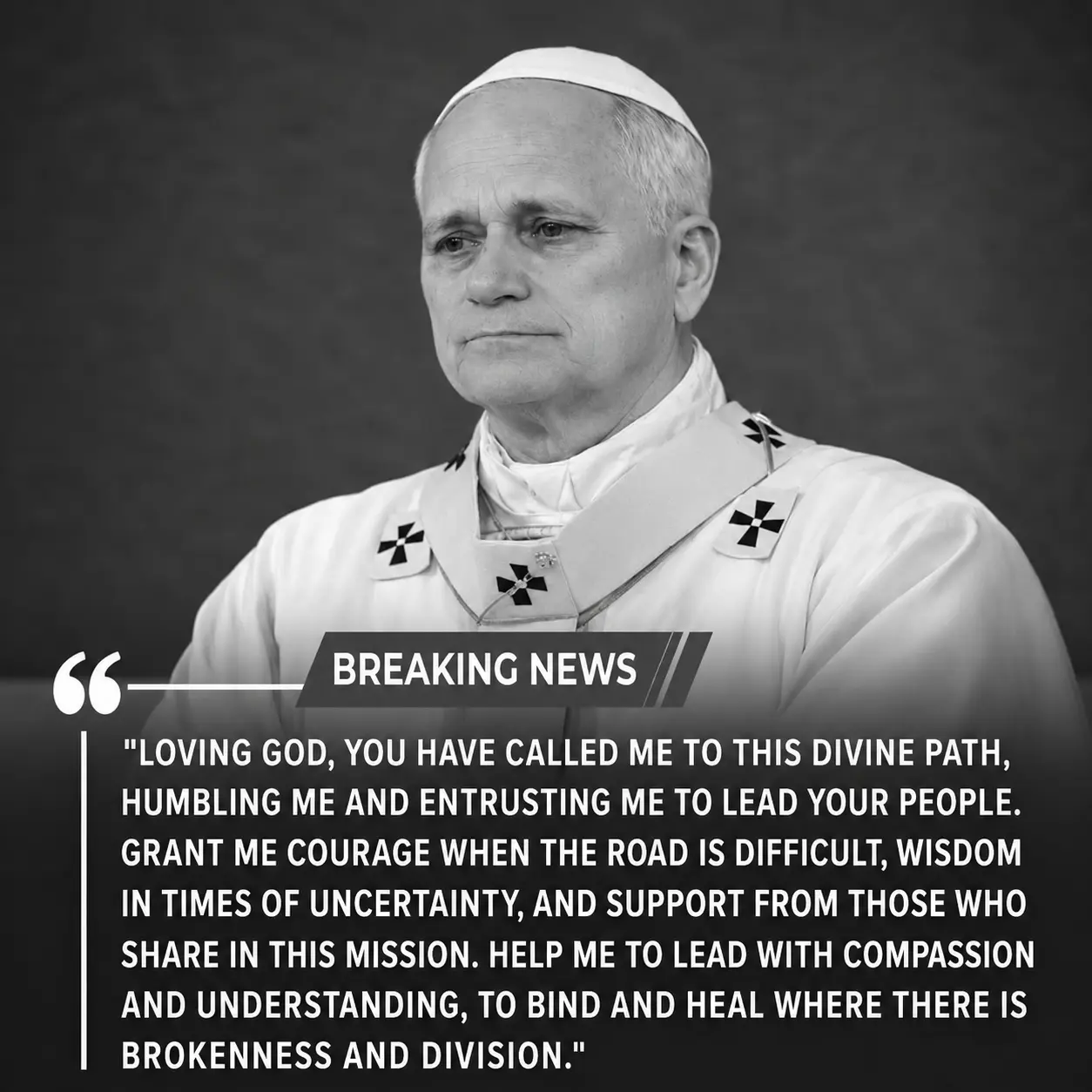
VATICAN CITY — At a time when conflict, fear, and uncertainty continue to affect millions of lives across the Middle East, Pope Leo XIV has delivered a message that reaches far beyond the walls of the Vatican.
His appeal is both spiritual and deeply humanitarian: stop the violence, protect innocent lives, and rediscover the courage to pursue peace through dialogue.
For communities suffering in Iran, Lebanon, and other parts of the region, those words carry particular significance.
Throughout 2026, the pontiff has repeatedly urged political leaders and ordinary citizens to recognize the devastating human consequences of armed conflict. His statements have emphasized that genuine stability cannot emerge from intimidation, retaliation, or the continued escalation of military force.
Instead, he has called for diplomacy, reconciliation, and a renewed commitment to human dignity.
The message is simple, but its implications are profound.
Peace cannot be achieved merely by silencing weapons temporarily. It requires the difficult work of rebuilding trust, protecting vulnerable communities, and addressing the conditions that allow violence to continue.
A Powerful Appeal Amid Middle Eastern Conflict

During his Angelus address in March 2026, Pope Leo XIV urged those responsible for the conflict involving Iran, Israel, and the United States to stop the fighting and reopen diplomatic channels.
He warned that continued violence would deepen suffering rather than produce the justice and stability that ordinary people desperately needed.
His concern extended beyond political disagreements or military calculations.
At the center of his appeal were civilians.
Families forced to abandon their homes.
Children whose education had been interrupted.
Elderly people struggling to find safety.
And communities facing the destruction of hospitals, schools, and essential infrastructure.
The pope's message emphasized that the consequences of war are experienced most directly by people who have little influence over the decisions that shape their lives.
For them, the pursuit of peace is not an abstract political objective.
It is a matter of survival.
Why Dialogue Matters More Than Confrontation

One of the central themes of Pope Leo XIV's message has been the importance of sincere and responsible dialogue.
In his public statements, he has challenged the belief that military escalation can create lasting security.
Threats may demonstrate power, but they rarely establish the trust required for peaceful coexistence.
Retaliation may satisfy immediate political demands, but it can also intensify resentment and create new cycles of violence.
Diplomacy, by contrast, offers an opportunity for opposing sides to address disagreements without exposing additional civilians to harm.
That does not mean negotiations are easy.
Deep political divisions, security concerns, historical grievances, and competing national interests can make compromise extraordinarily difficult.
Nevertheless, the pope has consistently presented dialogue as an essential alternative to continued bloodshed.
His position reflects the Holy See's longstanding emphasis on peaceful conflict resolution and the protection of human dignity.
The Human Cost Behind Every Headline
International conflicts are often described through military operations, diplomatic statements, and political developments.
Yet behind those headlines are countless individual experiences.
A mother searching for news of her children.
A father trying to find shelter for his family.
A student whose school has been damaged.
A patient unable to reach medical treatment.
These experiences demonstrate why humanitarian concerns occupy such an important place in the pope's appeals.
For people living in areas affected by conflict, ordinary routines can disappear almost overnight.
Access to food, clean water, electricity, and healthcare may become uncertain.
Displacement can separate families and destroy livelihoods.
Even after fighting subsides, the psychological and economic consequences may persist for years.
Pope Leo XIV's message asks the international community to recognize these realities rather than viewing war exclusively through strategic or political calculations.
A Warning Against the Cycle of Violence

The pontiff has also expressed concern about the consequences of allowing confrontation to replace dialogue.
When disputes become increasingly militarized, opportunities for peaceful negotiation can narrow.
Fear and distrust grow.
Communities become more divided.
And the prospect of reconciliation becomes more difficult.
His warnings are particularly relevant in a region where overlapping conflicts have affected generations of families.
The pope has urged leaders to consider the long-term consequences of their decisions and to prioritize the protection of civilians.
His appeal does not suggest that complex political disputes can be resolved through goodwill alone.
Rather, it emphasizes that durable solutions require serious diplomatic engagement, respect for human rights, and a willingness to reduce suffering.
More Than a Call to Prayer
Prayer remains central to Pope Leo XIV's public ministry.
But his message about peace has also emphasized responsibility and action.
For religious communities, prayer can express solidarity with people experiencing hardship.
For humanitarian organizations, compassion can take the form of emergency assistance, medical care, and support for displaced families.
For political leaders, responsibility involves seeking negotiated solutions and protecting civilian populations.
And for ordinary individuals, the pursuit of peace can begin through the rejection of hatred, prejudice, and dehumanizing language.
These different forms of action share a common principle.
Human dignity must remain important even during periods of profound disagreement.
The Meaning of Becoming Seeds of Hope
The image of sowing hope has appeared in Pope Leo XIV's reflections on peacebuilding.
It suggests that meaningful change often begins with actions whose results are not immediately visible.
A humanitarian worker providing assistance may not end a conflict.
A religious leader encouraging reconciliation may not resolve a political dispute.
A teacher helping children understand one another may not transform an entire society overnight.
Yet each action can contribute to the conditions necessary for a more peaceful future.
Hope, in this understanding, is not passive optimism.
It is a commitment to act responsibly despite uncertainty.
It requires patience, courage, and a willingness to recognize the humanity of others.
That message can resonate across religious, cultural, and national boundaries.
A Responsibility Shared Across the World
Although the pope speaks from the Vatican, the questions raised by his appeals extend far beyond the Catholic Church.
How should governments balance security concerns with the protection of civilians?
What responsibilities do international institutions have when humanitarian conditions deteriorate?
How can religious and community leaders help reduce hostility?
And what role can ordinary people play in encouraging peaceful coexistence?
There are no simple answers to these questions.
Different governments and communities may disagree sharply about the causes of conflict and the measures required to resolve it.
Nevertheless, the pope's statements have consistently emphasized that human suffering should never become secondary to political confrontation.
The protection of innocent life remains a fundamental concern.
A Message That Continues Beyond the Vatican
In July 2026, Pope Leo XIV again called for renewed negotiations and an end to military actions that endangered civilians across the Middle East.
His message reflected a continuing concern that violence was worsening humanitarian conditions and making lasting peace more difficult to achieve.
By November, his reflections on peacebuilding continued to emphasize dialogue, reconciliation, and the importance of people who work patiently toward peaceful solutions.
These repeated appeals demonstrate that his message is not limited to one speech or one moment of international crisis.
It is part of a broader vision of peace rooted in human dignity, responsibility, and the belief that reconciliation remains possible.
Will the World Listen?
The effectiveness of any appeal for peace ultimately depends on decisions made beyond the person delivering it.
Religious leaders can encourage dialogue.
Humanitarian organizations can provide assistance.
Citizens can express concern.
But governments and other parties involved in conflicts must make the decisions necessary to reduce violence and pursue negotiated settlements.
Pope Leo XIV's message therefore presents both an invitation and a challenge.
It invites people to imagine a future in which disagreements are addressed without the repeated destruction of civilian lives.
And it challenges those with power to consider the moral consequences of their actions.
For families suffering in Iran and across the Middle East, the hope for peace is not merely symbolic.
It is the hope of returning home.
Of sending children safely to school.
Of rebuilding communities.
And of living without the constant fear of violence.
As Pope Leo XIV continues to advocate dialogue and reconciliation, one question remains at the heart of his message:
Will the international community turn its stated desire for peace into meaningful action before more innocent lives are lost?
The answer will not be found in words alone.
It will be measured through the protection of civilians, the willingness to negotiate, and the concrete steps taken toward a just and lasting peace.