
🚨💔 WADE WILSON’S FATE TAKES ANOTHER DARK TURN! Florida Court Ruling Leaves His Death Sentence in Place — But the Legal Battle Is Far From Over! 😱
A dramatic chapter in one of Florida's most closely watched murder cases has brought renewed attention to Wade Wilson, the convicted double murderer whose death sentences remain in effect as his attorneys continue pursuing constitutional challenges. Following a crucial hearing before the Florida Supreme Court, Wilson's legal team faces significant obstacles, raising questions about whether the case could eventually reach the United States Supreme Court.
The situation has attracted widespread attention because of the serious crimes involved, the controversy surrounding Florida's capital punishment laws, and the possibility of further appeals.
But behind the legal arguments and sensational headlines lies a devastating tragedy involving two women whose lives were taken on the same day.
Wilson was convicted of murdering 35-year-old Kristine Melton and 43-year-old Diane Ruiz in Cape Coral, Florida, on October 7, 2019.
The crimes shocked the local community and eventually became the subject of intense national coverage.
According to evidence presented during his trial, Wilson met Melton at a bar before accompanying her to her home.
Prosecutors established that he strangled Melton and subsequently stole her vehicle.
Later that day, Wilson encountered Ruiz, who was walking to work.
He persuaded her to enter the stolen vehicle before attacking and strangling her.
Investigators determined that Wilson subsequently pushed Ruiz from the vehicle and repeatedly drove over her.
The disturbing sequence of events formed the foundation of the prosecution's case.
In June 2024, a Lee County jury convicted Wilson of two counts of first-degree murder.
The trial attracted substantial attention, with viewers following testimony, forensic evidence, and arguments presented by both sides.
However, the most consequential legal controversy emerged during the sentencing phase.
Florida had revised its death penalty law in 2023, changing the number of jurors required to recommend capital punishment.
Under the revised statute, at least eight of twelve jurors must recommend death before a judge can impose that sentence.
Previously, Florida law required a unanimous jury recommendation.
Wilson's jury recommended death by a vote of 9–3 for Melton's murder and 10–2 for Ruiz's murder.
On August 27, 2024, Circuit Judge Nicholas Thompson sentenced Wilson to death for both killings.
The ruling represented a major development in the criminal proceedings, but it did not end the legal process.
Capital cases routinely involve extensive appellate review because of the severity and irreversible nature of the punishment.
Wilson's attorneys subsequently challenged the legality of applying Florida's revised sentencing law to crimes committed before the statute changed.
Their argument centered on constitutional protections against certain retroactive changes in criminal law.
Because the murders occurred in 2019, when Florida required unanimous death recommendations, the defense maintained that the newer voting threshold should not govern Wilson's punishment.
That question became central to his appeal before the Florida Supreme Court.
On February 5, 2026, Wilson's attorney, Michael Ufferman, appeared before the state's highest court.
Observers anticipated arguments concerning the constitutionality of the sentencing procedure.
Instead, the hearing concluded unusually quickly.
Ufferman acknowledged that the Florida Supreme Court had already addressed similar constitutional challenges in other cases.
Those earlier decisions had rejected arguments against the state's revised death penalty framework.
Recognizing the existing precedent, Ufferman chose not to repeat arguments that the justices had already considered.
Instead, he explained that the defense wanted to preserve its constitutional claims for possible review by the United States Supreme Court.
The brief proceeding demonstrated the significant legal obstacles confronting Wilson's defense.
Florida's position remained that the death sentences were lawfully imposed under the applicable sentencing statute.

The state requested that the lower court's judgment be affirmed.
For Wilson, the development meant that his attorneys would need to consider whether further constitutional litigation offered a viable path forward.
Importantly, the February hearing should not be confused with a final resolution of every remaining legal issue.
The publicly available appellate docket continued to list Wilson's case as open in October 2026.
His two death sentences remained in effect, but the record did not establish that all possible avenues of appellate review had been exhausted.
The possibility of taking the case to the United States Supreme Court has therefore become an important part of the ongoing discussion.
However, there is a substantial difference between an attorney expressing an intention to seek federal review and the Supreme Court agreeing to hear a case.
The nation's highest court exercises discretion over most petitions submitted for its consideration.
Even if Wilson's attorneys eventually file a petition, the justices would have to determine whether the constitutional questions warrant review.
Acceptance of a petition would not automatically overturn the convictions or death sentences.
It would simply allow the Court to consider the legal issues presented.
Another important distinction concerns the scope of Wilson's appeal.
His principal argument focuses on the constitutionality of the sentencing process, not on establishing that someone else committed the murders.
Consequently, a successful challenge to the sentencing procedure would not necessarily disturb the jury's findings of guilt.
Depending on the circumstances, it could instead result in further sentencing proceedings.
Meanwhile, the case continues to generate strong public reactions.
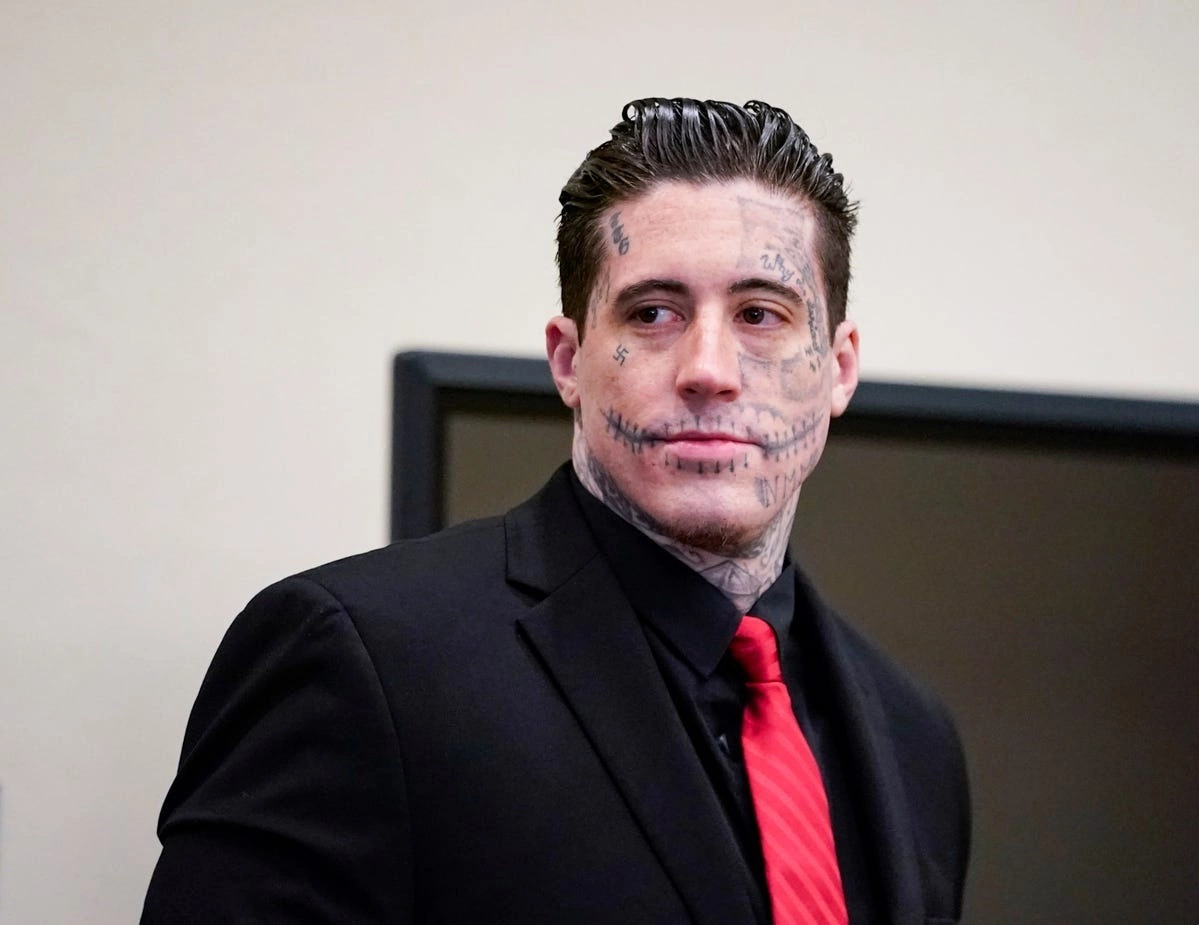
Wilson's distinctive facial tattoos and shared name with Marvel's fictional character Deadpool have contributed to his unusual online notoriety.
Documentaries, television coverage, and social media discussions have repeatedly brought his story to new audiences.
Yet the attention surrounding Wilson has also raised uncomfortable questions about the way society discusses violent offenders.
For the families of Kristine Melton and Diane Ruiz, the case is not simply an internet phenomenon or a courtroom drama.
It represents the permanent loss of two loved ones.
Their families have endured years of investigations, testimony, sentencing proceedings, and appeals.
Every new development can renew the emotional burden associated with the original crimes.
The continuing legal battle also highlights broader questions surrounding capital punishment in the United States.
Florida's decision to permit non-unanimous death recommendations remains an important issue in debates about criminal justice and constitutional protections.
Supporters of the revised statute maintain that it establishes a lawful sentencing procedure.
Critics argue that the extraordinary consequences of capital punishment justify stronger jury-consensus requirements.
Those disagreements extend beyond Wilson's individual case and concern the standards that should govern the most severe punishment available under American law.
For now, Wilson remains on Florida's death row.
No confirmed execution date has been announced, and his attorneys have indicated an interest in pursuing further legal remedies.

Whether those efforts will produce a different outcome remains uncertain.
What is clear is that the criminal convictions, the two death sentences, and the constitutional questions surrounding the sentencing procedure continue to shape the case.
As the proceedings move forward, attention will remain focused on the Florida Supreme Court's official docket and any subsequent federal filings.
For Wilson, the stakes could not be higher.
For the families of Melton and Ruiz, the proceedings remain connected to a tragedy that permanently changed their lives.
The death sentences remain in place, but the legal process has not necessarily reached its final chapter.
And until the remaining judicial questions are resolved, Wade Wilson's case will continue to occupy a difficult intersection of criminal justice, constitutional law, and the lasting consequences of violent crime.
💔 Two lives were lost. Two families continue to live with the consequences. And one of Florida's most closely watched death penalty cases remains under legal scrutiny.
👇 FULL DETAILS IN THE FIRST COMMENT BELOW!