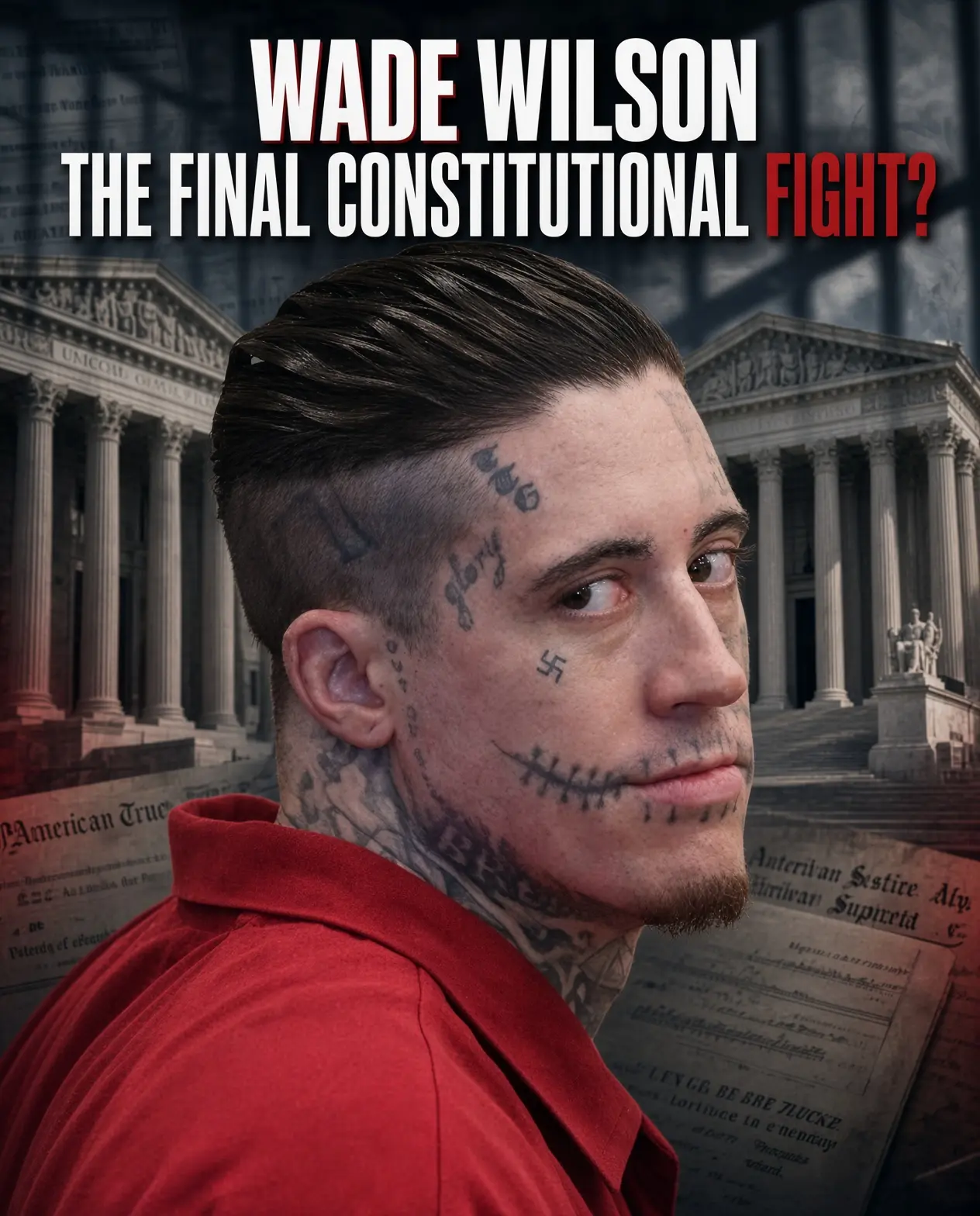
Florida’s legal precedent has dealt a serious blow to the convicted double murderer’s appeal. But his attorney is not giving up on the constitutional argument that could take the fight beyond the state’s highest court.
A major legal battle surrounding Wade Steven Wilson, the Florida man convicted of murdering Kristine Melton and Diane Ruiz, has reached a pivotal stage. Wilson remains under two death sentences, but the fight over whether those sentences were imposed under a constitutionally valid system has raised a question that reaches far beyond one defendant: Can Florida apply its revised death-penalty law to murders committed before that law took effect?
For Wilson’s defense attorney, Michael Ufferman, the answer remains a matter of constitutional concern. Yet the path forward has become increasingly difficult after the Florida Supreme Court upheld the state’s revised sentencing framework in earlier cases. The resulting conflict has left Wilson’s legal team facing an uphill battle in Florida while keeping open the possibility of asking the U.S. Supreme Court to examine the issue.
The stakes could hardly be higher. Wilson is challenging the legal foundation of his death sentences, not simply asking the courts to reconsider the facts of a case that shocked southwest Florida.
THE TWO DEATH SENTENCES THAT STARTED THE LEGAL FIGHT

Wilson was convicted in 2024 of the 2019 murders of Kristine Melton, 35, and Diane Ruiz, 43, in Cape Coral, Florida. The killings occurred within hours of each other and became the subject of extensive courtroom coverage.
According to evidence presented during the trial, Wilson met Melton before killing her at her home. He subsequently took her vehicle and encountered Ruiz, whom prosecutors said he later killed. The case included testimony about the circumstances of both deaths, along with evidence concerning Wilson’s conduct afterward.
The jury ultimately found Wilson guilty of first-degree murder in both cases. During the penalty phase, jurors recommended death for each murder, voting 9–3 in Melton’s case and 10–2 in Ruiz’s case. The trial judge subsequently imposed two death sentences.
Those divided votes are now central to one of the most consequential arguments in Wilson’s appeal.
Under Florida law in effect when the murders occurred in 2019, a unanimous jury recommendation was required for a death sentence. Florida changed its law in 2023, allowing a jury to recommend death when at least eight of the 12 jurors agree.
Wilson’s jury votes met the newer threshold, but neither vote was unanimous. His defense argues that applying the revised framework to crimes committed under the earlier system raises serious constitutional questions.
WHY FLORIDA’S 2023 DEATH-PENALTY LAW MATTERS

The dispute is not simply about whether the jurors believed Wilson deserved the death penalty. It concerns the legal rules governing how that decision could be reached.
The 2023 amendment changed Florida’s sentencing threshold from unanimity to an eight-juror majority. Supporters of the change backed a system that made death recommendations possible without requiring all 12 jurors to agree. Critics have raised constitutional objections to nonunanimous death recommendations and questioned whether the revised law can apply to offenses committed before its enactment.
Wilson’s appeal puts those competing legal principles into sharp focus.
His attorney has raised seven issues in the direct appeal before the Florida Supreme Court, including the challenge to the application of the newer death-penalty law. The broader constitutional questions involve protections against retroactive punishment and the constitutional requirements governing capital sentencing.
The distinction matters. A legal challenge to the sentencing process is not the same as an appeal claiming that the jury wrongly convicted a defendant. Wilson’s current fight focuses, in significant part, on the validity of the death sentences imposed after his convictions.
Even if a court were to agree with the defense on a sentencing issue, that would not automatically mean Wilson would be acquitted. Any remedy would depend on the court’s ruling and the applicable law.
THE HUNT DECISION CHANGES THE LANDSCAPE
The defense’s argument encountered a significant obstacle when the Florida Supreme Court issued its decision in Hunt v. State.
In that case, the court upheld the application of Florida’s revised death-penalty framework against a similar challenge. The ruling established precedent that Wilson’s attorney could not simply ask the same court to disregard.
The effect became apparent during Wilson’s oral argument on February 5, 2026. Ufferman acknowledged that the court had already addressed the central legal questions in its recent decisions. Rather than repeat arguments that binding precedent had substantially undermined, he preserved the defense’s position for potential review elsewhere.
That procedural choice is important. An attorney’s decision not to reargue a point already resolved by controlling precedent does not necessarily mean the attorney has abandoned the underlying constitutional objection.
Ufferman subsequently explained that he continued to believe the application of the newer law to Wilson’s case violated constitutional principles. He said the arguments had been preserved and identified the U.S. Supreme Court as the appropriate forum for seeking further review.
For the defense, the challenge has therefore shifted. The immediate obstacle is no longer just persuading Florida’s highest court to accept the argument. It is finding a viable route to have the federal constitutional question considered by the nation’s highest court.
COULD THE U.S. SUPREME COURT BECOME THE NEXT BATTLEGROUND?

The possibility of federal review gives the case another layer of legal significance. The U.S. Supreme Court has authority to review certain final state-court decisions involving federal constitutional questions, but it does not automatically hear every appeal submitted to it.
Wilson’s attorney would need to pursue the appropriate procedure, generally through a petition asking the justices to grant review. The court would then decide whether the case presents a question warranting its intervention.
Even if a petition is filed, there is no guarantee the justices will accept it. And even if they do, that would not necessarily mean Wilson’s death sentences would be overturned. The outcome would depend on the precise issues before the court and its eventual ruling.
The constitutional debate also extends beyond Wilson personally. Florida’s revised death-penalty system has been challenged in other cases, making the relationship between jury unanimity, capital sentencing and constitutional protections a continuing legal issue.
For Wilson’s defense, the objective is to preserve the argument that the change in Florida law cannot constitutionally govern his case. For the state, the existing convictions and sentences remain supported by the trial proceedings and the legal framework upheld by Florida’s highest court in related litigation.
The disagreement is now unfolding against a difficult procedural backdrop: the defense maintains its objection, while controlling state precedent has made success in Florida considerably more challenging.
WHAT HAPPENS NEXT FOR WADE WILSON?
Wilson’s case remains a capital appeal, and his two death sentences remain in place unless a court orders otherwise. The legal fight over the sentencing framework must be distinguished from any question about when an execution might occur.
The key issue to watch is whether Wilson’s defense pursues federal review of the preserved constitutional arguments and, if so, whether the U.S. Supreme Court agrees to consider them.
For now, the Hunt precedent represents a serious setback for the defense’s position in Florida. But the argument has not been abandoned, and the possibility of further litigation means the constitutional dispute may not end with the state-level proceedings.
The case ultimately presents a question larger than one defendant’s fate: How should constitutional protections apply when a state changes the rules governing the most severe criminal punishment?
Wilson’s convictions stand. His death sentences stand. And his defense faces a steep legal challenge.
The next chapter may depend not on a new trial, but on whether the nation’s highest court is willing to examine the constitutional question that Florida precedent has made so difficult to pursue.