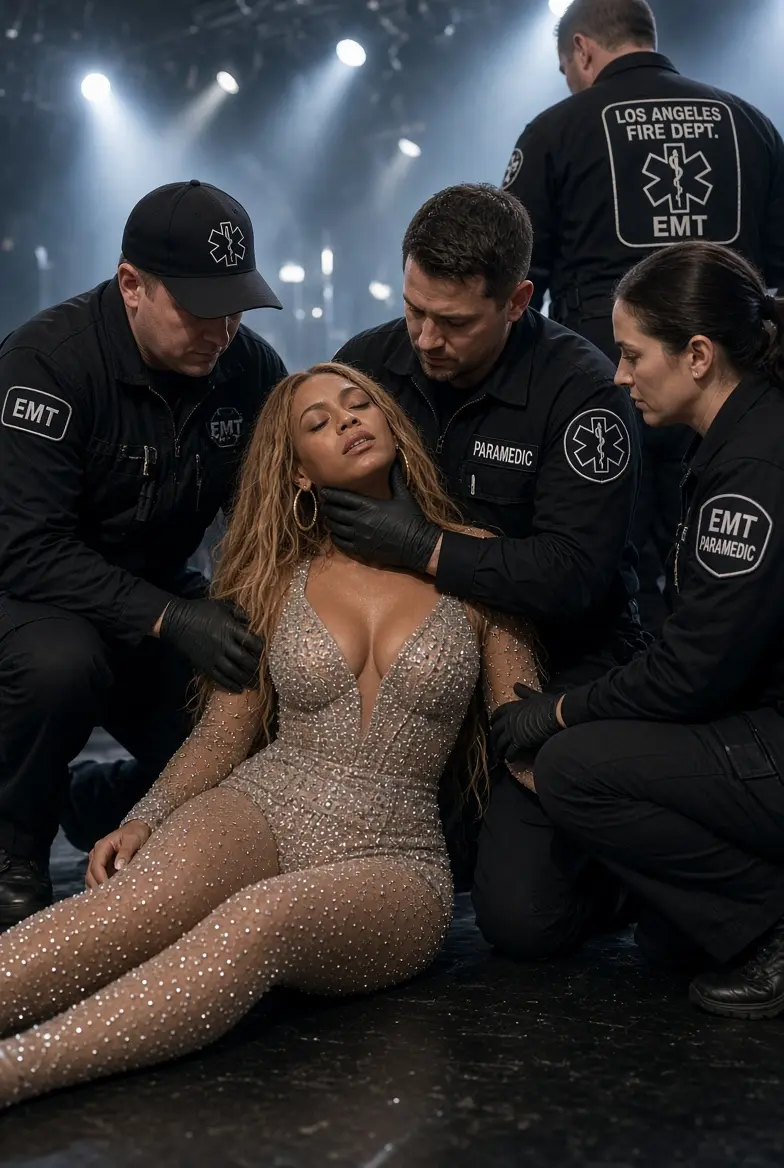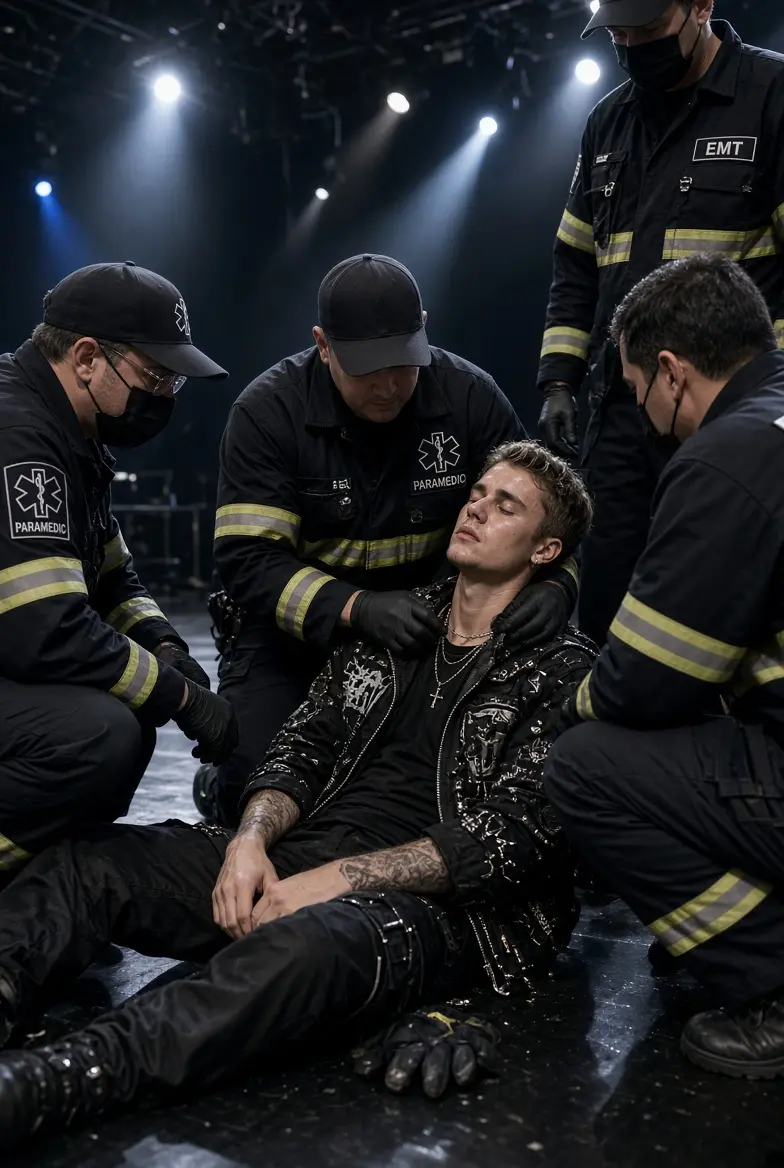
🚨💔 URGENT UPDATE: JUSTIN BIEBER COLLAPSES DURING A STADIUM PERFORMANCE — A FICTIONAL CONCERT NIGHT THAT LEAVES FANS IN TEARS
In this imagined concert scenario, a packed stadium erupts with excitement as Justin Bieber steps onto the stage beneath a dazzling display of lights. Thousands of fans have traveled to see the pop superstar perform, filling the venue with cheers, glowing phone screens, and the familiar melodies of his songs. Justin greets the audience with a smile before launching into an energetic performance. The crowd sings along enthusiastically, creating an atmosphere of celebration and connection. For several songs, everything unfolds smoothly. Then, during a quieter musical moment, Justin appears to lose his balance. He pauses, looking toward a nearby band member as though trying to communicate that something is wrong. The guitarist notices and moves closer, but before anyone can intervene, Justin collapses onto the stage. The music stops immediately. A wave of shock spreads across the stadium as fans struggle to understand what has happened. Crew members rush forward, and the bright stage lights remain fixed on the suddenly silent performance area. In this entirely fictional moment, the excitement of a long-awaited concert transforms into fear. The narrative captures the emotional impact of witnessing an unexpected incident involving a performer whose music has become deeply meaningful to countless listeners.
As the fictional emergency continues, medical personnel hurry toward the stage while security staff ask the audience to remain calm. Justin's bandmates step aside, allowing the responders to work without obstruction. Members of the production crew create a protective barrier to prevent unnecessary filming. In the front rows, several fans begin crying, while others stand quietly with their hands clasped together. The atmosphere is almost unrecognizable compared with the celebration that filled the stadium only minutes earlier. An organizer addresses the crowd, explaining that the performance has been paused and requesting patience while medical professionals assess the situation. Justin is carefully assisted backstage, where further evaluation can take place. The imagined audience remains concerned, uncertain whether the concert will resume. Some fans quietly discuss the frightening moment, while others encourage those around them not to speculate. The fictional story emphasizes that sudden medical incidents should be handled by qualified professionals rather than interpreted through rumors. No diagnosis is provided, and the narrative does not suggest that Justin is secretly facing a serious illness. Instead, it focuses on the emotional experience of an audience that has unexpectedly witnessed someone they admire in a vulnerable situation.
Backstage, the fictional medical team continues evaluating Justin while his colleagues wait for updates. The production manager speaks quietly with security personnel, ensuring that the surrounding area remains private. A physician explains that additional observation may be necessary and that the cause of the episode cannot yet be determined. In the imagined narrative, Hailey Bieber is informed and arrives to offer support. She approaches the waiting area with visible concern, asking whether Justin is comfortable and whether she can see him. The medical staff provide what information they can while continuing their assessment. Hailey sits nearby, holding her phone but paying little attention to the messages appearing on its screen. In fictional dialogue, she says, "When someone you love is going through a frightening moment, everything else suddenly becomes less important." Her invented words reflect the emotional center of the story. Outside, fans continue leaving the stadium after organizers announce that the concert will not resume. Many express disappointment, but the fictional audience responds with understanding. The narrative portrays the interruption not as a scandal or a sensational revelation, but as a reminder that performers are human beings whose health and well-being deserve respect.
Later in the imagined evening, Justin is described as resting under professional observation. Hailey is permitted to sit beside him, and the fictional reunion becomes a moment of cautious relief. Justin looks tired but responsive, offering a faint smile as she enters. Hailey gently takes his hand and asks how he feels. He replies in invented dialogue that the experience was frightening and unexpected. She reassures him that he does not need to worry about the interrupted concert or disappointed expectations. "People came because they care about your music," she says in the fictional exchange, "but the people who truly care about you will want you to take the time you need." Justin listens quietly, reflecting on the emotional connection between performers and audiences. The imagined scene avoids dramatic promises or exaggerated medical details. Instead, it focuses on the value of rest, patience, and support. Outside the room, crew members continue their work, packing away equipment that had been prepared for a very different evening. The contrast between the empty stadium and the quiet medical area reinforces the narrative's central theme: public success can be extraordinary, but personal well-being remains fundamental.
By the end of this fictional story, the stadium lights have dimmed, and the audience has returned home. Justin remains under observation within the imagined narrative, surrounded by attentive professionals and supportive loved ones. A final invented message expresses gratitude for the kindness shown during the frightening experience. "Sometimes the strongest thing you can do is recognize that you need a moment to rest," the fictional statement reads. "The love people show during difficult times means more than words can explain." The message offers a hopeful conclusion without claiming that Justin has received a specific diagnosis or recovered from a real medical incident. The narrative ends with an image of the empty stage, where instruments remain silent and the audience's earlier excitement lingers only as a memory. This account is entirely fictional and should not be interpreted as evidence of an actual collapse, health emergency, or concert cancellation involving Justin Bieber. Its purpose is to explore how unexpected uncertainty can transform the relationship between a performer and an audience. The story ultimately suggests that the most meaningful expression of admiration is not demanding another song or another appearance, but recognizing the importance of compassion, privacy, and care.