🚨💔 URGENT UPDATE: POPE LEO XIV'S IMAGINED SUDDEN DEPARTURE FROM ST. PETER'S SQUARE LEAVES THOUSANDS CONCERNED — AN EMOTIONAL MESSAGE ABOUT HEALTH, FAITH, AND HOPE MOVES THE CATHOLIC WORLD! 🙏😭

READ THE FULL STORY BELOW 👇👇
VATICAN CITY — St. Peter's Square has witnessed countless moments of faith, celebration, and profound emotion throughout its history.
Pilgrims from across the world gather beneath the magnificent dome of St. Peter's Basilica to pray, attend papal audiences, and experience the spiritual atmosphere of the Vatican.
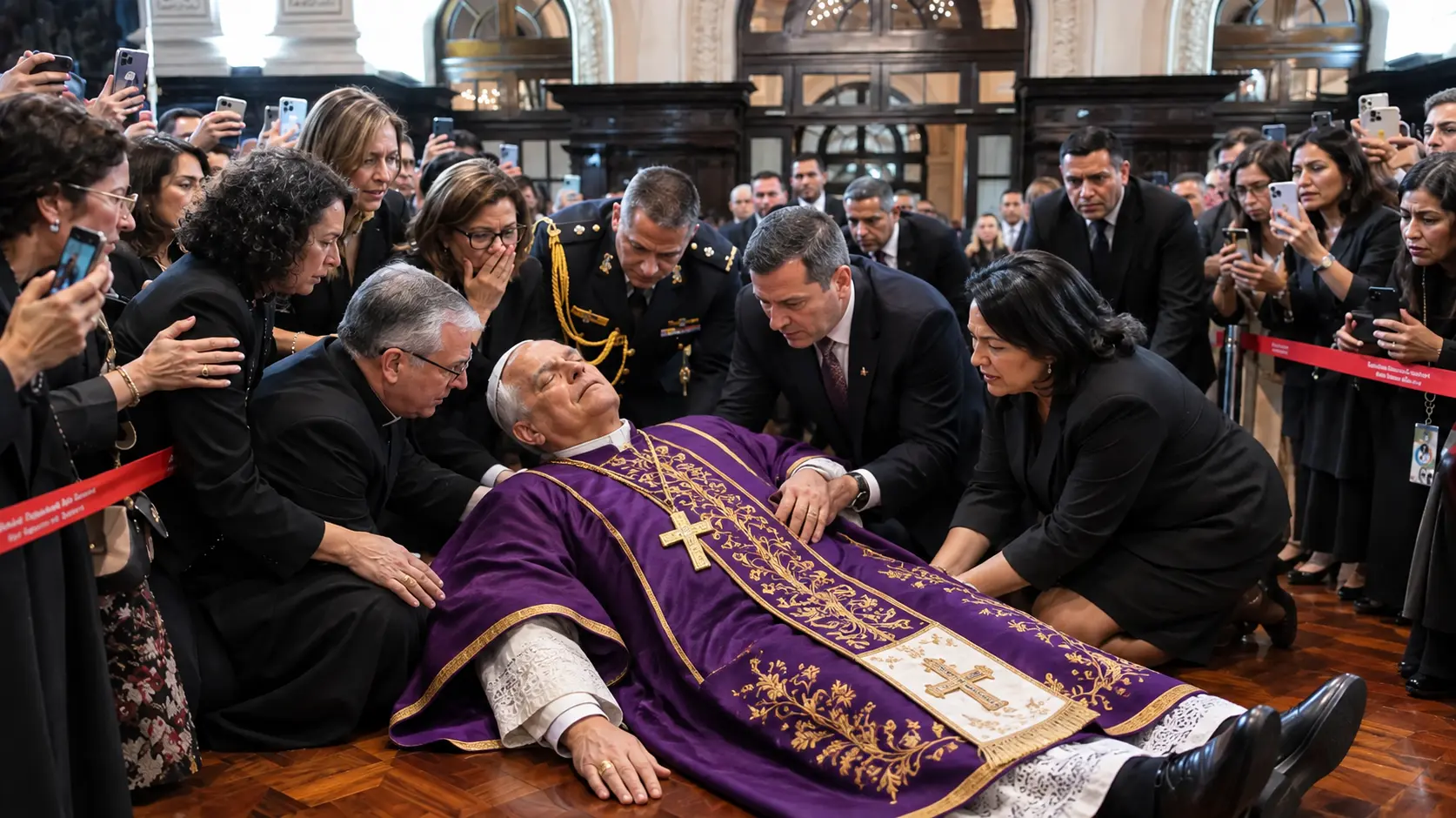
But in an imagined scenario unfolding during a public ceremony, the peaceful gathering suddenly takes an unexpected turn.
Pope Leo XIV, standing before thousands of worshippers, pauses during the event and quietly speaks to an aide.
Moments later, the fictional ceremony is briefly interrupted as Vatican staff members approach the pontiff.
The unexpected movement attracts attention.
Whispers spread through the crowd.
And as Pope Leo XIV is escorted away from the main ceremonial area, concern begins growing among those watching.
What follows is a fictional story about human vulnerability, compassion, and the power of prayer during moments of uncertainty.
🚨 THE MOMENT THE ATMOSPHERE CHANGES
The imagined morning begins beneath a bright Roman sky.
Thousands of pilgrims fill St. Peter's Square.
Families hold small flags.
Religious sisters stand together in prayer.
Visitors from different countries wait eagerly for the Pope's appearance.
When Pope Leo XIV arrives, applause rises across the square.
He greets the crowd and begins addressing those gathered.
For several minutes, everything proceeds normally.
Then, in the fictional scene, the pontiff pauses.
He turns toward an aide standing nearby.
The aide leans forward to listen.
A brief conversation follows.
Moments later, two Vatican staff members approach.
The Pope nods and slowly steps away from the microphone.
💔 THE CROWD'S EMOTIONAL REACTION
In the imagined narrative, many pilgrims initially assume that the ceremony is simply being adjusted.
But as the pontiff moves toward a nearby entrance, some attendees begin expressing concern.
An elderly woman standing near the front folds her hands.
“Please let him be all right,” she whispers.
A father lifts his young daughter onto his shoulders.
The child asks why the Pope is leaving.
Her father responds gently.
“Maybe he needs a little rest.”
Around them, people begin praying quietly.
The atmosphere shifts from celebration to concern.

🙏 THE VATICAN AIDES STEP FORWARD
In the fictional scenario, Vatican aides accompany Pope Leo XIV toward a private room.
A member of the medical staff is asked to check on his well-being.
The event organizers temporarily pause the ceremony.
There is no dramatic collapse.
No confirmed medical emergency.
And no verified ambulance intervention.
Instead, the imagined scene portrays a precautionary interruption prompted by the Pope's need for rest.
The distinction is important.
Leaving a ceremony early does not automatically establish a serious medical crisis.
Public figures may adjust schedules for many reasons, and medical conclusions should never be drawn from appearances alone.
❤️ THE FIRST MESSAGE TO THE PILGRIMS
Several minutes later, in the fictional story, a Vatican representative approaches the microphone.
The crowd becomes quiet.
“Your Holiness is resting and receiving appropriate attention.”
The representative pauses.
“We ask everyone to remain calm and to continue the spirit of prayer that has brought us together today.”
The announcement is fictional and does not represent an actual Vatican statement.
Within the imagined narrative, however, it helps reassure the gathering.
The pilgrims respond with quiet applause.
Some continue praying.
Others remain seated, waiting for further information.
😭 AN ELDERLY PILGRIM'S HEARTFELT PRAYER
Among the fictional visitors is an elderly woman named Maria.
She has traveled to Rome with her daughter.
For years, she dreamed of attending a papal audience.
When she sees the ceremony interrupted, she becomes emotional.
Her daughter gently takes her hand.
“Are you all right, Mama?”
Maria nods.
“I was just thinking about how much we ask of people who spend their lives serving others.”
She looks toward the basilica.
“Sometimes we forget they need care too.”
Her daughter embraces her.
The imagined exchange becomes a quiet reminder of the humanity behind positions of leadership.
✝️ THE RESPONSIBILITY OF SPIRITUAL LEADERSHIP
The Pope carries significant responsibilities within the Catholic Church.
His duties involve religious celebrations, meetings, pastoral messages, and engagement with communities around the world.
Public ceremonies can require considerable preparation.
International travel and demanding schedules can also place physical demands on any individual.
These realities make health and rest important considerations for leaders.
But they do not justify inventing medical diagnoses.
Responsible discussion of the Pope's well-being must distinguish official information from rumors.
The fictional scene uses an unexpected schedule interruption to explore the importance of compassion.
💔 THE PRIVATE MOMENT BEHIND CLOSED DOORS
In the imagined narrative, Pope Leo XIV sits in a quiet room overlooking part of the Vatican gardens.
A physician asks how he is feeling.
The Pope responds that he is tired and would appreciate a brief period of rest.
An aide brings him water.
For several moments, the room remains quiet.
Then the Pope looks toward the window.
“Are the people still waiting outside?”
The aide nods.
“Yes, Holy Father.”
The Pope smiles faintly.
“Please thank them for their patience.”
The fictional exchange reflects pastoral concern rather than any verified medical conversation.
🌹 THE MESSAGE THAT TOUCHES EVERYONE
In the imagined scene, the Pope asks an aide to share a short message with the pilgrims.
“Even when our strength feels limited, compassion can remain without limits.”
The words are fictional and are not an authenticated quotation from Pope Leo XIV.
Within the story, however, they become a message of reassurance.
Human strength changes from day to day.
People experience fatigue.
They encounter uncertainty.
And sometimes they must accept assistance from others.
But needing help does not diminish a person's dignity.
It is part of being human.
🌍 PRAYERS FROM AROUND THE WORLD
As the fictional ceremony concludes, visitors begin sharing messages of encouragement.
Some pray silently.
Others speak with family members.
A group of young pilgrims gathers near the square and offers a prayer for people experiencing illness.
Their concern extends beyond the Pope.
They remember relatives receiving treatment.
Friends recovering from surgery.
And strangers facing difficult medical circumstances.
The imagined gathering becomes an expression of solidarity.
Rather than focusing on speculation, the pilgrims turn their attention toward compassion.
❤️ THE IMPORTANCE OF VERIFIED HEALTH INFORMATION
Stories involving a religious leader's health can spread quickly.
A photograph may be taken out of context.
A routine schedule change may be described as an emergency.
And anonymous claims may circulate without reliable documentation.
Such reports can cause unnecessary anxiety.
They may also mislead people who are genuinely concerned.
Official Vatican communications and credible independent reporting are important sources when assessing claims about papal health.
Without confirmation, it is inappropriate to declare that the Pope is facing a new serious condition.
The fictional scenario presented here should not be mistaken for such confirmation.
😢 THE YOUNG BOY WHO ASKS A SIMPLE QUESTION
In the imagined story, a young boy named Luca stands with his grandfather near the edge of St. Peter's Square.
He has been waiting all morning to see the Pope.
When the ceremony ends early, Luca looks disappointed.
“Grandpa, why did he have to leave?”
His grandfather kneels beside him.
“Sometimes people need to rest.”
Luca thinks for a moment.
“Even the Pope?”
His grandfather smiles.
“Even the Pope.”
The boy looks toward the basilica.
“Then I hope he feels better.”
His grandfather gently places a hand on his shoulder.
“That's a very kind thing to wish.”
💞 THE LESSON ABOUT HUMAN VULNERABILITY
The imagined incident highlights a truth that applies to everyone.
People in positions of authority are still human.
They experience ordinary physical limitations.
They need sleep, rest, and appropriate care.
And they sometimes require support from those around them.
Public admiration should not create unrealistic expectations.
Leadership does not require someone to ignore their well-being.
In fact, recognizing personal limits can be an important part of responsible service.
The fictional ceremony interruption invites readers to consider this perspective.
🕊️ THE QUIET RETURN OF CALM
Later in the imagined afternoon, Vatican staff members confirm to the fictional event organizers that the Pope is resting.
No further public appearance is scheduled that day in the story.
Pilgrims begin leaving the square.
The atmosphere is peaceful.
Some stop to light candles.
Others take photographs of St. Peter's Basilica.
Maria and her daughter remain for a few minutes.
They sit together quietly.
Maria looks toward the basilica.
“I'm grateful we came.”
Her daughter smiles.
“Even though the ceremony ended early?”
Maria nods.
“Yes.”
Then she adds:
“Sometimes the unexpected moments teach us the most.”
💔 THE MESSAGE FOR FAMILIES FACING ILLNESS
For people caring for sick relatives, the fictional story may feel familiar.
An unexpected change in plans can create anxiety.
Waiting for medical information can be difficult.
And uncertainty may leave families feeling powerless.
During such moments, compassionate support matters.
Listening can help.
Offering practical assistance can make daily responsibilities easier.
And respecting medical privacy can protect a person's dignity.
The story's broader message is not about predicting illness.
It is about responding to vulnerability with kindness.
✝️ FAITH DURING UNCERTAIN MOMENTS
For many Catholics, prayer offers a way to express hope and concern.
It can provide comfort during difficult circumstances.
It can also bring communities together.
But faith and factual accuracy should complement one another.
Prayers for someone's well-being do not require inventing a medical emergency.
And compassion should not depend on sensational headlines.
The imagined pilgrims in St. Peter's Square demonstrate that people can respond with kindness even when they do not know every detail.
🌹 THE FINAL MESSAGE FROM THE IMAGINED VATICAN SCENE
As evening approaches, the fictional Vatican gardens become quiet.
Pope Leo XIV is portrayed resting after the interrupted ceremony.
An aide enters the room.
“Holy Father, many people have sent messages of encouragement.”
The Pope smiles.
“Please thank them.”
The aide nods.
“Of course.”
The Pope pauses.
“And remind them to pray for everyone who is suffering.”
The imagined conversation ends with a message that extends beyond the Vatican.
Concern for one person can become an opportunity to remember many others.
❤️ THE FINAL REFLECTION
In this fictional scenario, Pope Leo XIV's unexpected departure from a public ceremony causes concern among thousands of pilgrims.
But the story does not establish that he suffered a serious medical emergency.
It does not reveal a verified new diagnosis.
And it does not represent an actual Vatican health announcement.
Instead, it explores how a community might respond when a respected spiritual leader needs rest and support.
Faith does not eliminate human vulnerability.
Leadership does not remove the need for care.
And compassion does not require certainty about every circumstance.
Sometimes the most meaningful response to an unexpected moment is simply to show kindness.
To respect privacy.
To avoid spreading rumors.
And to remember everyone who is facing illness, uncertainty, or recovery.
The most powerful expression of faith may not be found in dramatic headlines, but in the quiet decision to care for one another when life becomes difficult. 🙏❤️✝️
💬 What message of hope and encouragement would you like to share with Pope Leo XIV and everyone experiencing health challenges?
👇 FULL STORY IN THE FIRST COMMENT!
#PopeLeoXIV #PopeLeo #VaticanCity #StPetersSquare #CatholicChurch #HolyFather #VaticanNews #CatholicFaith #PrayersForThePope #FaithAndHope #ChristianCommunity #PowerOfPrayer #SpiritualLeadership #HopeAndHealing #CatholicWorld #CompassionAndFaith