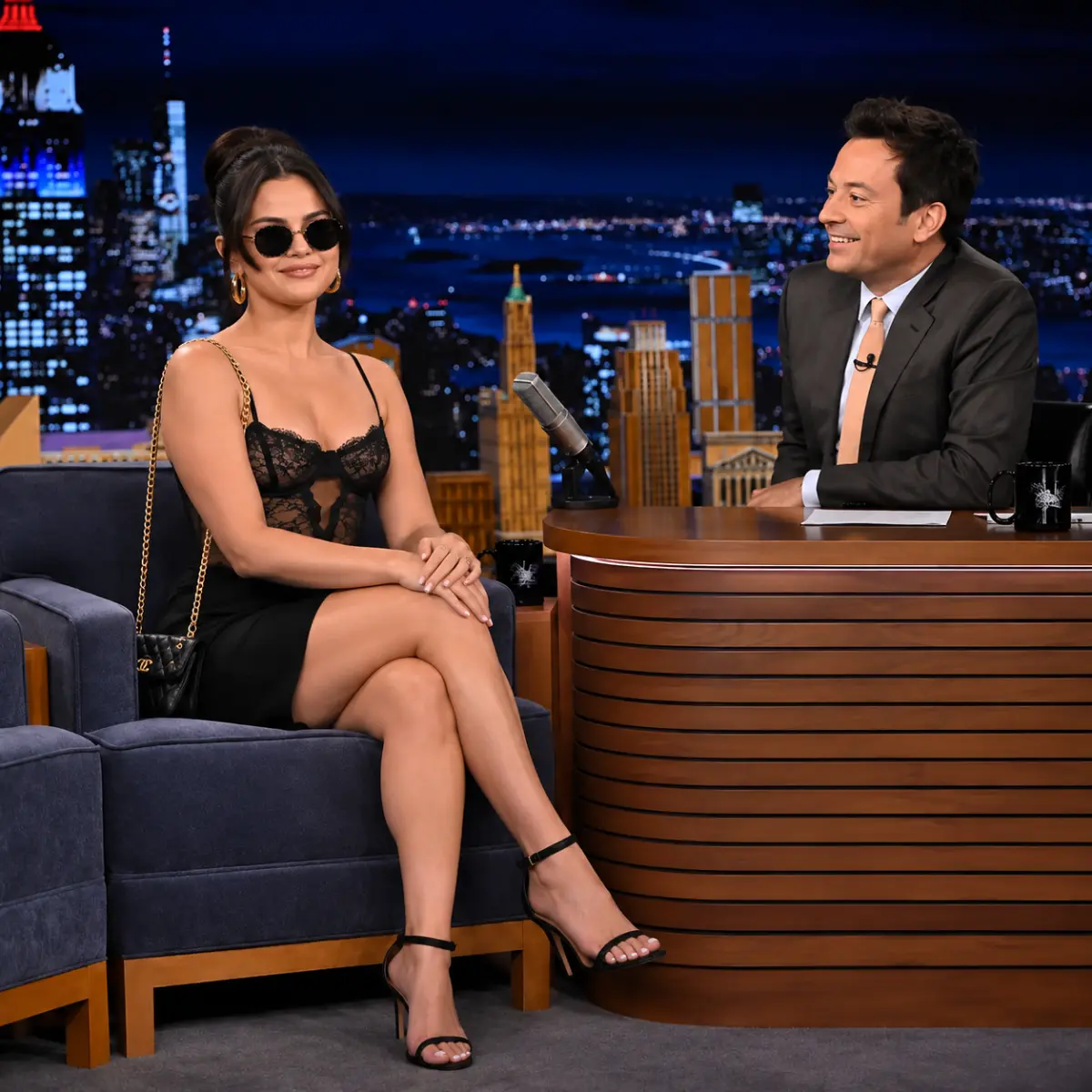
NEW YORK — What was supposed to be a relaxed television appearance featuring global entertainment superstar Selena Gomez took a breathtaking turn when a seemingly ordinary question about the 2026 United States midterm elections triggered an increasingly uncomfortable confrontation. In this dramatized scenario, the singer and actress arrived at the studio expecting to discuss her career, her creative projects, and the personal values that had shaped her public life. Instead, she found herself at the center of a debate that would end with an empty chair, a stunned television host, and a question that nobody seemed prepared to answer.
The atmosphere initially appeared welcoming as Gomez entered the brightly illuminated studio, greeted the audience, and settled into her seat opposite the presenter. The opening conversation focused on her evolution from a young television performer into an internationally recognized artist, actress, and entrepreneur. Viewers were treated to moments of humor and thoughtful reflection, creating the impression that the interview would follow the familiar pattern of a celebrity appearance designed to entertain and inspire.
However, the mood began changing when the host introduced the subject of political influence and the role celebrities play during American elections. The presenter suggested that some entertainment personalities might exploit politically charged moments to strengthen their public image, attract attention, or remain relevant in a fiercely competitive industry. Although the question was initially presented as a broader observation about Hollywood, the host's increasingly pointed language made it difficult for Gomez to avoid interpreting the challenge personally.

For a moment, the singer appeared surprised by the sudden change in direction, but she maintained her composure and listened carefully as the presenter continued. The host asked whether celebrities who encouraged political participation were genuinely motivated by civic responsibility or simply understood that controversial opinions could generate enormous publicity. Gomez's expression became noticeably more serious, and the audience sensed that the interview was approaching an uncomfortable turning point.
In the imagined conversation, Gomez responded by challenging the idea that public figures should automatically be viewed with suspicion whenever they discuss important social questions. She emphasized that entertainers are also citizens with personal experiences, families, and concerns about the communities around them. Being famous, she argued, should neither grant someone unquestionable authority nor strip away their right to participate in meaningful conversations about the future.
The presenter pushed back, suggesting that a celebrity's enormous online following could create an imbalance between famous voices and ordinary people struggling to be heard. This introduced a more complicated dimension to the discussion because it raised questions about responsibility, influence, and the potential consequences of political messaging. Gomez acknowledged that influential people should consider the impact of their words, but she rejected the suggestion that visibility alone made their intentions dishonest.
As the exchange continued, the studio audience grew increasingly quiet, sensing that the conversation had moved far beyond a routine promotional interview. The host appeared determined to secure a direct admission that political involvement could benefit a celebrity's reputation, while Gomez seemed frustrated by the repeated implication that public advocacy was necessarily motivated by personal ambition. Their disagreement was no longer simply about elections, but about whether sincerity could be judged fairly from the outside.
Then the presenter introduced a question that dramatically intensified the tension. Would Gomez be willing to admit, the host asked, that some celebrities spoke about politics primarily because controversy helped keep their names in the headlines? The singer paused before answering, apparently recognizing that the question could not be addressed with a simple yes or no without oversimplifying a complicated issue.
Gomez explained that celebrity activism, like any other form of public engagement, could involve a mixture of motivations, and that individuals should be evaluated according to their actions rather than assumptions about their character. She suggested that encouraging people to educate themselves about elections was different from attempting to control their political choices. The distinction seemed important to her because it allowed room for civic participation without treating entertainers as unquestionable political authorities.
But the host interrupted before she could fully develop her response, asking whether celebrities should sometimes step aside and allow political experts to dominate these discussions. The question drew a visible reaction from Gomez, who appeared increasingly dissatisfied with the direction of the interview. She argued that expert knowledge deserved respect, but that the existence of experts did not mean ordinary citizens, including artists, had to abandon their own voices.
The audience reacted with a mixture of applause and uncertainty, and the host attempted to regain control of the conversation by returning to the issue of publicity. Gomez, however, had begun questioning the purpose of the exchange itself, wondering whether the presenter genuinely wanted to explore the responsibilities of public figures or simply provoke a confrontation that could generate attention after the broadcast.
The tension reached its peak when the host suggested that a celebrity who entered political debates should be prepared to answer uncomfortable questions without complaint. Gomez acknowledged that public scrutiny was a natural consequence of influence, but she also insisted that scrutiny and personal insinuation were not interchangeable. The exchange had become increasingly circular, with both participants defending principles they believed were being misunderstood.
Then, without warning, the entire atmosphere shifted.
In the imagined scene, Gomez slowly leaned back in her chair, took a brief moment to collect herself, and began removing the small microphone attached to her clothing. The host stopped speaking as she placed the device carefully on the table, apparently uncertain whether the gesture signaled a temporary pause or the end of the conversation. Several audience members exchanged surprised glances as Gomez stood up and looked toward the presenter.

Rather than delivering an angry outburst, she calmly explained that she believed meaningful discussions required mutual respect, patience, and a willingness to listen. She indicated that she had come prepared to answer difficult questions but no longer felt that the conversation was progressing toward greater understanding. With that, she thanked the audience and turned toward the studio exit while the cameras continued recording.
The host remained seated, momentarily struggling to decide whether to address the departing guest or turn directly toward the audience. The production crew continued filming as Gomez walked away from the interview area, leaving behind a scene that contrasted sharply with the cheerful atmosphere at the beginning of the broadcast. What had started as an ordinary celebrity appearance had become a striking illustration of the pressures surrounding political conversations in contemporary entertainment.
The imagined aftermath was equally complicated because the walkout could be interpreted in several ways. Some observers might regard Gomez's decision as an example of setting personal boundaries during an increasingly confrontational interview. Others might argue that remaining seated and answering difficult questions is part of the responsibility that accompanies a powerful public platform, particularly when political issues are involved.
Yet the deeper significance of the scene extended beyond the singer's departure. It raised the question of whether celebrity influence can coexist with thoughtful political discussion, and whether television interviews sometimes prioritize dramatic confrontation over genuine understanding. Those concerns are especially relevant in an environment where short video clips can circulate without the surrounding context that gives conversations their full meaning.
The final image was remarkably simple: an empty chair, a silent audience, and a host facing the consequences of a discussion that had moved beyond anyone's expectations. No dramatic music was necessary, and no elaborate announcement could resolve the disagreement that remained suspended in the studio air. The most powerful moment was not the act of leaving, but the uncomfortable silence that followed.
And perhaps that was the unexpected lesson at the heart of the story. In a world where public conversations are increasingly measured by their ability to provoke reactions, the greatest challenge may not be finding the courage to speak or walk away, but discovering how to disagree without making meaningful dialogue impossible.
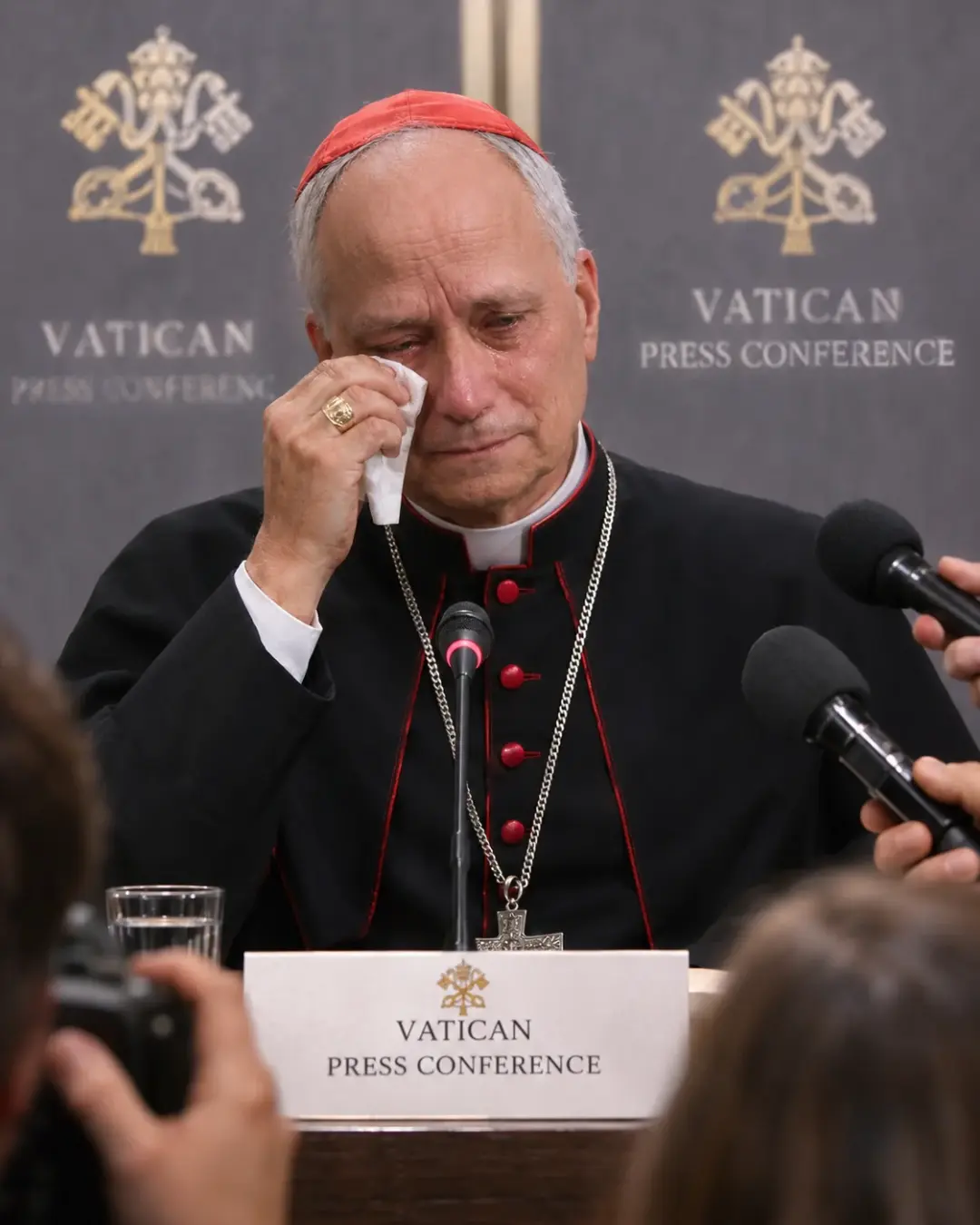
 The pope's willingness to speak openly about his recovery also carried a broader message about vulnerability. Public figures are frequently expected to project unwavering strength, especially when they occupy positions associated with spiritual authority. Yet acknowledging a difficult experience can create a different form of connection with people who are facing illness, uncertainty, or personal hardship.
