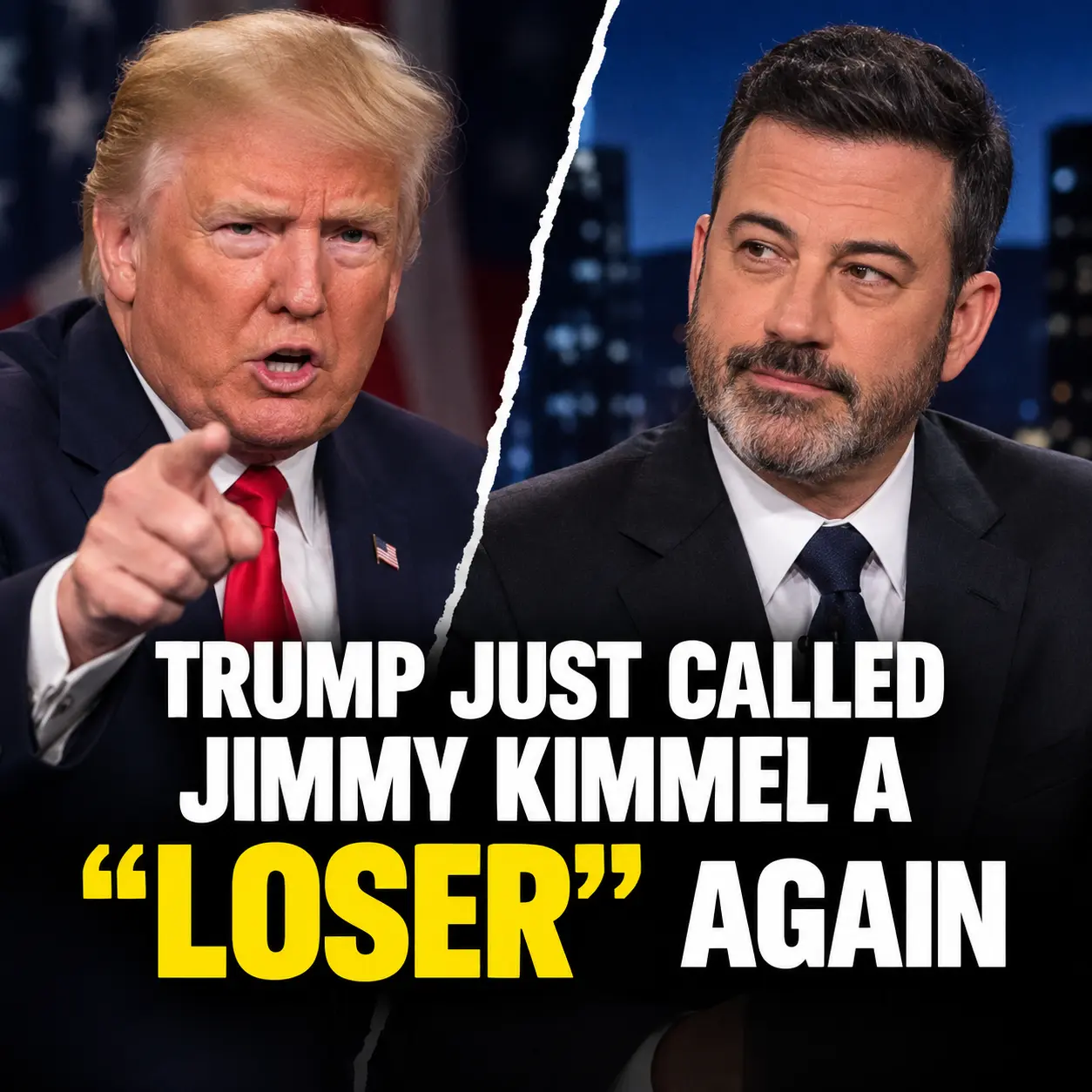
🚨 TRUMP CALLS JIMMY KIMMEL A “LOSER” AGAIN — AND THE LATE-NIGHT FEUD IS HEATING UP AS STEPHEN COLBERT’S ABSENCE LOOMS LARGE
Donald Trump has reignited his feud with Jimmy Kimmel, turning another political rally into a fresh confrontation between the president and late-night television.
During a rally in Clarksville, Tennessee, Trump took aim at Kimmel, calling the ABC host a “loser” after taking issue with Kimmel’s comments about attendance at Trump’s rallies. Kimmel responded on Jimmy Kimmel Live!, pushing back against the president’s criticism and bringing the dispute back to television.
The exchange is the latest chapter in a long-running conflict between Trump and late-night comedians — one that has become increasingly difficult to separate from the broader debate over political satire, media criticism, and the relationship between public officials and the press.
According to CinemaBlend, Trump was particularly unhappy with Kimmel’s remarks about apparently empty seats at one of his events. Trump disputed the impression created by those images, arguing that attendees had moved toward the front rather than leaving the venue empty.
Kimmel, in turn, used his monologue to revisit the disagreement and showed an image of the rally as part of his response.
The familiar pattern was back: Trump criticized the comedian, and the comedian turned the criticism into material for his show.
But this time, there is another reason the dispute is attracting attention. Stephen Colbert, one of Trump’s most persistent late-night critics, is no longer hosting The Late Show.
For years, Colbert built a significant part of his television identity around political satire. His monologues regularly examined Trump’s statements, administration decisions, and public disputes with journalists and entertainers. His program ended in May 2026 after 11 seasons, leaving audiences to watch the continuing Trump–late-night conflict play out without Colbert’s nightly commentary.
That does not mean Colbert has weighed in on this latest exchange. There is no confirmed statement from him about Trump’s most recent attack on Kimmel. But the incident illustrates how much political conflict continues to provide material for the late-night format even after one of its most prominent hosts has departed.
The stakes are not limited to whether a joke lands or whether a politician gets the last word. Late-night comedy occupies an unusual place in American media: it is entertainment, but it also shapes how some viewers encounter political news. A monologue can introduce an issue to an audience that might never watch a full press conference or read a lengthy policy report.
That influence is precisely why these exchanges generate such strong reactions.
Supporters of hosts like Kimmel argue that public officials should expect scrutiny and that comedians have a legitimate role in challenging powerful figures. Critics counter that late-night programs can become partisan echo chambers, reinforcing the views of audiences who already agree with the host.
The latest Trump–Kimmel dispute fits into that wider disagreement. For some viewers, Kimmel’s response is an example of a comedian refusing to back down after being attacked. For others, the exchange is another reminder of how closely late-night entertainment has become tied to political conflict.
There is also a practical difference between a rally and a television monologue. A rally is designed to energize supporters, while a late-night show is built around humor, commentary, and audience reaction. When the two collide, a brief insult can become a headline, a punchline, and a new round of online debate within hours.
Trump has previously criticized Colbert and other late-night hosts, including Jimmy Fallon and Seth Meyers. After CBS announced Colbert’s cancellation, Trump publicly celebrated the decision and predicted that other hosts would eventually leave as well. Those comments intensified discussion about the future of late-night television, although CBS maintained that its decision to end The Late Show was financial.
Kimmel’s latest exchange with Trump does not establish what will happen to the future of his own program. Nor does it prove that the president’s criticism will have any particular effect on the show’s audience or network decisions.
What it does demonstrate is that the relationship between Trump and late-night television remains a recurring source of headlines — even as the lineup of hosts changes.
And with the 2026 midterm elections approaching, political speeches and television monologues are likely to keep intersecting. Campaign events generate material for comedians, while jokes and criticism often become part of the next day’s political conversation.
For Colbert’s former viewers, the question may be whether anyone else can fill the particular role he played in that conversation. For Kimmel’s audience, the immediate question is simpler: how will he respond the next time Trump brings him up?
What do you think? Should late-night hosts keep challenging Trump on television, or has the political feud become too much of the entertainment?