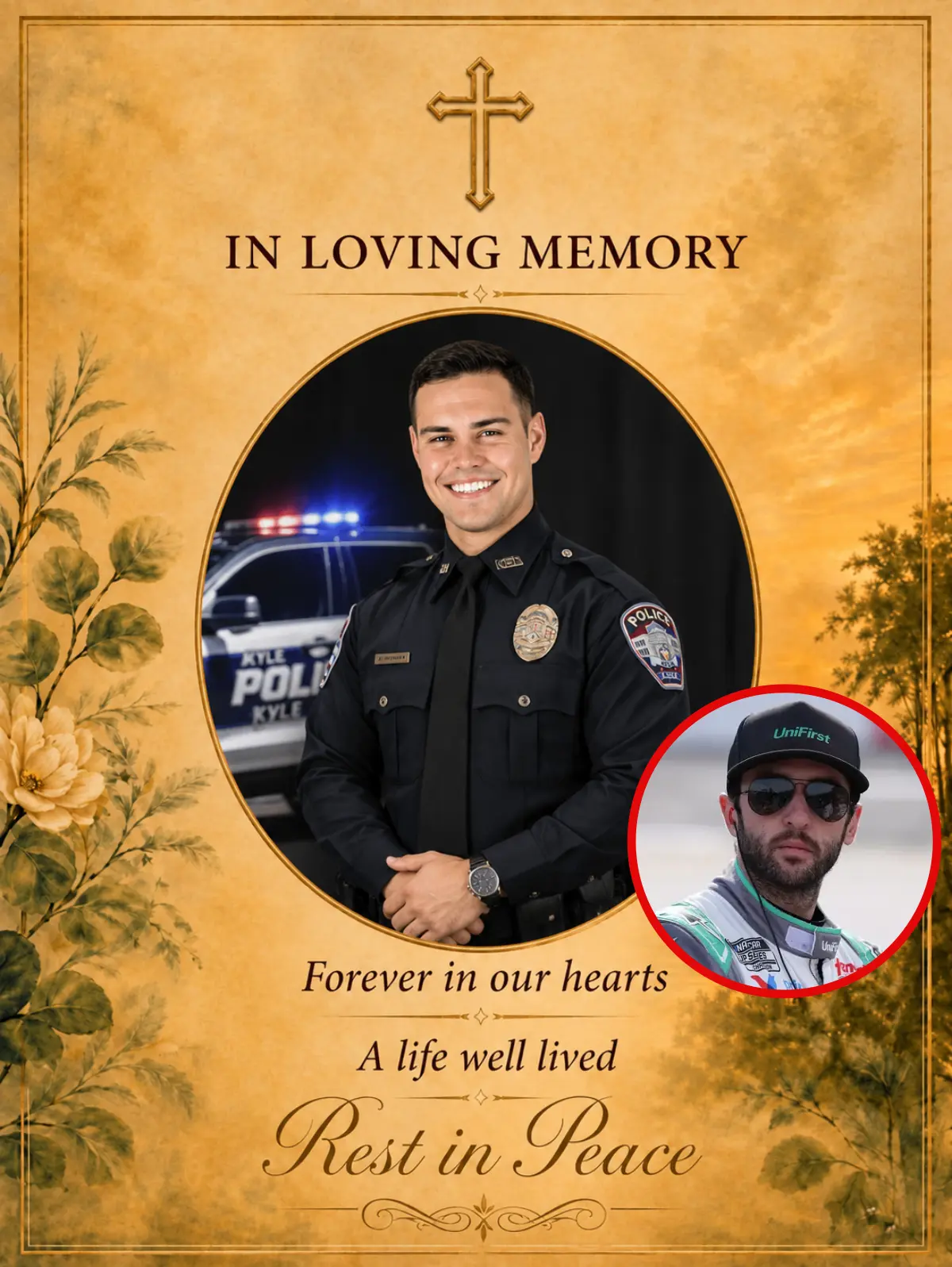
💔🚨 TRAGIC NEWS: THE NASCAR COMMUNITY IS HEARTBROKEN BY REPORTS OF A DEVASTATING LOSS INVOLVING OFFICER AUSTIN BRENNAN, A DEDICATED NASCAR FAN. 🏁😭
A deeply emotional story circulating online has drawn attention to Officer Austin Brennan, a man described in social media posts as both a dedicated law enforcement officer and a passionate NASCAR supporter. The claims have raised troubling questions about a reported family tragedy, prompting concern for his wife, young child, and loved ones.
However, an important question remains unanswered: What actually happened to Officer Austin Brennan, and which details of the circulating story can be independently confirmed?
At present, the reported loss and the circumstances surrounding it have not been established through verified information available for this article. No official statement, confirmed incident report, or independently authenticated family announcement has been provided to substantiate the claims.
That uncertainty is especially important when a story involves a real person and potentially devastating consequences for a family.
For many NASCAR supporters, stories involving military personnel, first responders, and community service carry particular emotional significance.
The sport has long celebrated values such as loyalty, perseverance, family, and respect for those who serve their communities. From patriotic ceremonies before major races to charitable initiatives supporting veterans and first responders, these traditions have helped create a strong connection between motorsports and public service.
It is within that broader cultural context that the story involving Officer Brennan has attracted attention.
Social media posts describe him as a devoted NASCAR fan whose enthusiasm for racing was part of his personal identity. Yet without independent confirmation, those descriptions should be treated as claims rather than established biographical facts.
The same caution applies to reports concerning his family.
Some circulating accounts have emphasized the emotional impact that a possible tragedy could have on a spouse and young child. Such details naturally evoke sympathy, particularly among readers who understand the sacrifices often associated with law enforcement careers.
But sympathy should not be confused with confirmation.
A family's privacy matters most when public attention is growing and reliable information remains limited.
For anyone who has experienced an unexpected family emergency, the period immediately afterward can be extraordinarily difficult.
Loved ones may be struggling to understand what happened, communicate with relatives, or make important personal decisions.
During such moments, speculation can create additional emotional pressure.
Even well-intentioned messages may become overwhelming when they repeat claims that have not been verified.
That is why responsible reporting requires a careful distinction between confirmed facts, public reaction, and unanswered questions.
In Officer Brennan's case, the available narrative does not establish the nature of the alleged incident, when it occurred, or whether the reported loss took place at all.
Without those details, it would be inappropriate to describe a death, accident, medical emergency, or other tragedy as fact.
Nevertheless, the attention surrounding the story highlights something meaningful about the NASCAR community.
Racing fans often describe their connection to the sport as extending far beyond competition.
For many families, NASCAR is a tradition passed from one generation to another.
Parents introduce their children to favorite drivers. Families gather around televisions on race weekends. Friends travel together to racetracks, creating memories that can last a lifetime.
The familiar sound of engines, the anticipation of the green flag, and the excitement of a close finish become part of shared family experiences.
That sense of belonging can make stories involving fellow fans particularly emotional.
When someone connected to the racing community is believed to be experiencing hardship, other supporters may feel compelled to offer encouragement.
The instinct to help is understandable.
But meaningful support also requires sensitivity.
Before sharing a dramatic headline, readers should consider whether the information comes from a trustworthy source.
Before posting photographs of relatives, they should consider whether those images were released with permission.
And before repeating claims about a person's death or family circumstances, they should look for confirmation from appropriate authorities, credible news organizations, or authorized family representatives.
These precautions are not obstacles to compassion.
They are ways of protecting the very people that compassionate messages are intended to support.
For the NASCAR community, respect has always been an important part of the sport's identity.
Drivers compete fiercely on the track, yet moments of hardship often remind fans that human connections matter more than finishing positions or championship standings.
The same principle applies to stories involving people outside the racing industry.
Whether someone is a professional driver, a track employee, a police officer, or simply a lifelong supporter, their dignity should not depend on public attention.
If the reported circumstances involving Officer Brennan are eventually confirmed, the focus should remain on accurate information, the wishes of those closest to him, and any legitimate opportunities to provide assistance.
Until then, speculation should not be presented as a memorial or an established account of tragedy.
There are also practical ways for communities to express support without amplifying uncertainty.
People can recognize the demanding work performed by first responders, support established organizations assisting law enforcement families, and offer kindness to those facing genuine hardship.
Such actions do not require dramatic claims or sensational details.
They require empathy and responsibility.
As discussion surrounding Officer Austin Brennan continues, the central issue remains the need for reliable answers.
Was an incident officially documented? Has a credible source confirmed the circumstances? Have authorized representatives released information that can responsibly be shared?
Those questions deserve answers before any definitive conclusion is published.
For now, the story serves as a reminder that behind every viral headline is a real person whose reputation, privacy, and family relationships deserve protection.
The NASCAR community's greatest strength is not simply its passion for racing. It is the willingness of people to stand together when genuine hardship occurs.
And sometimes, the most respectful expression of that solidarity is to wait for the truth before sharing a heartbreaking claim.
💔🚨 TRAGIC NEWS: THE NASCAR COMMUNITY IS HEARTBROKEN BY REPORTS OF A DEVASTATING LOSS INVOLVING OFFICER AUSTIN BRENNAN, A DEDICATED NASCAR FAN. 🏁😭
An emotional story circulating online has sparked concern and sympathy for Officer Austin Brennan and his family. The reports have prompted messages of love, prayers, and support, with particular concern for his wife and young child. As NASCAR fans reflect on the importance of family, service, and community, many are seeking answers about what truly happened. ❤️🙏
DISCLAIMER: The reported tragedy involving Officer Austin Brennan has not been independently verified for this article. No death, accident, family loss, or specific incident is being confirmed. The descriptions circulating online should not be treated as established facts without reliable supporting evidence.