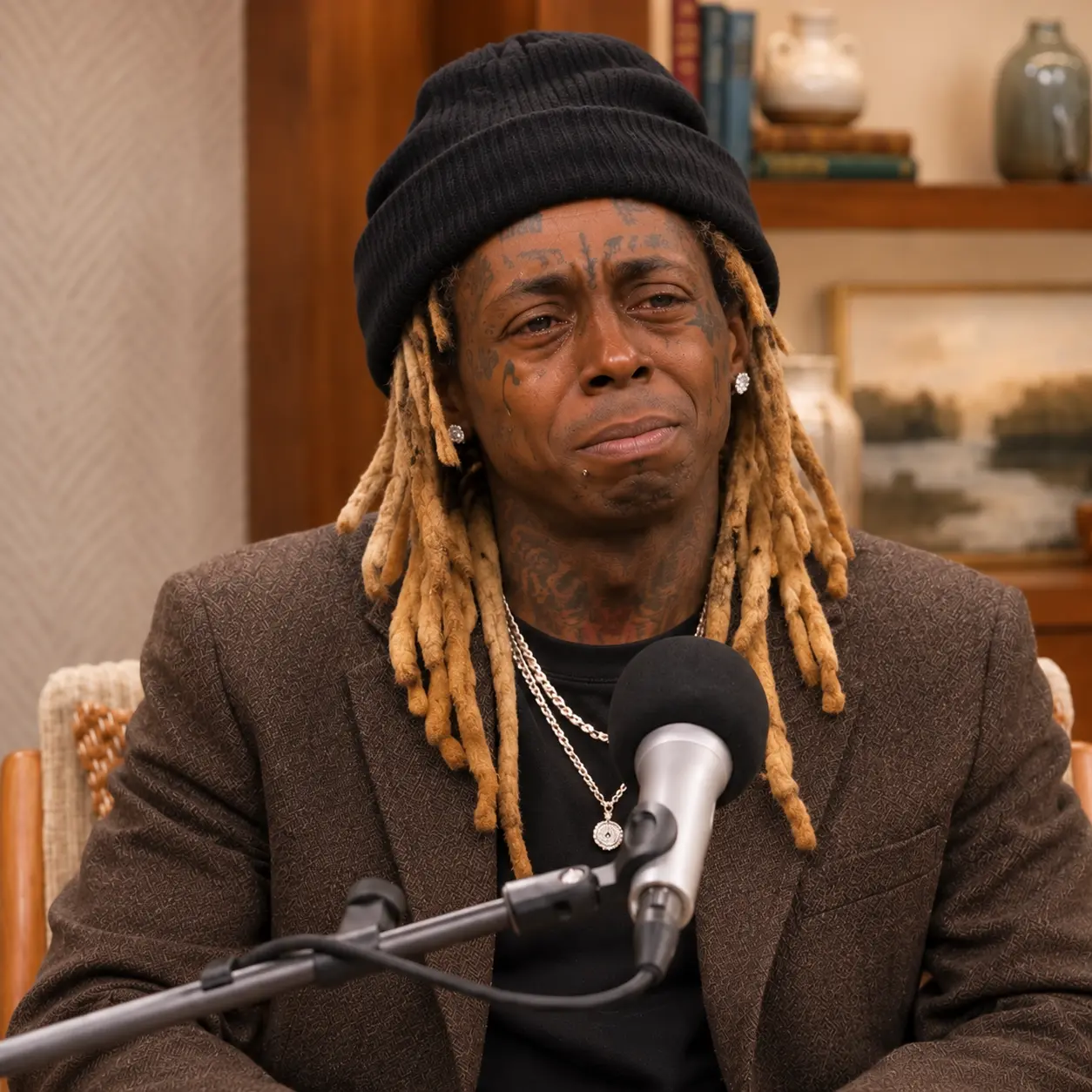
💔 TEARS BEHIND THE SPOTLIGHT: LIL WAYNE'S NEXT CHAPTER HAS FANS TALKING — HIS LEGENDARY MUSIC LEGACY, ICONIC STYLE AND INFLUENCE ON HIP-HOP ARE BACK IN THE SPOTLIGHT!
For more than two decades, Lil Wayne has remained one of the most recognizable and influential figures in hip-hop. From his early beginnings in New Orleans to becoming a Grammy-winning superstar, the rapper has built a career that extends far beyond music. His unmistakable voice, unpredictable fashion choices, business ventures, and ability to influence an entire generation have made him a cultural figure whose impact continues to be felt.
But behind the tattoos, platinum records, sold-out performances, and larger-than-life personality is a story of ambition, reinvention, and an unusually long journey in an industry that constantly searches for its next superstar.
As fans continue to celebrate his music and follow his latest projects, Lil Wayne's legacy is once again attracting attention. And with his Tha Carter series continuing to define an important part of his career, there is still plenty to discuss about the man known around the world as Weezy.
Born Dwayne Michael Carter Jr. on September 27, 1982, in New Orleans, Louisiana, Lil Wayne began pursuing music at an exceptionally young age.
His early talent brought him into contact with Cash Money Records, where he eventually became part of the Hot Boys alongside Juvenile, B.G., and Turk.
The group helped introduce a distinctive New Orleans sound to a wider audience. Their success gave Wayne an early platform, but it was his solo career that would ultimately establish him as one of hip-hop's defining artists.
In 1999, he released his debut solo album, Tha Block Is Hot. The project achieved major commercial success and introduced audiences to a young rapper whose technical ability and distinctive delivery were already attracting attention.
Rather than remaining a promising teenage performer, Wayne continued developing his sound, experimenting with lyrics, flows, and musical production.
His early years were marked by an extraordinary work ethic. Mixtapes, collaborations, studio sessions, and album releases helped him build a reputation for being almost constantly active.
That willingness to create music at such a relentless pace would eventually become one of the defining characteristics of his career.
THE CARTER SERIES: THE PROJECTS THAT DEFINED AN ERA
Few album series in hip-hop have become as closely associated with an artist as Tha Carter has with Lil Wayne.
The first installment arrived in 2004, establishing a new chapter in his solo career. Subsequent releases helped transform Wayne from a successful rapper into a major force in mainstream music.
Tha Carter III, released in 2008, became a defining moment.
Featuring songs such as "A Milli," "Lollipop," and "Got Money," the album achieved enormous commercial success and earned Wayne multiple Grammy Awards, including Best Rap Album.
Its influence extended beyond sales and awards. The project demonstrated how Wayne could move between different musical styles while maintaining a recognizable identity.
Tha Carter IV followed in 2011, continuing his commercial momentum. After years of anticipation and delays, Tha Carter V finally arrived in 2018, giving fans another major installment in one of hip-hop's most recognizable album franchises.
Then came Tha Carter VI in 2025, extending a musical journey that had begun more than two decades earlier.
The series is more than a collection of albums. It represents different stages of Wayne's life, artistic development, and relationship with hip-hop.
In 2026, his 20th-anniversary touring celebration of the Carter legacy was extended with additional North American dates, demonstrating the continuing demand for the music that helped define his career.
YOUNG MONEY: THE BUSINESS DECISION THAT CHANGED HIP-HOP
Lil Wayne's influence cannot be measured solely through his own discography.
One of his most important contributions to the music industry was the establishment of Young Money Entertainment in 2005.
The label became a platform for developing emerging talent and eventually helped introduce some of the biggest names in contemporary music to mainstream audiences.
Among its most recognizable success stories are Drake and Nicki Minaj.
Both artists went on to build enormously successful careers, becoming global stars in their own right.
Young Money helped create a cultural moment in which Wayne was not simply competing with other rappers. He was also helping shape the next generation of hip-hop.
That distinction is important.
Many artists achieve commercial success, but relatively few establish a platform that contributes to the careers of other major performers. Wayne's role in Young Money added another dimension to his legacy: that of a mentor, executive, and influential figure behind the scenes.
The label became part of a larger movement that helped shape mainstream hip-hop throughout the late 2000s and 2010s.
A FASHION IDENTITY THAT NEVER FOLLOWED THE RULES
Lil Wayne's impact also extends into fashion.
Throughout his career, he has consistently challenged conventional expectations of how a male rap superstar should dress.
From oversized T-shirts and streetwear during his early years to bold patterns, colorful accessories, designer clothing, and skate-inspired outfits, Wayne has developed a visual identity that is difficult to confuse with anyone else's.
His style has never been built around one consistent aesthetic.
Instead, it has evolved alongside his music, reflecting different periods of experimentation and personal expression.
In 2012, he launched TRUKFIT, a clothing line influenced by skateboarding and streetwear culture.
The brand reflected Wayne's interest in skateboarding and his desire to bring elements of that lifestyle into fashion.
His relationship with skate culture also became part of his public identity. He was not simply wearing skate-inspired clothing as a temporary trend; he developed a genuine interest in the sport and incorporated it into his broader creative world.
His fashion choices have sometimes divided audiences, but that unpredictability is part of what makes his style recognizable.
Wayne has rarely appeared interested in dressing according to traditional celebrity expectations.
For him, personal expression has often mattered more than following trends.
THE ARTIST WHO HELPED CHANGE THE SOUND OF MODERN RAP
Lil Wayne's influence on hip-hop is particularly evident in the artists who followed him.
His approach to vocal delivery, wordplay, punchlines, metaphors, and melodic experimentation helped establish techniques that became widely influential throughout the genre.
His mixtape era was especially important.
Projects such as Dedication 2, Da Drought 3, and No Ceilings demonstrated his ability to reinterpret existing instrumentals and transform them through unexpected flows and lyrics.
These releases also helped establish the modern mixtape as a powerful tool for artists to build audiences outside traditional album cycles.
Wayne's willingness to release large volumes of music gave fans constant access to new material and helped create an environment in which creativity was not limited by conventional commercial schedules.
His influence can be heard across multiple generations of rappers.
Some adopted elements of his melodic approach. Others drew inspiration from his punchline-heavy writing or his willingness to experiment with vocal delivery.
Even artists with very different musical identities have acknowledged the importance of his contributions.
That influence is one reason his name continues to appear in discussions about the greatest rappers of all time.
BEYOND MUSIC: THE BUSINESSMAN AND ENTREPRENEUR
As his career developed, Wayne explored opportunities outside recording and performing.
His ventures have included fashion, sports-related business interests, publishing, and brand partnerships.
He also established the One Family Foundation, reflecting an interest in charitable and community-focused work.
His career demonstrates how modern music artists can expand their influence beyond the recording studio.
However, Wayne's business journey has not been without challenges. His long-running dispute with Cash Money Records over contractual and financial matters became one of the most widely discussed conflicts in his career.
The disagreement delayed the release of Tha Carter V and created uncertainty around his professional future for years.
The eventual release of the album in 2018 marked an important moment for both Wayne and his fans.
It also illustrated the difficulties artists can face when creative control, ownership, and business relationships become complicated.
Despite those obstacles, Wayne continued working and releasing music.
THE MAN BEHIND THE WEEZY PERSONA
Public attention often focuses on Lil Wayne's tattoos, performances, fashion choices, and larger-than-life personality.
But his career also includes personal experiences that have shaped the way he approaches music and life.
He has spoken publicly about the importance of his family, his New Orleans upbringing, and the experiences that influenced his development as an artist.
His life has not been free from controversy or difficult moments.
Yet his willingness to continue creating music, performing, and exploring new opportunities has remained a consistent part of his public story.
For longtime fans, this is part of what makes Wayne's career so compelling.
They have watched him grow from a young performer into an established industry figure, while his music has accompanied different stages of their own lives.
The relationship between an artist and an audience can change over time, but Wayne's extensive catalog has allowed multiple generations of listeners to discover his work.
WHAT COMES NEXT FOR LIL WAYNE?
At this stage of his career, Lil Wayne occupies a position that few artists achieve.
He has an extensive catalog, a recognizable musical identity, a record label associated with major stars, and a legacy that continues to influence younger performers.
His 2026 touring activity demonstrates that the Tha Carter era remains an important part of his connection with audiences.
Recent conversations about his recording habits and creative process have also reminded fans that his relationship with music remains a major part of his identity.
Whether through new recordings, live performances, collaborations, or business projects, Wayne continues to find ways to remain involved in the culture he helped shape.
There is no need to assume that a specific new project is imminent to understand why fans remain interested in his next move.
His career has already demonstrated that he is capable of changing direction without abandoning the creative identity that made him famous.
A LEGACY THAT GOES FAR BEYOND THE MUSIC
Lil Wayne's story is not simply about chart positions, awards, platinum records, or sold-out tours.
It is about an artist who entered the industry at a young age and spent decades building a distinctive place within hip-hop.
From the Hot Boys to Tha Carter, from Young Money to his fashion ventures, Wayne has repeatedly expanded what it means to be a rap superstar.
His influence can be found in the music of artists who came after him, the fashion choices that challenged traditional expectations, and the business opportunities he helped create for others.
For fans who have followed him since the beginning, his journey represents more than nostalgia. It is a reminder of how much hip-hop has changed and how significantly one artist can contribute to that evolution.
And as Lil Wayne continues moving forward, one question remains at the center of the conversation:
After more than two decades of changing hip-hop, has Weezy already delivered his greatest chapter — or is there still another era waiting to surprise the world?