🚨 Wade Wilson Hospitalization Claim Raises Questions — What Has Actually Been Confirmed?
A dramatic claim that Wade Wilson was “rushed to the hospital following a medical incident on death row” presents readers with an urgent and unsettling picture. It suggests an emergency inside a secure prison, a sudden transfer, and potentially serious concerns about his condition. Yet the most important part of that story remains missing: reliable confirmation that the alleged incident happened.
Searches conducted for this article did not identify a credible news report or an attributable official statement establishing a recent emergency hospitalization. That does not prove that no medical event occurred. It means the headline cannot responsibly be presented as confirmed breaking news on the evidence available.
For readers following Wilson’s case, that distinction matters. A claim involving a real person’s health requires more than dramatic language, an emotional photograph, or a caption promising an extraordinary development.
The Established Case Behind the Headline
Wilson was convicted in June 2024 of murdering Kristine Melton and Diane Ruiz in Cape Coral, Florida. Melton was 35, and Ruiz was 43. The killings occurred in October 2019. In August 2024, Wilson received death sentences for both murders, a documented outcome separate from the unverified hospitalization claim.
An appellate filing available through Florida’s court system records that the trial court imposed the two death sentences on August 27, 2024, and that Wilson subsequently filed a notice of appeal. Those records establish important legal history; they do not establish a new medical emergency.
This separation is essential. A headline can include accurate background about a conviction while attaching a new allegation that has not been substantiated. Familiar names and genuine courtroom details do not automatically validate everything else in the story.
The question here is therefore specific: what evidence supports the claim that Wilson was recently taken to a hospital from death row?
At present, the material reviewed does not provide a reliable answer.
What the Hospitalization Claim Leaves Unanswered
The supplied headline does not identify when the alleged incident occurred, who confirmed it, or which agency provided the information. It also does not name a hospital, describe an attributable statement from an attorney, or link to reporting that independently verifies a transfer.
Those omissions do not necessarily make a claim false. However, they prevent a reader from checking its most consequential assertions.
Even the phrase “medical incident” provides little usable information. It could refer to circumstances of very different severity. Without verified details, there is no basis for describing a diagnosis, suggesting a cause, or asserting that someone is in critical condition.
There is likewise no foundation for inventing a scene involving officers discovering Wilson unresponsive, emergency personnel entering a cell, or relatives receiving a frightening telephone call. Such details would make the article more vivid, but they would also create an account unsupported by evidence.
Responsible coverage must stop where the available information stops.
Why an Image Would Not Settle the Question
A photograph attached to a hospitalization headline may appear persuasive, especially if it shows a hospital bed, medical equipment, or a person wearing institutional clothing. But a photograph requires its own verification.
When was it taken? Who originally published it? Does it show the person identified in the caption? Was it connected to an earlier event? Has it been edited or generated?
Without answers, an image cannot establish the date or circumstances of a supposed emergency. An authentic older photograph can still create a misleading impression when paired with a new caption.
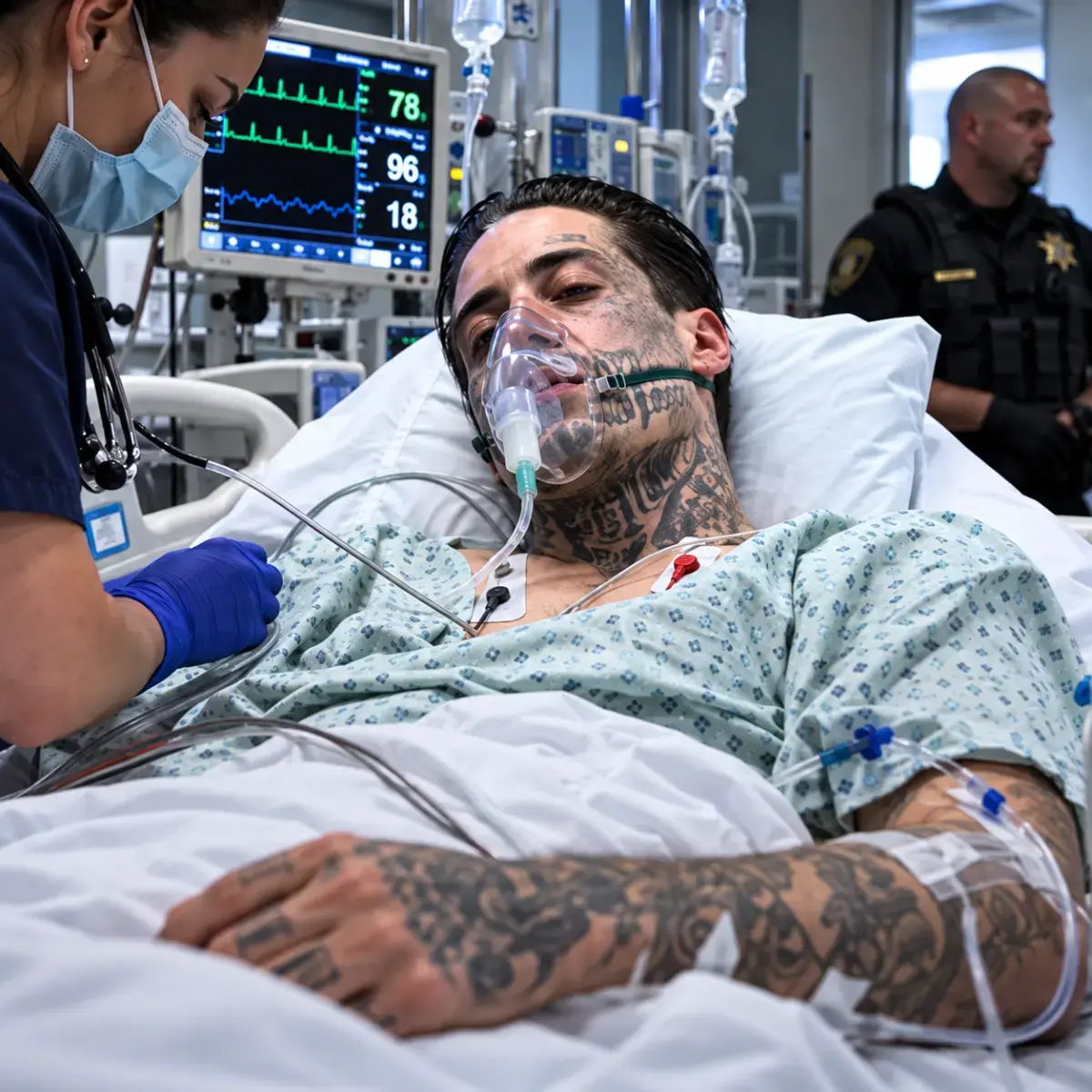
The same caution applies to video. A clip of Wilson in court, a prison exterior, or an ambulance does not independently demonstrate that he was recently hospitalized. Images may illustrate a story, but they cannot substitute for evidence supporting its central claim.
For that reason, this article does not describe any circulating medical image as proof of a new incident.
Silence Does Not Confirm an Emergency
Readers may reasonably wonder whether the absence of public details reflects restrictions around medical information. It is possible for the public record to be incomplete. But uncertainty must remain uncertainty.
A lack of information cannot establish that a person is seriously ill. It also cannot establish that the person is healthy, has recovered, or has returned to a particular prison unit.
These are separate factual claims, each requiring support.
Likewise, there is no basis here for suggesting that officials are concealing an emergency or that a family has requested secrecy. Those explanations would introduce additional allegations without resolving the original one.
The accurate position is narrower: a recent hospitalization has not been independently verified through the sources reviewed for this article. If reliable information becomes available, the account can be updated to reflect what it actually establishes.
Until then, speculation should not fill the gaps.
A Medical Claim Is Separate From a Legal Development
The wording “on death row” adds emotional weight to the allegation. It may also encourage readers to connect a possible health issue with an execution, a court ruling, or a change in sentence.
No such connection has been established here.
The documented sentencing history does not prove that a medical incident occurred. Conversely, even a confirmed hospital transfer would not, by itself, explain what was happening in the courts.
A report about health should identify its medical facts as precisely as the evidence permits. A report about an appeal should rely on the relevant court records. Combining the two into a single dramatic narrative can imply developments that neither source supports.
This article therefore makes no claim that an alleged hospitalization has changed Wilson’s sentence, affected an execution schedule, or prompted a new judicial decision.
The Victims Remain Central to the Case
Any renewed coverage should also remember why this case exists. Kristine Melton and Diane Ruiz were real people whose lives were taken. Reporting that focuses entirely on Wilson’s appearance, notoriety, or an alleged emergency risks pushing the victims out of their own story.
Their names belong in coverage because they are central to the established facts, not because they provide an emotional backdrop for speculation.
That does not mean a verified medical development involving a prisoner could never be newsworthy. It means accuracy and proportion remain necessary. Coverage can report a substantiated event without turning uncertainty into spectacle.
It should also avoid inventing responses from the victims’ relatives. Nothing reviewed for this article supports claims that they have commented on the hospitalization allegation.
What Readers Can Reliably Take Away
The strongest version of this story is the one the evidence can support.
Wilson’s convictions and 2024 death sentences are documented. The new claim that he was rushed to a hospital after a medical incident has not been substantiated by the reliable material identified in this review.
Before treating a future update as confirmed, readers should look for a dated report, an identifiable source, and a clear explanation of what has actually been verified. A headline repeating another headline offers little additional assurance.
The missing information is substantial: whether a transfer occurred, when it occurred, what prompted it, and whether any authorized source has described Wilson’s condition. Until those questions are answered, reporting a detailed emergency narrative would mislead readers.
For now, the accurate headline is straightforward: Wade Wilson hospitalization claim remains unverified. The available evidence supports caution, not a declaration that a new death-row medical crisis has been confirmed.