🕯️💔 REFLECTIONS ON A FINAL JOURNEY: WADE WILSON, THE HAUNTING SILENCE OF DEATH ROW, AND THE DARK CONSEQUENCES OF TWO MURDERS THAT SHOCKED FLORIDA ⚖️
 😭
READ THE FULL STORY BELOW 👇👇
FLORIDA — Behind the locked doors of Florida's prison system, Wade Wilson remains one of the most controversial figures associated with a modern American death-penalty case.
Known in sensational media coverage as the “Deadpool Killer,” Wilson attracted extraordinary public attention following his convictions for the murders of Kristine Melton and Diane Ruiz.
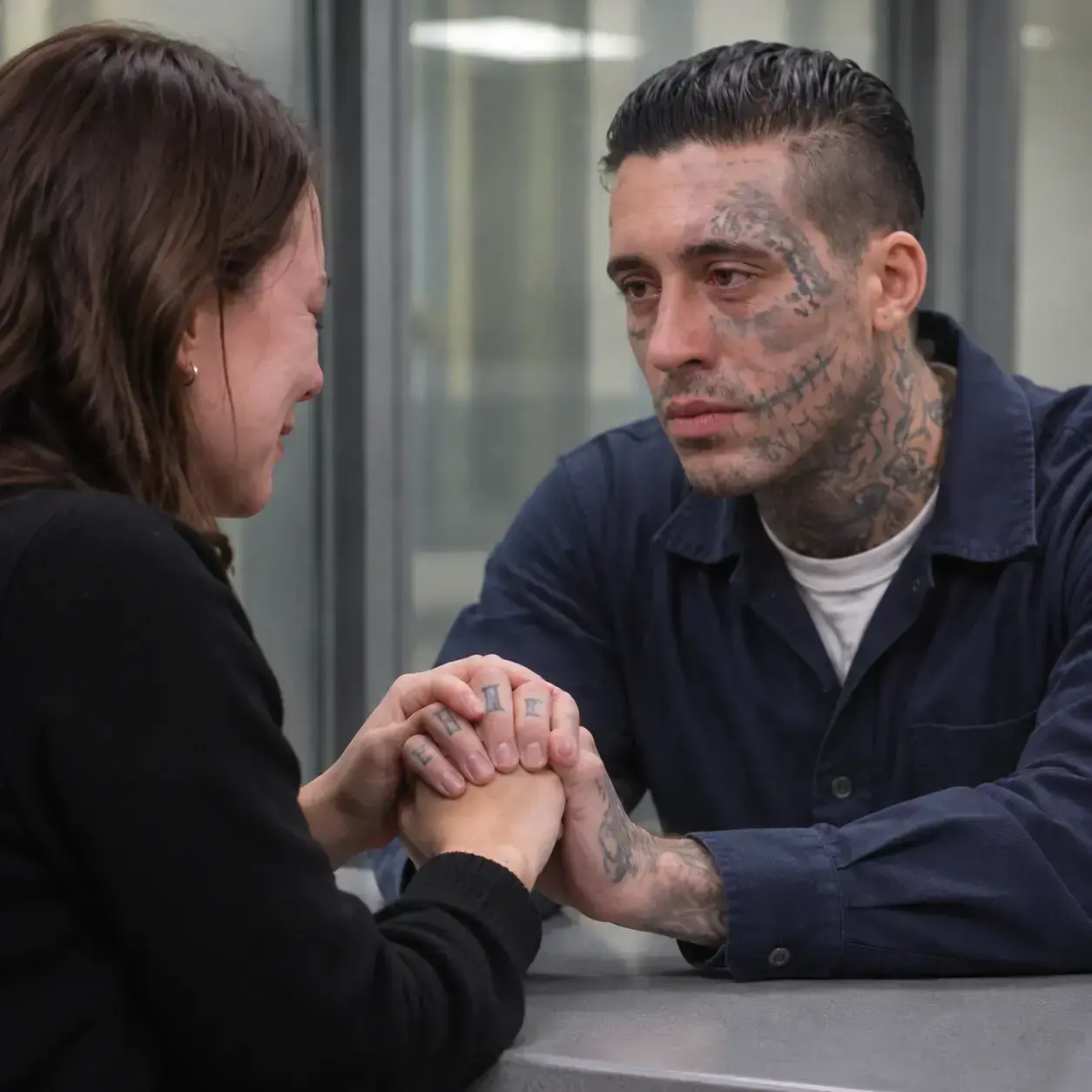
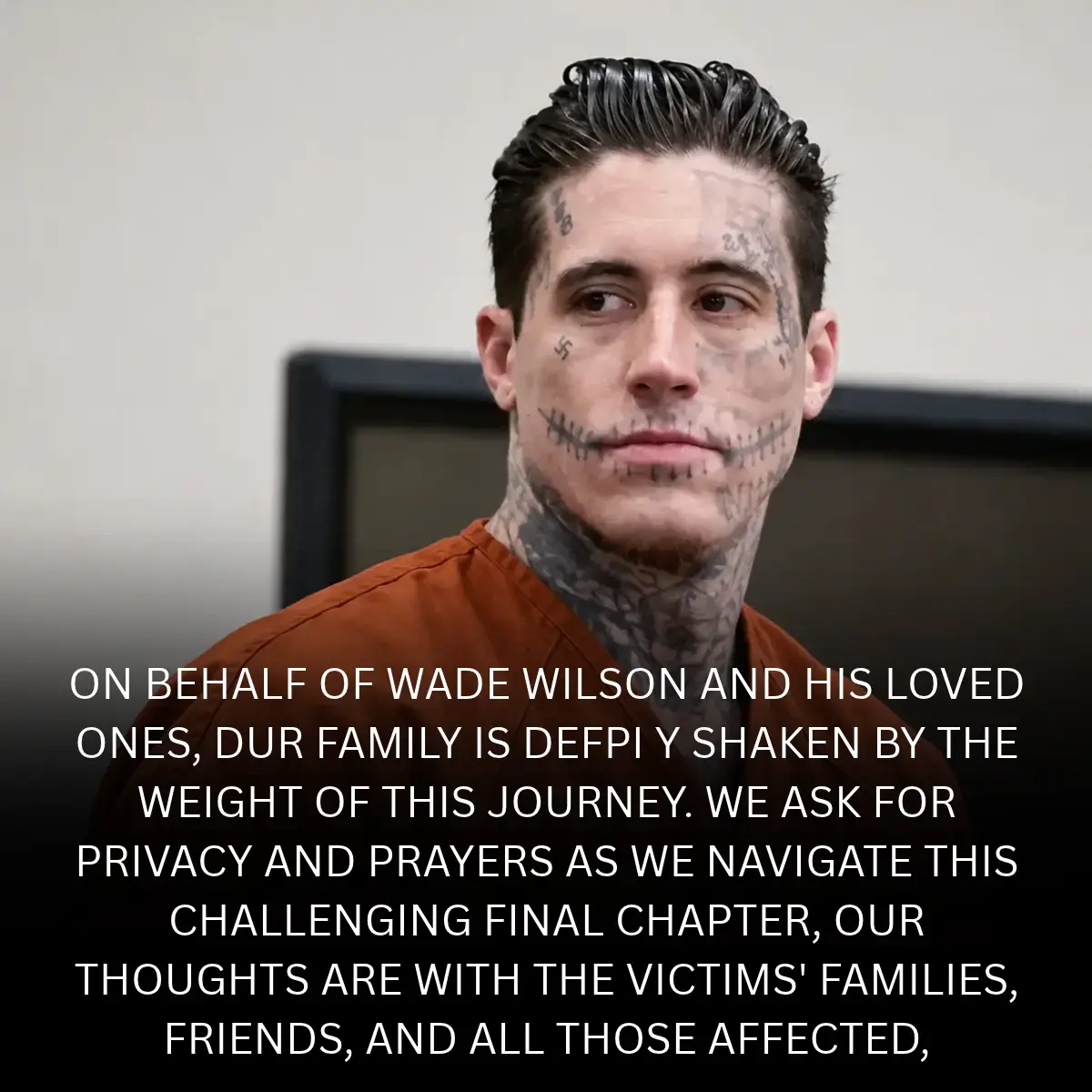
His heavily tattooed appearance, courtroom behavior, and the disturbing circumstances of the crimes helped turn his case into an international true-crime phenomenon.
But beneath the headlines lies a far more serious story.
Two women lost their lives.
Their families were left to confront devastating grief.
And a convicted murderer now faces the consequences of crimes that permanently changed numerous lives.
The phrase “final journey” may evoke images of a man confronting his past from death row. Yet Wilson's private thoughts cannot be known without reliable statements or documentation, and his death sentences should not be confused with a confirmed execution date.
The reality is already powerful enough without inventing a confession or claiming to know what he feels.
⚖️ THE CRIMES THAT CHANGED EVERYTHING
On October 7, 2019, Kristine Melton and Diane Ruiz were murdered in Cape Coral, Florida.
The crimes shocked the surrounding community and eventually became the focus of a widely followed criminal prosecution.
Wilson was convicted of two counts of first-degree murder.
In August 2024, he received two death sentences.
The courtroom proceedings brought national attention to the case.
But the victims' identities and the devastation experienced by their loved ones remain central to understanding its significance.
Kristine Melton and Diane Ruiz were not simply names in a criminal case.
They were individuals whose lives were violently taken.
Their deaths created losses that cannot be reversed by any judicial outcome.
💔 THE HUMAN TRAGEDY BEHIND THE HEADLINES
True-crime coverage often focuses heavily on defendants.
Their appearance.
Their behavior.
Their backgrounds.
And the dramatic details of courtroom proceedings.
But this attention can overshadow the victims.
For the families of Melton and Ruiz, the case represents something much deeper than a widely discussed criminal trial.
It represents the absence of loved ones.
Birthdays that will never be celebrated together.
Conversations that will never happen.
And ordinary family moments that have been permanently lost.
No amount of public attention can restore those experiences.
The emotional reality of the case begins with that irreversible harm.

🚨 THE FACE THAT BECAME AN INTERNET OBSESSION
Wilson's tattoos and courtroom expressions became prominent features of online discussions.
Images circulated widely.
Commentators analyzed his demeanor.
And some social-media users began treating his appearance as a form of entertainment.
The fascination created an unsettling contrast.
A case involving two murders was increasingly discussed through the visual image of the convicted man.
For some observers, the attention demonstrated the strange power of internet celebrity.
For others, it raised questions about how criminal notoriety can distract from victims and their families.
The phenomenon is not unique to Wilson.
Throughout modern history, certain criminal defendants have attracted audiences whose curiosity extends beyond the facts of their cases.
But fascination should never be mistaken for admiration.
🕯️ THE SILENCE OF DEATH ROW
Death row occupies a particularly troubling place in public imagination.
It represents confinement under a sentence carrying the possibility of execution.
For outsiders, it can evoke questions about time, isolation, responsibility, and mortality.
But the actual psychological experiences of individual prisoners vary.
Without verified personal testimony, it would be misleading to describe Wilson as overwhelmed by remorse, consumed by regret, or privately preparing for an imminent execution.
Those claims require evidence.
What can be discussed is the broader reality of a person living under a capital sentence while legal proceedings continue.
The uncertainty of an unresolved appeal can become an important part of the legal story.
⚖️ THE LEGAL BATTLE IS NOT THE SAME AS AN EXECUTION COUNTDOWN
Wilson's death sentences followed his 2024 convictions.
His case subsequently entered appellate review.
The Florida Supreme Court heard oral arguments in his appeal on February 5, 2026.
The legal issues include challenges concerning the capital-sentencing process.
An appellate hearing is not an execution order.
A death sentence is not an execution warrant.
And the existence of ongoing legal proceedings means that claims about an imminent execution must be carefully checked against official records.
As of the October 2026 docket information discussed in earlier reporting, the appeal remained open.
Any later development must be confirmed through updated court records.
There is no basis here for presenting a specific execution date as established.
😢 THE QUESTION OF REGRET
One of the most common questions surrounding death-row cases is whether the condemned person experiences remorse.
Does time change how someone understands their actions?
Can a person recognize the suffering caused by their crimes?
And what does accountability mean when the consequences cannot be undone?
These are difficult questions.
They cannot be answered by looking at courtroom photographs or interpreting facial expressions.
Nor can remorse be assumed simply because someone faces severe punishment.
Genuine accountability requires more than an emotional image.
It involves acknowledging wrongdoing and the harm inflicted on others.
Whether Wilson has reached any particular private understanding cannot be established through speculation.
💌 THE DISTURBING PHENOMENON OF CRIMINAL FANDOM
One of the more unusual aspects of Wilson's public notoriety has been the attention he received from strangers.
Reports surrounding the case described people expressing romantic interest or sending supportive messages despite his convictions.
Such reactions have prompted broader discussions about fascination with notorious offenders.
Some people may be drawn to the perceived mystery of a highly publicized defendant.
Others may develop an unrealistic emotional attachment to someone they know only through photographs and media coverage.
Social media can intensify these dynamics.
Short video clips and dramatic images often circulate without the full context of the crimes.
As a result, the convicted person's public image may become separated from the suffering experienced by victims.
That separation deserves serious scrutiny.
🌹 WHY APPEARANCE SHOULD NEVER OVERSHADOW ACTIONS
A person's physical appearance does not determine guilt or innocence.
Nor does it establish character, remorse, or moral responsibility.
Criminal judgments must rest on evidence and lawful proceedings.
Wilson's tattoos became part of his public image, but they are not the reason he was convicted.
The convictions arose from the criminal case concerning the murders of Melton and Ruiz.
Reducing the story to photographs or dramatic nicknames risks misunderstanding the legal and human realities involved.
The central issue is not whether Wilson looks frightening, mysterious, or charismatic.
It is that two people were murdered and a court found him responsible.
💔 THE WEIGHT OF IRREVERSIBLE CONSEQUENCES
Many decisions in life can be corrected.
An apology may repair a misunderstanding.
A changed course may improve a difficult situation.
And personal growth can help people overcome earlier mistakes.
Murder is different.
The lives lost cannot be restored.
The suffering of surviving relatives cannot simply be erased.
That irreversibility is central to the moral gravity of the case.
It is also why discussions about criminal responsibility must remain grounded in the victims' experiences rather than becoming exercises in romanticizing the offender.
⚖️ THE DEATH PENALTY DEBATE
Wilson's case also intersects with longstanding arguments about capital punishment.
Supporters of the death penalty emphasize accountability for the gravest crimes and the interests of justice.
Opponents raise concerns about irreversible punishment, procedural safeguards, and the possibility of legal error.
These questions are particularly significant when a defendant challenges the sentencing framework used in a capital case.
Florida's revised death-penalty procedures have generated constitutional litigation and public debate.
Courts must address the legal issues presented to them according to applicable law.
The seriousness of the underlying crimes does not eliminate the need for proper judicial review.
Likewise, the existence of an appeal does not erase the convictions.
🕊️ WHAT A FINAL JOURNEY REALLY MEANS
The phrase “final journey” is emotionally powerful.
It suggests a closing chapter.
A moment of reckoning.
Perhaps even a final opportunity for reflection.
But in Wilson's case, it should be understood as a literary theme rather than a verified description of an approaching execution.
No authenticated personal diary or final statement is presented here.
No private confession is being attributed to him.
And no execution timetable is being invented.
The meaningful question is broader.
What can society learn from a case in which violence destroyed two lives and produced years of legal proceedings?
One answer concerns the importance of recognizing warning signs of dangerous behavior.
Another concerns protecting potential victims and supporting people affected by violence.
And another concerns refusing to turn suffering into spectacle.
❤️ REMEMBERING KRISTINE MELTON AND DIANE RUIZ
The most important names in this story are Kristine Melton and Diane Ruiz.
Their deaths are the reason the criminal case exists.
Their families and loved ones continue to live with the consequences.
Any reflection on Wilson's future should begin by recognizing that reality.
It is possible to discuss legal safeguards and capital punishment while maintaining compassion for victims.
It is possible to examine a defendant's circumstances without excusing the crimes.
And it is possible to acknowledge the complexity of the justice system without losing sight of the people whose lives were taken.
🚨 THE DANGER OF SENSATIONAL FINAL-WORDS STORIES
Stories claiming to reveal a prisoner's final thoughts can attract enormous attention.
But such accounts should be treated cautiously.
A dramatic quotation is not reliable merely because it appears in a viral post.
An alleged prison letter requires authentication.
And a supposed confession should not be presented as genuine without credible evidence.
In Wilson's case, unsupported claims about private reflections could mislead readers about his state of mind or legal situation.
Responsible reporting distinguishes documented statements from interpretation.
That distinction matters especially when the subject is a real criminal case involving grieving families.
💔 THE FINAL REFLECTION
Wade Wilson's story is not a romantic tragedy.
It is a criminal case involving two murdered women, two death sentences, and significant questions under appellate review.
His public notoriety has generated fascination, outrage, and debate.
But the deepest lesson does not come from his tattoos, his nickname, or speculation about what he thinks inside prison.
It comes from the irreversible consequences of violence.
Two women lost their futures.
Their families lost people they loved.
And a criminal case continues to raise difficult questions about accountability, punishment, and justice.
The future of Wilson's death sentences must be determined through the legal process.
His private feelings should not be invented.
And the victims should never become secondary characters in a story centered on the man convicted of killing them.
True reflection begins not with fascination for a notorious prisoner, but with recognition of the lives that were taken and the responsibility that follows from such devastating acts.
Whatever happens next in court, the deaths of Kristine Melton and Diane Ruiz remain the defining tragedy of this case.
Their lives deserve remembrance.
Their families deserve dignity.
And the public deserves information grounded in evidence rather than speculation.
Justice must remain focused on truth, accountability, and the human consequences of violence. 🕯️⚖️💔
💬 How should true-crime coverage balance public interest in convicted offenders with respect for victims and their families?
👇 FULL STORY IN THE FIRST COMMENT!
#WadeWilson #WadeWilsonCase #FloridaDeathRow #TrueCrimeDiscussion #KristineMelton #DianeRuiz #JusticeForVictims #CriminalJustice #DeathPenaltyDebate #FloridaCourts #CapitalPunishment #VictimsMatter #CourtCaseAnalysis #CrimeAndConsequences #LegalAwareness #RememberTheVictims