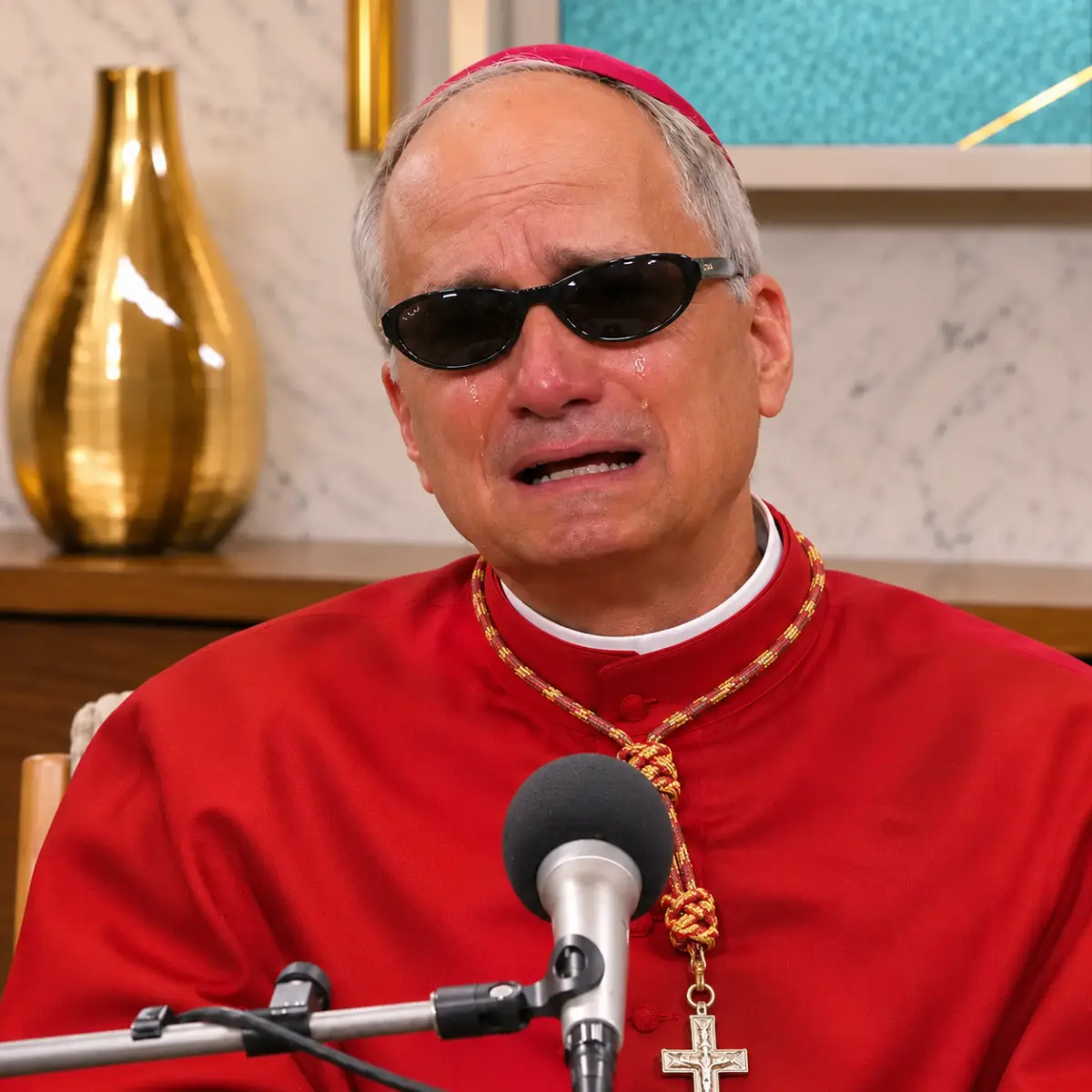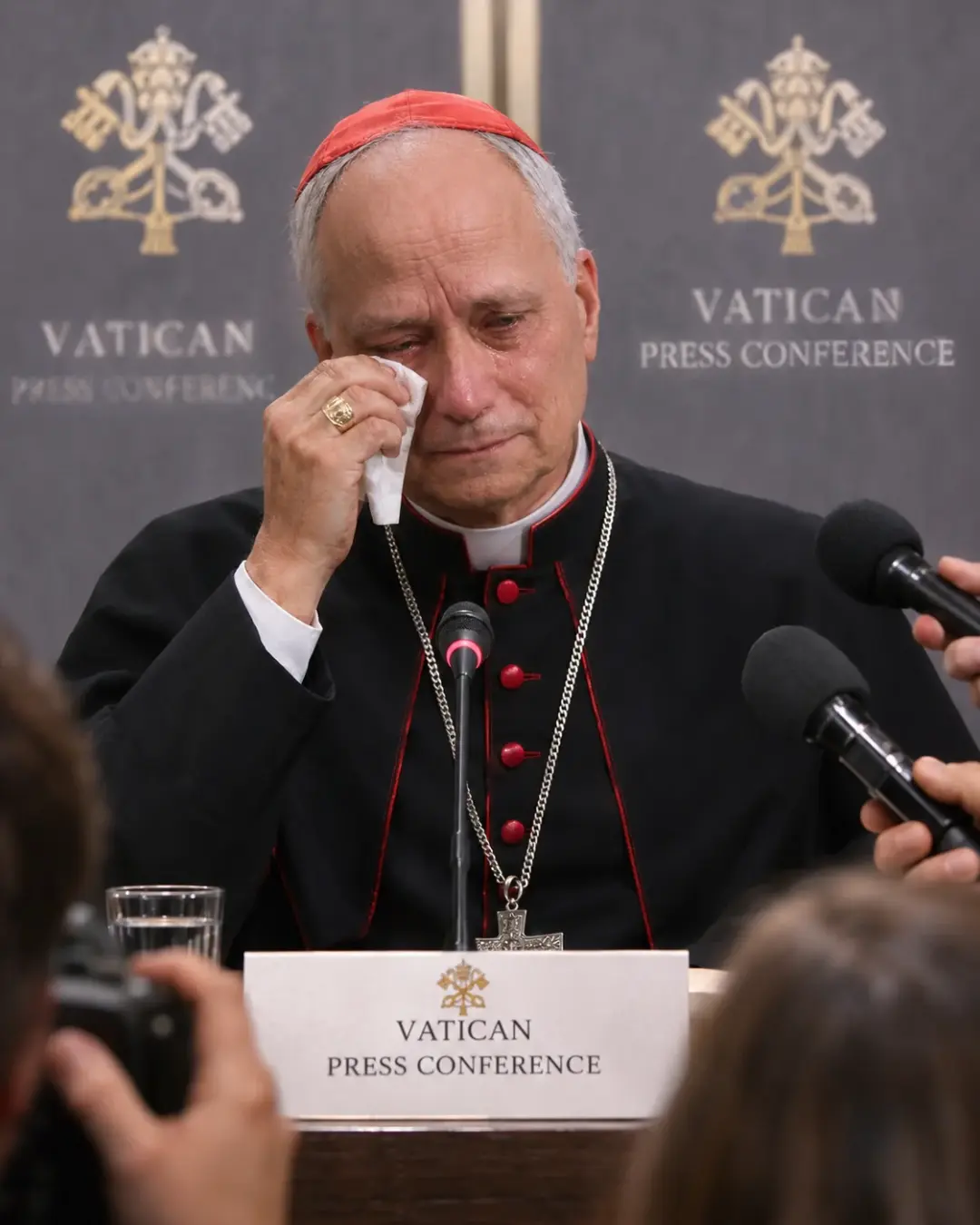
ROME — A press conference involving Pope Leo XIV has brought together some of the most sensitive questions facing the Catholic Church, revealing a striking combination of personal vulnerability, institutional responsibility, and determination to overcome division. What might initially have appeared to be a routine conversation with journalists became an opportunity to examine the challenges facing a pontiff whose words reach millions of believers across the world.
The conversation took place as Pope Leo XIV returned from an extensive journey through Latin America, where he had encountered communities shaped by different cultural traditions, economic conditions, and religious experiences. The trip required considerable physical stamina, yet the questions awaiting him extended far beyond the demands of international travel. Journalists wanted to understand his priorities, his health, and his vision for a Church navigating profound social change.
One particularly significant subject concerned the pope's recent medical treatment. Public discussions about the health of religious leaders often create uncertainty because the responsibilities of their offices are closely connected to questions of continuity and stability. For Catholics, the health of a reigning pontiff can carry emotional significance extending beyond ordinary public curiosity.
According to Associated Press reporting, Pope Leo XIV discussed his recent lung cancer surgery and indicated that the experience had not fundamentally altered his agenda or his outlook. His remarks offered an unusually personal glimpse into the challenges of maintaining demanding responsibilities while recovering from a serious medical procedure.
 The pope's willingness to speak openly about his recovery also carried a broader message about vulnerability. Public figures are frequently expected to project unwavering strength, especially when they occupy positions associated with spiritual authority. Yet acknowledging a difficult experience can create a different form of connection with people who are facing illness, uncertainty, or personal hardship.
For believers confronting their own health challenges, such openness may offer reassurance that suffering and responsibility are not mutually exclusive. Religious leadership does not eliminate human vulnerability, and acknowledging that reality can make spiritual messages more accessible to people whose daily lives involve struggles rarely visible in public ceremonies.
But the conversation did not remain focused on personal matters. Journalists also questioned Pope Leo XIV about the future of Catholic traditions, including the possibility of changes involving married priests and the celebration of the traditional Latin Mass. Both issues have generated intense discussion within the Church, reflecting different understandings of continuity, reform, and pastoral responsibility.
His responses suggested that immediate structural changes were not at the forefront of his agenda. Reuters reported that the pope was not currently planning to expand the ordination of married men and did not intend to reverse existing restrictions on the older Latin liturgy. Instead, he emphasized the importance of maintaining unity within a religious community that includes diverse perspectives and expectations.
Reuters+1
That emphasis is important because the Catholic Church must continually balance the preservation of longstanding practices with the need to respond to changing circumstances. Decisions that appear technical from outside the institution can carry profound emotional and spiritual significance for believers. A change affecting worship, clerical responsibilities, or Church governance may influence the religious lives of entire communities.
The press conference also addressed questions of accountability and the responsibility of Church authorities toward people who have experienced abuse. These discussions remain among the most consequential challenges confronting Catholic leadership. Meaningful progress requires more than public acknowledgment; it demands effective safeguards, institutional responsibility, and a willingness to confront failures that have caused lasting harm.
Pope Leo XIV's comments about accompanying survivors and helping them seek justice reflected the continuing importance of these obligations. He also discussed the need to address spiritual abuse through appropriate Church procedures, recognizing that religious authority must never become a justification for exploitation or coercion.
America Magazine+1
As the discussion moved between personal health and institutional responsibilities, another subject emerged with implications far beyond the Vatican: the political divisions affecting societies around the world. The recent American midterm elections provided an opportunity for journalists to ask about polarization, democratic participation, and the responsibilities of influential public figures.
Pope Leo XIV's response emphasized dialogue, reconciliation, and a reduction in hostility. Rather than presenting himself as a participant in partisan competition, he described his approach as an expression of the Church's social teaching. His message reflected the conviction that disagreements need not eliminate the possibility of mutual understanding.
ANSA.it+1
That position may sound straightforward, but its implications are substantial. Political and cultural disagreements increasingly shape how people interpret even the most general moral statements. Calls for peace can become controversial when audiences disagree about responsibility for conflict, while appeals for justice may be interpreted differently depending on personal experience and political allegiance.
The pope's emphasis on listening therefore raises a difficult question about modern public life. Can communities rediscover the ability to disagree without treating every difference as an existential threat? And can institutions with deep historical traditions demonstrate that maintaining convictions does not require rejecting those who see the world differently?
For Pope Leo XIV, these questions intersect with the challenge of leading a Church whose members live under dramatically different political systems and social conditions. The concerns of Catholics in Latin America may differ from those of believers in Europe, Africa, Asia, or North America, yet all remain connected through a shared religious institution.
This diversity creates both opportunities and responsibilities. A message delivered in Rome may inspire people thousands of miles away, but it may also be interpreted through circumstances the speaker cannot fully anticipate. Effective leadership therefore requires careful attention not only to the content of a message but also to the communities receiving it.

The conversation aboard the papal aircraft illustrated that complexity. Questions about health, liturgy, institutional reform, abuse, and international politics initially appeared unrelated, yet each involved the relationship between authority and responsibility. Each also demanded a response capable of acknowledging human concerns without pretending that difficult problems could be solved through a single declaration.
Perhaps the most revealing element of the press conference was the absence of a dramatic promise to transform everything immediately. Instead, Pope Leo XIV presented a vision centered on continuity, accountability, and the patient work of reconciliation. Whether that approach succeeds will depend on decisions and actions extending well beyond one international journey.
And that is where the deeper significance of his remarks becomes clear. The most important announcement was not necessarily a new policy or a surprising institutional change, but the repeated insistence that unity and dialogue remain possible even in deeply divided times.
For a world accustomed to measuring leadership through confrontation and spectacle, that message offers a different perspective. The enduring test of Pope Leo XIV's leadership may be whether his words translate into meaningful action, whether vulnerable people receive protection, and whether communities divided by disagreement can rediscover a shared sense of responsibility.