🚨 POPE LEO XIV FACES A DEFINING TEST: A DEEP DIVISION THREATENS TO SHAKE THE CATHOLIC CHURCH — AND THE WORLD IS WATCHING! ⛪😱
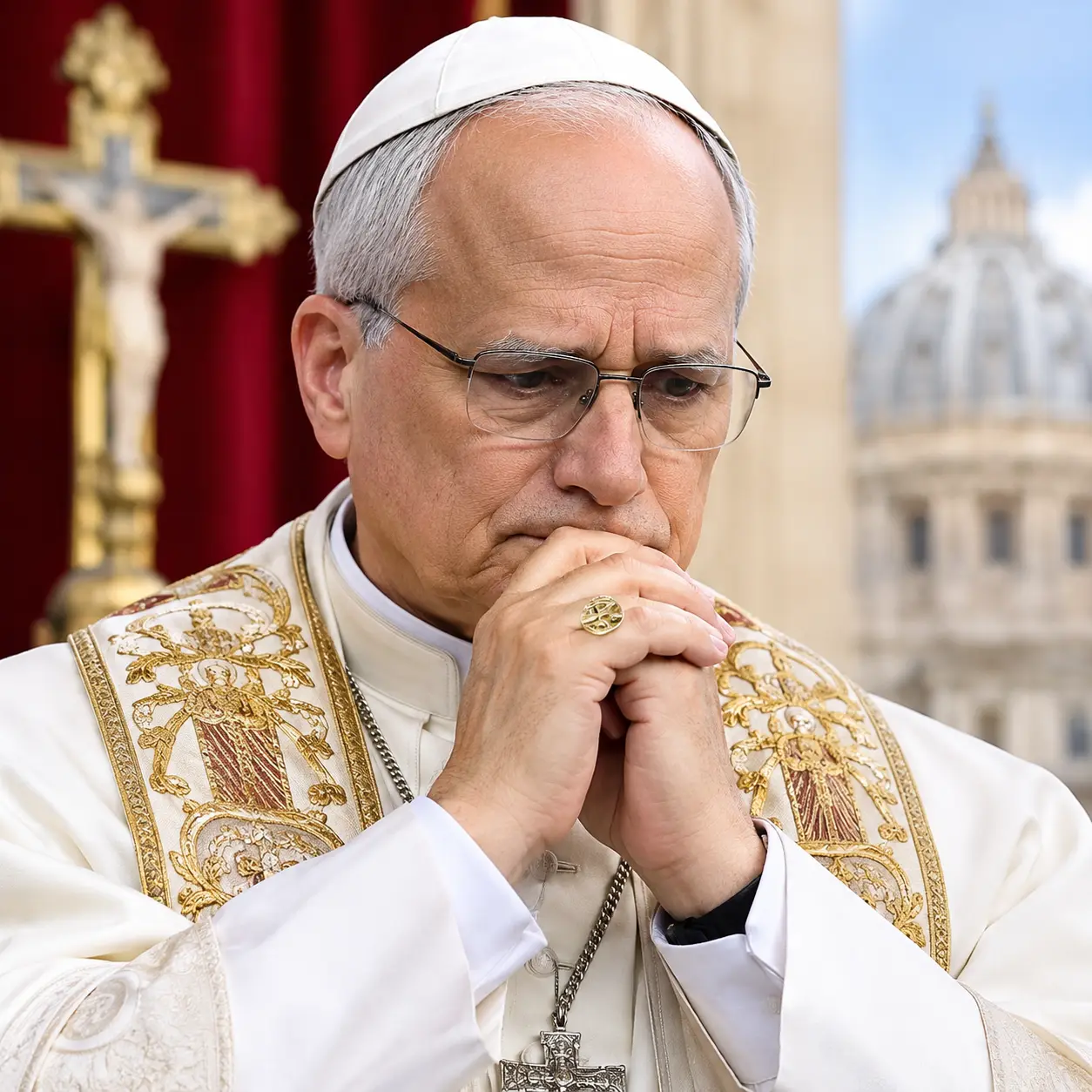
A major confrontation inside the Catholic Church has placed Pope Leo XIV before one of the most difficult challenges of his early papacy. What began as a dispute over religious tradition and Church authority has developed into a serious conflict, raising questions about unity, leadership, and the future direction of the Vatican.
At the center of the controversy is the Society of St. Pius X (SSPX), a traditionalist Catholic organization that has maintained longstanding disagreements with the Vatican over reforms introduced during the Second Vatican Council in the 1960s.

The situation escalated dramatically in 2026 when the organization announced plans to consecrate new bishops without the pope's approval. The decision threatened to reopen one of the Catholic Church's most painful historical divisions.
For Pope Leo XIV, the issue was about much more than an internal disagreement. It involved the authority of the papacy, the preservation of Church unity, and the difficult question of how to respond to Catholics who remain deeply committed to older religious traditions.
The SSPX argued that it needed additional bishops to ensure the continuation of its ministry and serve followers around the world. Its leadership maintained that the situation required urgent action, expressing disappointment with the Vatican's response to its requests.
However, the Vatican viewed unauthorized episcopal consecrations as a serious violation of Church authority. Under Catholic canon law, consecrating bishops without papal approval carries the penalty of automatic excommunication for those directly involved.
The disagreement soon reached a critical point.

On July 1, 2026, the traditionalist group proceeded with the controversial consecrations in Switzerland despite the Vatican's objections. The following day, the Vatican announced that the bishops involved had incurred excommunication. Its decree went further than many observers expected, declaring that priests and Catholics formally adhering to the organization were also in schism with the wider Church.
The announcement sent a powerful message about the seriousness of the dispute.
Yet the consequences extend far beyond the individuals directly involved. The Vatican's declaration raised difficult questions for ordinary Catholics who identify with traditional worship but may not necessarily agree with every position taken by the SSPX.
Pope Leo XIV has repeatedly emphasized the importance of unity, dialogue, and listening. His leadership style has generally been associated with reconciliation rather than unnecessary confrontation. But this crisis demonstrated that a commitment to dialogue does not mean abandoning the principles he believes are essential to the Church.
The pope has also expressed strong support for the reforms of the Second Vatican Council, describing them as fundamental elements of Church teaching. That position places him at the center of a difficult debate between preserving tradition and maintaining the direction established by the modern Catholic Church.

For many observers, the biggest question is no longer simply whether the Vatican and the traditionalist movement can resolve their disagreements. It is whether the two sides can find a path forward without creating an even deeper division among believers.
The challenge is particularly sensitive because the Catholic Church represents approximately 1.4 billion people worldwide. Even disputes involving relatively small organizations can carry enormous symbolic significance when they touch on questions of religious authority and identity.
There are also broader concerns about how the Vatican will handle future disagreements. Will Pope Leo XIV continue pursuing dialogue with groups that challenge established Church decisions? How much room will traditionalist Catholics receive within the wider institution? And what happens when reconciliation appears impossible?
These are questions that will likely remain part of the discussion surrounding his papacy.
Despite the severity of the confrontation, the Vatican has not abandoned the possibility of reconciliation. The Church has outlined conditions through which affected lay Catholics and clergy can return to full communion, including affirming Catholic teaching and accepting the reforms of the Second Vatican Council.
That leaves a complicated road ahead.

Pope Leo XIV now faces the challenge of demonstrating that the Catholic Church can defend its traditions and institutional unity while still making room for meaningful dialogue. His decisions will help shape how future disagreements are handled and how the Vatican responds to movements that resist its authority.
One thing is clear: this confrontation has become an important test of his leadership.
For Catholics around the world, the stakes are deeply personal. Many are hoping for reconciliation, while others are watching closely to see whether the Vatican's firm response will strengthen unity or deepen existing divisions.
As the debate continues, the question remains: Can Pope Leo XIV bring together a Church divided by tradition and reform, or will this conflict become one of the defining challenges of his papacy?
The world is watching, and the future of this relationship remains uncertain.