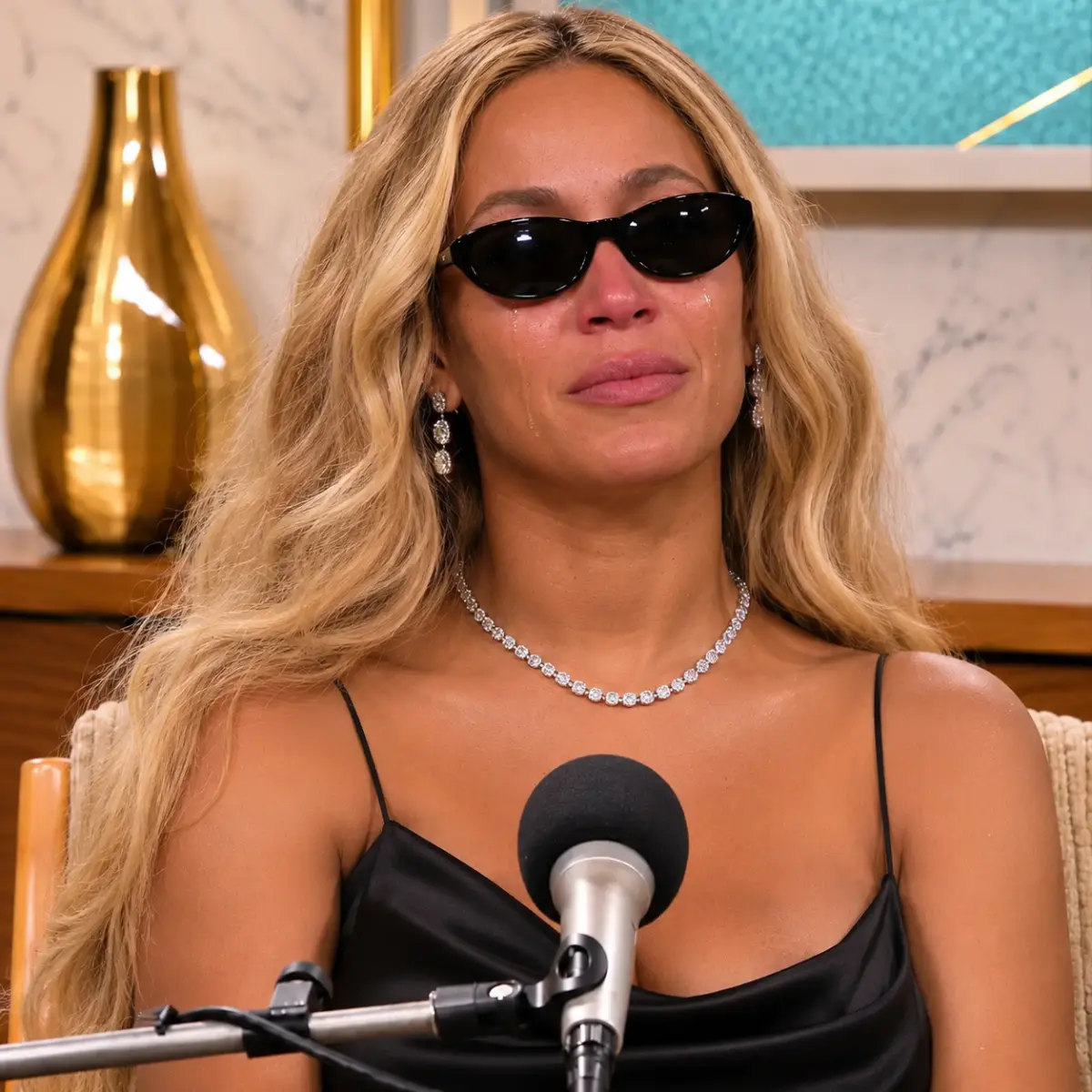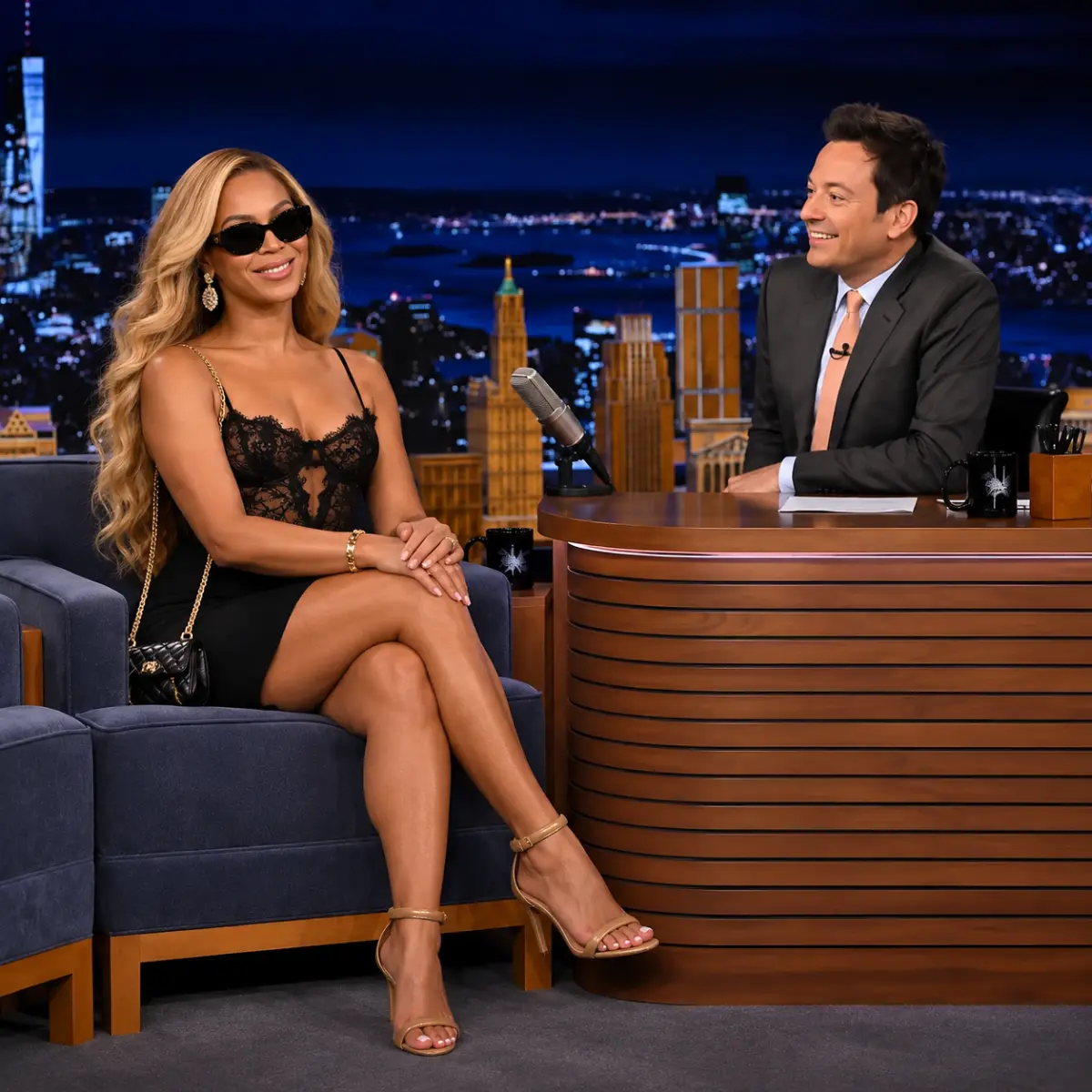
New York City has witnessed countless unforgettable television moments, from emotional celebrity confessions to explosive political confrontations. Yet in this imagined encounter, a routine interview with Beyoncé transforms into something far more controversial when a television host introduces a provocative question about the 2026 midterm elections. What begins as a discussion about music and cultural influence quickly becomes an intense exchange that leaves the studio audience wondering whether the conversation has crossed an invisible line.
The interview opens inside a sophisticated Manhattan television studio, where enormous screens display highlights from Beyoncé's remarkable career. The audience welcomes the Grammy-winning superstar with enthusiastic applause, while the host introduces her as one of the most influential figures in modern entertainment. The atmosphere is warm and celebratory, suggesting that viewers are about to enjoy a familiar conversation about creativity, family, and professional achievement.
For the first several minutes, everything proceeds smoothly. Beyoncé discusses the importance of artistic independence, the challenges of maintaining privacy, and the extraordinary relationship between performers and their audiences. She appears relaxed, occasionally laughing at the host's observations while offering thoughtful reflections on the demands of international fame.

But the tone changes when the presenter shifts the conversation toward politics.
The host introduces the subject by discussing how celebrities increasingly participate in public debates surrounding American elections. Rather than simply asking whether Beyoncé believes artists should express political opinions, the presenter raises a more confrontational possibility: could celebrity endorsements distract voters from the actual issues affecting their communities?
The question is framed as a challenge to the entertainment industry's influence over political discussions. The host suggests that famous performers may possess enormous platforms without necessarily having the expertise required to address complicated policy questions. The implication is uncomfortable, particularly for an artist whose public statements have sometimes extended beyond the boundaries of music.
Beyoncé listens carefully before responding. In this dramatized conversation, she argues that being an entertainer does not eliminate someone's right to participate in discussions about the future of their country. She emphasizes that public visibility can create opportunities to encourage civic engagement, but that individual voters must ultimately make decisions according to their own experiences and convictions.
The answer receives scattered applause, yet the host appears unconvinced.
The presenter asks whether celebrity political participation risks becoming a performance in itself, with carefully produced speeches and viral appearances attracting more attention than meaningful civic action. Beyoncé responds by challenging the assumption that a highly visible public statement must automatically be insincere. She points out that public figures, like other citizens, may hold genuine concerns about issues affecting their families and communities.
The disagreement carries an additional layer of significance because Beyoncé has previously participated in American political events. During the 2024 presidential campaign, she appeared alongside Kelly Rowland at a Houston rally supporting Kamala Harris and addressed the audience about freedom and civic responsibility. Her appearance became part of a broader national discussion about the influence of celebrity endorsements.
Investing.com
Inside the imagined New York studio, the host brings up that history while pressing for a more definitive answer. Should influential entertainers be held to a higher standard when they enter political conversations? And should their statements receive the same scrutiny as those made by elected officials or professional political commentators?
Beyoncé acknowledges that anyone making public statements should expect disagreement and criticism. However, she argues that accountability should involve examining what a person actually says rather than automatically assuming that fame makes their motivations questionable. The distinction becomes central to the increasingly tense conversation.
The host then introduces another argument, suggesting that the entertainment industry sometimes treats political participation as a fashionable public-relations strategy. The presenter wonders whether celebrities who speak during election campaigns demonstrate the same level of commitment when public attention moves elsewhere. The question draws an audible reaction from several members of the audience.
For a moment, Beyoncé remains silent.
She appears to consider the implications of the question before explaining that nobody can reasonably speak for the motivations of every famous person. She can discuss her own values and experiences, she suggests, but she cannot defend or condemn the private intentions of an entire industry. The response is calm, though the growing tension between the two participants has become impossible to ignore.
The presenter attempts to continue, but the exchange is no longer flowing naturally. Each answer seems to produce another challenge, and the original purpose of the interview has largely disappeared. What was supposed to be an opportunity to discuss Beyoncé's career has become a debate about whether famous entertainers deserve a meaningful place in political conversations.
Then the host asks the question that changes the entire atmosphere.
Would Beyoncé agree that some celebrities exploit election seasons for attention, even when their public statements appear sincere?
The singer's expression becomes serious as she considers the wording. Rather than offering the simple agreement or denial the presenter appears to expect, she explains that broad accusations can undermine constructive conversations. She argues that examining specific actions is more useful than making assumptions about an entire category of people.
The host tries to press the point again.
This time, Beyoncé raises her hand slightly, signaling that she wants to finish her response without interruption. She explains that difficult questions are not inherently disrespectful, but that a productive interview requires participants to engage with the answers already given. The exchange has reached a point where the disagreement concerns not only politics but also the fairness of the conversation itself.
Several audience members glance toward the production area. A camera operator adjusts position, while the host looks briefly toward the monitor displaying the broadcast. The atmosphere becomes unusually still, as though everyone senses that something unexpected may happen.
Then Beyoncé makes her decision.
In this imagined scene, she thanks the host for the invitation but explains that she does not believe the discussion is moving toward a meaningful exchange of ideas. Without raising her voice or making a dramatic accusation, she stands from her chair and begins walking toward the edge of the set.
The audience falls silent.
The host appears momentarily stunned, turning toward the departing singer before looking back at the camera. For several seconds, the production team continues recording as Beyoncé disappears beyond the studio lights. There is no explosive argument, no shouting match, and no theatrical final confrontation.
Instead, the most striking image is the empty chair beside the host.
In the imagined aftermath, viewers begin debating what the departure represents. Some interpret it as an assertion of personal boundaries, arguing that celebrities should not be expected to remain in conversations they consider unproductive. Others believe that walking away from difficult questions risks reinforcing the perception that famous people are uncomfortable with public scrutiny.

A third perspective focuses on the role of television itself. Modern interviews frequently operate within an environment where short, confrontational exchanges can circulate more widely than lengthy, thoughtful discussions. The pressure to produce memorable moments may sometimes encourage questions designed to provoke dramatic reactions rather than generate deeper understanding.
The controversy also raises a broader question about celebrity political influence. Famous artists can encourage public participation, bring attention to overlooked issues, and introduce important conversations to audiences who might not otherwise encounter them. At the same time, their visibility does not automatically make their opinions more informed or more persuasive than those of other citizens.
These competing realities make the relationship between entertainment and politics unusually complicated. An artist can possess both genuine convictions and an enormous commercial platform, while an interviewer can ask legitimate questions in ways that still feel unnecessarily confrontational. Understanding those distinctions requires more nuance than a single dramatic television exchange can provide.
As the imagined broadcast approaches its conclusion, the host attempts to summarize the discussion while the empty chair remains visible. The presenter acknowledges that the conversation ended unexpectedly and moves toward the next segment, but the tension has not entirely disappeared.
What remains unresolved is whether the two participants ever had a realistic opportunity to understand each other's positions.
And that becomes the final twist of the story. The most important question was never whether Beyoncé could withstand a difficult interview, or whether the host had the right to challenge her opinions. It was whether a conversation designed to attract attention could still create the space necessary for genuine understanding.
In this imagined New York studio, the cameras captured a departure. What they could not capture was the conversation that might have happened if both sides had continued listening.