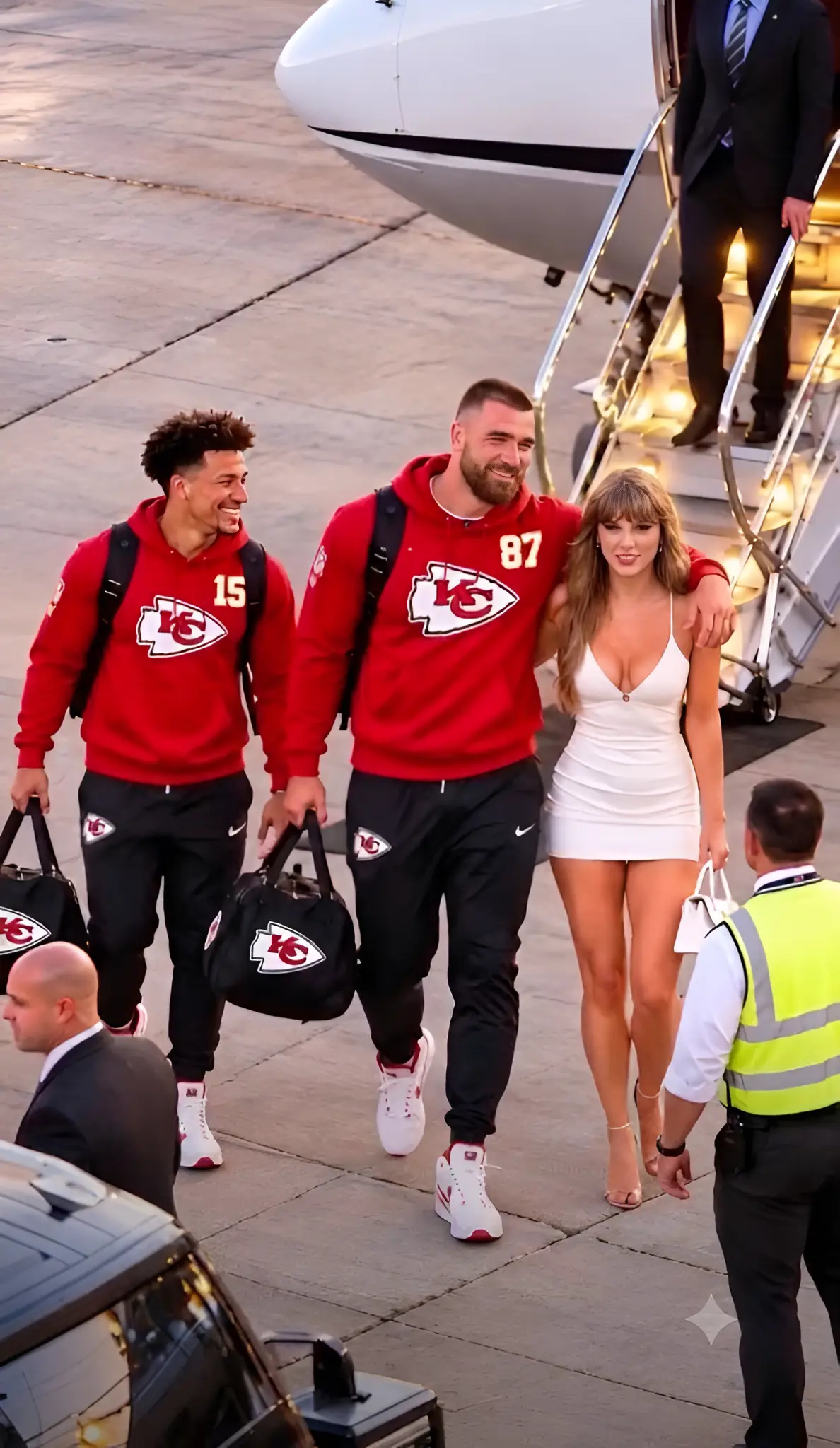
BREAKING NEWS-STYLE FEATURE | NFL & ENTERTAINMENT
🚨 SHOCKING MOMENT: Alleged CCTV Footage Involving Kansas City Chiefs Star Travis Kelce Sparks Questions as Mysterious “15 Minutes Ago” Headline Spreads Online
An explosive headline claiming that newly retrieved surveillance footage captured a significant moment involving Travis Kelce has raised questions about what the cameras supposedly recorded. But with no verified footage, identified location, or confirmed incident, the story remains an unresolved claim rather than established breaking news.
The world of professional football is no stranger to dramatic headlines, unexpected developments, and moments that capture the attention of millions. Yet when a story involves one of the NFL's most recognizable personalities, even a few words can create an extraordinary wave of curiosity. That is precisely the effect of a circulating headline claiming that CCTV footage has been retrieved showing a mysterious moment involving Kansas City Chiefs star Travis Kelce. Presented as an urgent development that supposedly occurred just 15 minutes earlier, the message promises a shocking revelation but stops before explaining what actually happened.
The headline reads like the opening of a major breaking-news report. It uses an urgent time reference, identifies a prominent athlete, and suggests that security cameras have captured something significant. However, the information provided contains no description of the alleged incident, no verified recording, no location, and no statement from Kelce, the Kansas City Chiefs, law enforcement, or any other identifiable source.
Those omissions are crucial. Without the footage or reliable confirmation of the event, there is no factual basis for claiming that Kelce was involved in an accident, confrontation, emergency, controversy, or any other specific incident. The dramatic headline may generate curiosity, but its central claim remains unsubstantiated.
Still, the attention such a story can attract is understandable. Travis Kelce is not simply another professional football player. He has become one of the most widely recognized figures in American sports and entertainment, known for his accomplishments on the field, his charismatic public personality, and his presence in popular culture.
For years, Kelce has been a central figure in the Kansas City Chiefs' offensive success. His ability to create separation from defenders, make difficult catches, and deliver important performances in high-pressure situations has helped establish him among the NFL's most accomplished tight ends. His partnership with quarterback Patrick Mahomes became one of the defining offensive connections of a successful era in Kansas City football.
But Kelce's influence extends beyond the stadium. His appearances in entertainment programming, his podcast work with his brother Jason Kelce, and his high-profile relationship with global music superstar Taylor Swift have introduced him to audiences who might never have followed an NFL game.
That unusual combination of athletic achievement and mainstream celebrity makes almost any headline involving Kelce especially powerful.
The Mysterious CCTV Claim That Raises More Questions Than Answers
At the center of the circulating story is the assertion that surveillance footage has been retrieved. The term CCTV, short for closed-circuit television, refers to video monitoring systems commonly used in public spaces, commercial buildings, transportation facilities, stadiums, parking areas, and private properties.
Such recordings can sometimes provide important evidence about events that were not witnessed directly. In legitimate investigations, surveillance footage may help establish timelines, identify movements, clarify conflicting accounts, or document incidents.
But the existence of a headline mentioning CCTV does not prove that a recording exists.
In this case, the supplied message offers no information about who retrieved the footage, who controls the cameras, when the recording was made, or what it supposedly shows. It also does not establish whether the alleged footage has been reviewed by any credible news organization.
These are not minor details. They are the essential elements needed to determine whether the claim has substance.
The reference to "just 15 minutes ago" creates an additional problem. Such wording suggests extraordinary immediacy, encouraging readers to believe they are witnessing an event almost as it unfolds. Yet without a publication timestamp or identifiable event date, the phrase cannot establish when anything happened.
A message containing that wording can continue circulating long after it was originally written, creating the false impression of a new development each time it appears.
The unfinished sentence is another striking feature. Rather than describing the supposed event, the headline ends immediately after stating that cameras captured a moment involving Kelce. Readers are left to imagine what might follow.
That uncertainty is precisely what makes the headline compelling, but it also prevents the story from functioning as a reliable report.
Why Travis Kelce Attracts Such Intense Public Attention
To understand the appeal of this mysterious claim, it is necessary to consider Kelce's extraordinary public profile.
Throughout his NFL career, Kelce has built a reputation as an elite competitor whose performances helped transform the Chiefs into one of the league's most successful franchises. His achievements include multiple Super Bowl championships, numerous Pro Bowl selections, and exceptional postseason performances.
His style of play has also influenced how audiences understand the tight end position. Traditionally associated with a combination of blocking and receiving responsibilities, the position has evolved considerably, with athletes like Kelce demonstrating the importance of sophisticated route running, precise timing, and versatility.
Kelce's chemistry with Mahomes became especially important to Kansas City's offensive identity. Their ability to adjust during plays and recognize defensive weaknesses helped produce memorable moments in regular-season and postseason games.
For Chiefs supporters, Kelce represents more than individual statistics. He has become part of the team's modern identity, associated with championship celebrations, emotional victories, and the competitive resilience that defined some of the franchise's most important seasons.
That connection creates a strong emotional response whenever his name appears in an unexpected headline.
Fans naturally want to know whether a story concerns his career, his personal life, his teammates, or something unrelated to football.
A vague headline can exploit that uncertainty by encouraging readers to assume the most dramatic possibility before any evidence has been presented.
The Taylor Swift Connection and a New Level of Celebrity
Kelce's public visibility expanded dramatically as his relationship with Taylor Swift attracted international attention.
Swift's presence at Chiefs games helped introduce football to audiences more familiar with music, entertainment, and celebrity culture. Television broadcasts frequently showed reactions from spectators, family members, and celebrities attending games, while social media platforms filled with discussions about the intersection of sports and pop culture.
The relationship became a recurring topic in entertainment coverage, with fans interested in the couple's public appearances and the ways their demanding careers intersected.
For Kelce, this attention added another dimension to an already prominent professional identity.
He was no longer known exclusively through football coverage. His name appeared regularly in entertainment discussions, lifestyle reporting, fashion commentary, and social media conversations.
That broader visibility can create opportunities, but it also increases exposure to rumors.
A story involving Kelce may now reach audiences with very different levels of familiarity with his career. Some readers may recognize him as a Chiefs player, while others may know him primarily through entertainment coverage.
The result is an unusually large audience for almost any claim involving his name.
However, neither Kelce's fame nor his relationship with Swift provides evidence supporting the alleged CCTV story. No connection between Swift and the supposed footage has been established.
How a Few Words Can Create a Viral Sensation
The construction of the headline illustrates several techniques commonly associated with attention-driven online content.
First, it begins with an emergency-style symbol and the phrase "shocking moment." This immediately establishes an atmosphere of urgency and emotional significance.
Second, it introduces a short time frame, suggesting that the information is new and that readers should act quickly to learn more.
Third, it mentions CCTV footage, implying that visual evidence exists and that the story may involve a previously hidden event.
Fourth, it names a famous athlete whose reputation guarantees widespread recognition.
Finally, it ends without revealing the supposed incident.
Each element contributes to curiosity, but none supplies independent confirmation.
The result is a headline that encourages engagement while withholding the very information necessary to evaluate its accuracy.
In an increasingly competitive digital environment, this type of presentation can spread rapidly. Social media users may share a headline before opening the associated article, while others may react emotionally based solely on the words they see.
Over time, the repeated appearance of the same claim can make it seem more credible, even if no new evidence has emerged.
This is especially concerning when a story hints at an unspecified incident involving a real person.
Readers may begin filling the information gap with their own assumptions. One person might imagine a sports-related emergency, another a personal confrontation, and another a completely different event.
None of those interpretations is supported by the headline.
The Importance of Verified Surveillance Footage
Surveillance recordings can be valuable sources of information, but they require careful interpretation.
Even when a video is authentic, a short clip may not show the circumstances leading up to an event or what happened afterward. Camera angles, lighting conditions, missing audio, and limited context can influence how viewers interpret what they see.
A recording may also circulate with an inaccurate caption, an incorrect date, or a misleading description of the individuals involved.
For these reasons, journalists examining surveillance footage typically need to establish its origin, date, location, and relevance before drawing conclusions.
In a story involving a public figure such as Kelce, additional care is warranted because inaccurate claims can spread far beyond the original audience.
If genuine footage were released, responsible reporting would distinguish between what is visibly documented and what remains unknown.
For example, a video showing someone entering a building would not establish why that person was there. Footage showing an interaction between individuals would not necessarily explain the nature of their relationship or conversation.
Similarly, a recording of an unexpected event would need context before anyone could responsibly characterize its significance.
In the current Kelce headline, however, the problem comes even earlier: no footage has been supplied for examination.
There is therefore nothing that can be reliably described as having been captured on camera.
The Kansas City Chiefs and the Pressure of Public Scrutiny
The Chiefs' success has brought extraordinary visibility to the franchise and its leading players.
Championship runs, nationally televised games, postseason rivalries, and major media appearances have made Kansas City one of the NFL's most recognizable teams.
That prominence naturally produces extensive reporting about players' performances, injuries, contracts, public appearances, and personal milestones.
Kelce, as one of the team's best-known personalities, frequently becomes part of those conversations.
His leadership, experience, and relationship with teammates have been important subjects in legitimate sports reporting. His ability to perform under pressure has also made him a familiar figure in discussions about championship football.
Yet there is a meaningful difference between reporting on an athlete's professional responsibilities and making unsupported suggestions about a mysterious personal incident.
Professional athletes are public figures, but they retain legitimate interests in privacy, accuracy, and fair treatment.
A vague allegation involving surveillance footage can encourage speculation without giving the individual any identifiable claim to address.
That is one reason credible news organizations generally require confirmation before presenting an incident as established fact.
The Emotional Reaction Such Headlines Can Trigger
For dedicated football supporters, unexpected headlines involving favorite players can produce immediate concern.
Fans develop connections with athletes through years of watching games, celebrating victories, and following the personal stories that accompany professional careers.
Kelce's energetic personality and visible enthusiasm have made him especially recognizable among Chiefs supporters.
His interactions with teammates, his humor, and his public celebrations have contributed to an image that many fans associate with confidence and positivity.
When a dramatic headline suddenly appears, supporters may naturally wonder whether something serious has happened.
That emotional response is understandable, but it also illustrates why accuracy matters.
A headline suggesting that a major event occurred only minutes earlier can create unnecessary alarm if no verified incident exists.
The strongest response to such uncertainty is not to assume the worst but to seek information from sources capable of confirming the facts.
In this case, the provided text does not establish that Kelce experienced any emergency or that he was involved in any noteworthy incident captured by surveillance cameras.
What an Authentic Breaking-News Report Would Need
If a genuine CCTV-related story involving Kelce emerged, several details would be essential to understanding it.
A credible report would identify the location and approximate time of the event. It would explain what the recording shows and how the footage was obtained.
It would also distinguish direct observations from claims made by witnesses or other sources.
If the alleged event involved a public venue, information from the venue or event organizers might help establish the circumstances.
If authorities were involved, an official statement or verified public record could provide additional context.
And if the matter concerned Kelce personally, a statement from him or his representatives could clarify details that were otherwise being misinterpreted.
Not every legitimate story will contain all these elements immediately, especially during an unfolding event. But a breaking-news report should provide enough confirmed information to establish what has actually happened.
The circulating headline does not meet that standard.
Its central assertion remains incomplete, and its dramatic language goes far beyond the evidence provided.
The Broader Problem of Celebrity Rumors in the Digital Age
The Kelce story reflects a larger challenge facing entertainment and sports journalism.
Digital platforms reward speed, emotional impact, and engagement. Stories that provoke surprise or concern may attract attention more quickly than carefully qualified reports.
That incentive can encourage exaggerated headlines, ambiguous claims, and the recycling of older material.
Celebrities and athletes are particularly vulnerable because their names already attract large audiences.
A claim involving an unknown person may receive little attention, while the same wording attached to a famous individual can circulate internationally.
The consequences extend beyond confusion about one story.
Repeated exposure to misleading headlines can make it harder for audiences to distinguish reliable reporting from speculation.
It can also create an environment in which public figures must respond to rumors that lack a clear factual basis.
For athletes whose professional responsibilities already involve significant public pressure, that additional attention can become an unnecessary distraction.
The solution is not to eliminate curiosity about public figures. Interest in sports personalities and entertainment celebrities is a natural part of popular culture.
The challenge is to ensure that curiosity does not become a substitute for evidence.
Travis Kelce's Legacy Goes Beyond Sensational Headlines
Whatever the origin of the mysterious CCTV claim, Kelce's established professional accomplishments remain far more substantial than an unsupported online suggestion.
His career has helped define an important era in Chiefs football. His performances alongside Mahomes contributed to some of the most memorable moments in recent NFL history.
His influence has extended to younger athletes studying his approach to receiving, movement, and understanding defensive coverage.
Beyond football, his media work and public personality have demonstrated how modern athletes can develop identities that extend across sports and entertainment.
That combination of achievement and cultural visibility ensures that Kelce will continue attracting attention.
But attention alone does not make every circulating story newsworthy or true.
The significance of any new development depends on the evidence supporting it, not simply on the fame of the person involved.
For readers who admire Kelce, accurate information offers a more meaningful connection to his career and public life than dramatic but unsupported speculation.
What Happens Next?
The immediate question is whether any reliable evidence will emerge to support the claim that CCTV footage involving Kelce has been retrieved.
At present, the supplied headline does not identify a specific incident, provide a recording, or establish the circumstances under which the alleged footage was obtained.
Without those details, there is no confirmed event to reconstruct and no factual basis for describing a shocking encounter.
If a credible recording or authenticated statement becomes available, it could provide the information needed to understand the situation.
Until then, claims about what the footage supposedly reveals should be treated with caution.
The phrase "just 15 minutes ago" should also not be interpreted as proof of a current event. Without an identifiable timestamp, it remains a promotional claim rather than a reliable indication of when something happened.
For the Kansas City Chiefs and their supporters, the sensible focus remains on established developments rather than speculation built around an unfinished sentence.
A Mysterious Headline, but No Confirmed Revelation
The story involving Travis Kelce demonstrates how easily an incomplete claim can create the appearance of an extraordinary breaking-news event.
It contains the familiar ingredients of a viral headline: a famous athlete, an urgent time reference, an alleged surveillance recording, and the promise of a shocking revelation.
What it lacks is the most important ingredient of all—verified information about the event itself.
There is no confirmed description of what the cameras supposedly captured. No authenticated footage has been presented. No identifiable source has established that a significant incident occurred.
As a result, the dramatic suggestion that a major moment involving Kelce has just been uncovered remains unsupported.
For a player whose achievements have already earned him a prominent place in NFL history, speculation will undoubtedly continue to follow his public life. But the distinction between rumor and reality remains essential.
If an actual development emerges, it should be reported with the clarity, context, and evidence it deserves.
Until then, the supposed CCTV revelation remains a mystery created by an incomplete headline rather than a documented event.
The biggest unanswered question is not what shocking moment Travis Kelce was caught experiencing, but whether the alleged footage exists at all.
Editorial note: This article examines an unverified viral headline. It does not establish that Travis Kelce was involved in an accident, confrontation, emergency, or other incident, nor that any CCTV footage involving him was recently retrieved.