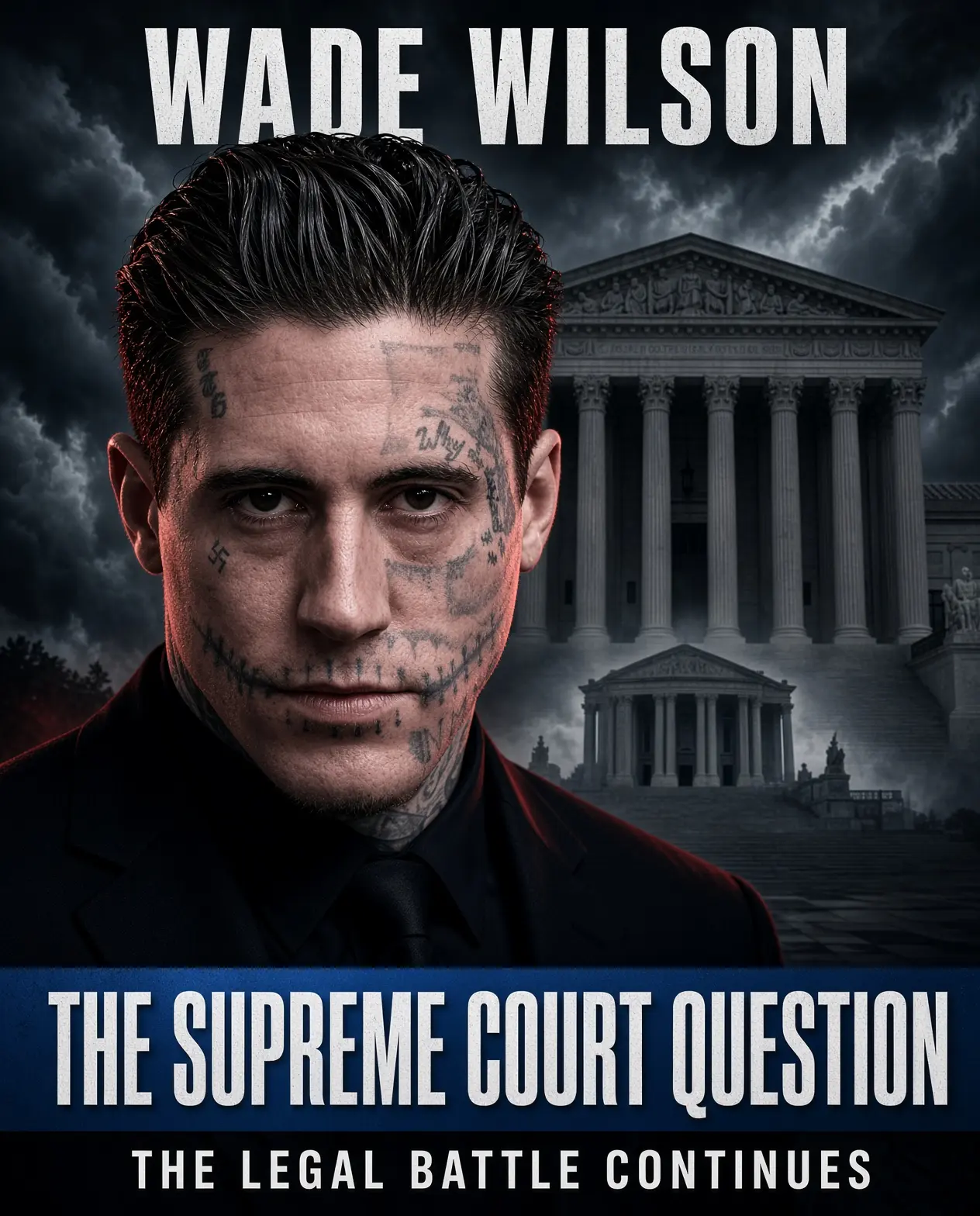

More than eight months after his case was argued before Florida’s highest court, Wade Wilson remains under two death sentences. The appeal raises a consequential question about Florida’s capital-punishment law—and the jury votes that helped determine his fate.
TALLAHASSEE, Florida — More than eight months have passed since Wade Wilson’s mandatory death penalty appeal was heard by the Florida Supreme Court, yet the case continues to draw attention for one reason: the court proceeding has not reached its final public conclusion.
Wilson, who was convicted of the 2019 murders of Kristine Melton and Diane Ruiz in Cape Coral, remains under two death sentences. His appeal, docketed as SC2024-1345, challenges the legality of those sentences through seven separate issues. The court’s official case page lists the matter as OPEN, while the February 5, 2026, oral-argument record confirms that the appeal was presented to the justices that day.
Florida Appellate Case Information System
The status is significant, but it should not be mistaken for a sign that Wilson has won a new hearing, secured a reversal, or received a reprieve. An open appellate case simply means the court’s record has not been marked closed. Until an official ruling changes the legal position, Wilson’s two death sentences remain in force.
The central question is whether his legal team can persuade the court to overturn those sentences—or preserve a constitutional argument for a possible later fight beyond Florida’s court system.
The hearing that left the biggest question unresolved

The February 5 hearing was brief, but it placed the dispute over Florida’s death penalty system in the spotlight. According to Court TV’s report from that day, Wilson’s attorney, Michael Ufferman, chose not to repeat arguments already presented in the written appeal. Instead, he emphasized the importance of preserving the constitutional objections for possible review by the U.S. Supreme Court. The state’s attorney asked the justices to affirm the lower court’s decision.
That distinction matters. Wilson’s appeal is not a retrial of the murders, and his legal team is not seeking to relitigate the convictions themselves through this direct appeal. The challenge centers on the death sentences and the legal framework used to impose them.
The hearing also did not, by itself, mean Wilson had secured a path to the nation’s highest court. Preserving an argument is a procedural step—not a guarantee that the U.S. Supreme Court will agree to hear it. Any further review would depend on the subsequent legal process and the court’s own decisions.
The official docket continues to be the key place to look for a formal disposition. Its open status indicates that the case has not been marked closed in the public case record, even as the oral argument has already taken place.
The 2023 law at the heart of the dispute
The most closely watched issue involves Florida’s 2023 change to its capital sentencing law.
At the time Melton and Ruiz were murdered in 2019, Florida required a unanimous jury recommendation for a death sentence. The state later changed the rules, allowing a death recommendation when at least eight of the 12 jurors supported it.
Wilson’s jury voted 9–3 in favor of death for Melton’s murder and 10–2 for Ruiz’s murder. Both recommendations cleared the threshold under the newer system. But the fact that the crimes occurred years before the law changed has become a central point of the defense’s constitutional challenge.
The defense argues that applying the newer sentencing framework raises constitutional concerns, including questions about retroactivity and the protections defendants had under the law when the crimes occurred.
The state’s position has been supported by prior Florida Supreme Court rulings upholding the revised capital sentencing system in other cases. That existing precedent creates a major obstacle for Wilson’s argument at the state level. His attorney’s decision to preserve the issue for possible federal review reflects the difficulty of persuading the Florida court to depart from its earlier decisions.
The disagreement is bigger than the numbers on a jury form. It touches on how much protection unanimity provides in a capital case, whether a change in sentencing procedure can be applied to crimes committed before the change, and how constitutional safeguards should be interpreted when the potential punishment is death.
Those questions have implications beyond Wilson’s case, even though the outcome of his appeal will depend on the arguments and record before the court.
Seven issues—and no announced execution date
Wilson’s direct appeal raises seven issues seeking reversal of his death sentences, according to the Florida Supreme Court’s oral-argument archive. The jury-vote dispute is one of the most prominent, but it is not the only legal question in the appeal.

The number of issues does not automatically determine how long a court will take to decide a case. Appeals can involve complicated records, established precedents, and arguments that have already been considered in other proceedings. Nor does a lengthy wait necessarily signal that a ruling will favor either side.
As of the information reflected in the official case record, Wilson remains under both death sentences. No execution date has been publicly announced, and the open appeal should not be interpreted as an order suspending or overturning those sentences. The official case page and the court’s oral-argument archive provide different pieces of the procedural picture: the former tracks the case status, while the latter confirms that the hearing took place and identifies the seven issues raised.
The next meaningful development would be an official court order or opinion that clarifies the disposition of the appeal. Until then, claims that Wilson’s death sentences have been overturned, that an execution has been scheduled, or that the U.S. Supreme Court has agreed to review the case would go beyond the available record.
What happens next?
For now, the case sits at a critical point in its legal journey. Wilson’s defense has raised its objections, presented its appeal, and signaled that it wants to preserve constitutional questions for potential review beyond Florida. But the existence of those arguments does not mean they will prevail.
The Florida Supreme Court’s eventual disposition will determine the next procedural step in the state appeal. Depending on that outcome, further legal options may be pursued, subject to the applicable rules and deadlines. A possible U.S. Supreme Court challenge remains a separate step, not an automatic continuation.
That is why the open docket matters—but also why it must be read carefully. It is evidence of the case’s recorded procedural status, not proof of a coming reversal or a hidden development.
More than eight months after the February hearing, the central questions remain consequential: Will the court’s final disposition leave both death sentences intact? Can Wilson’s constitutional challenge overcome the precedent already established in Florida? And will the defense ultimately have an opportunity to ask the nation’s highest court to consider the issue?
For now, the public record points to a case still listed as open, two death sentences still in force, and no publicly announced execution date. The next official filing or ruling—not speculation—will determine what happens next.