
🚨🏈 CHAOS ERUPTS ON THE VIEW: JOY BEHAR DEMANDS DAN CAMPBELL BE REMOVED FROM THE STAGE — BUT THE DETROIT LIONS HEAD COACH REFUSES TO BACK DOWN! 😱🔥
“ENOUGH—CUT IT NOW, GET HIM OFF THIS STAGE!” — The explosive words that turn an ordinary television interview into an unforgettable confrontation.
THE MOMENT EVERYTHING CHANGED
NEW YORK CITY — What was supposed to be a routine television appearance suddenly transforms into one of the most dramatic moments imaginable on daytime television.
The studio lights are shining.
The cameras are rolling.
The audience is watching closely.
And seated across from the hosts of The View is one of the NFL's
 most recognizable personalities: Detroit Lions head coach Dan Campbell.
Known for his emotional leadership, powerful speeches, and unapologetically passionate approach to football, Campbell has built a reputation as a man who rarely backs away from a challenge.
But in this imagined television confrontation, the challenge has nothing to do with football.
There are no opposing defensive coordinators.
No fourth-down decisions.
No roaring crowds at Ford Field.
Instead, Campbell finds himself facing an increasingly tense conversation with television personality Joy Behar.
And within minutes, the atmosphere becomes almost unrecognizable.
What begins as a discussion about leadership, pressure, and accountability takes a dramatic turn when Campbell refuses to abandon his position.
Then comes the moment that changes everything.
“ENOUGH—CUT IT NOW, GET HIM OFF THIS STAGE!”
In the fictional scene, Behar's voice echoes across the studio.
The audience falls silent.
The other hosts exchange startled glances.
But Dan Campbell does something nobody expects.
He doesn't flinch.
He doesn't move.
He simply remains seated, looking directly toward the panel.
And what happens next becomes the defining moment of the imagined confrontation.
A FRIENDLY INTERVIEW TAKES AN UNEXPECTED TURN
The fictional interview begins with a warm introduction.
Campbell enters the studio wearing a dark suit, his familiar confident expression immediately drawing applause from the audience.
The conversation initially focuses on his football career.
The hosts discuss his leadership philosophy, his passionate locker-room speeches, and the extraordinary emotional connection he has developed with Detroit Lions supporters.
Campbell speaks about perseverance.
He emphasizes teamwork.
And he explains why accountability matters in professional sports.
For several minutes, the conversation remains respectful.
Then the discussion shifts toward a more difficult question.
One host asks whether Campbell's famously intense leadership style can sometimes place too much pressure on players.
Campbell considers the question carefully.
In this imagined exchange, he explains that football requires discipline, sacrifice, and a willingness to confront uncomfortable truths.
He argues that strong leadership involves honesty rather than simply telling people what they want to hear.
The response appears reasonable to some members of the fictional audience.
But Joy Behar challenges his position.
And the tension begins to rise.
JOY BEHAR PUSHES BACK
In the imagined conversation, Behar questions whether demanding leadership always produces positive results.
She suggests that public figures have a responsibility to consider how their words affect others.
Campbell listens.
Then he responds firmly.
He explains that leadership is not about creating conflict.
It is about establishing expectations and helping people achieve goals they might initially believe are impossible.
The exchange grows increasingly intense.
Behar presses him again.
Campbell refuses to retreat from his argument.
Neither appears willing to concede.
The fictional studio audience becomes noticeably uncomfortable.
Some viewers nod in agreement with Campbell.
Others appear sympathetic to Behar's concerns.
But what makes the scene especially dramatic is Campbell's composure.
Despite the increasingly confrontational atmosphere, he does not raise his voice.
He does not interrupt.
He does not attempt to embarrass anyone.
Instead, he continues explaining his perspective with the same determination that has defined his public football persona.
And that calm response only intensifies the fictional disagreement.
THE EXPLOSIVE MOMENT THAT SILENCES THE STUDIO
As the conversation reaches its most heated point, Behar leans forward.
Her expression becomes increasingly frustrated.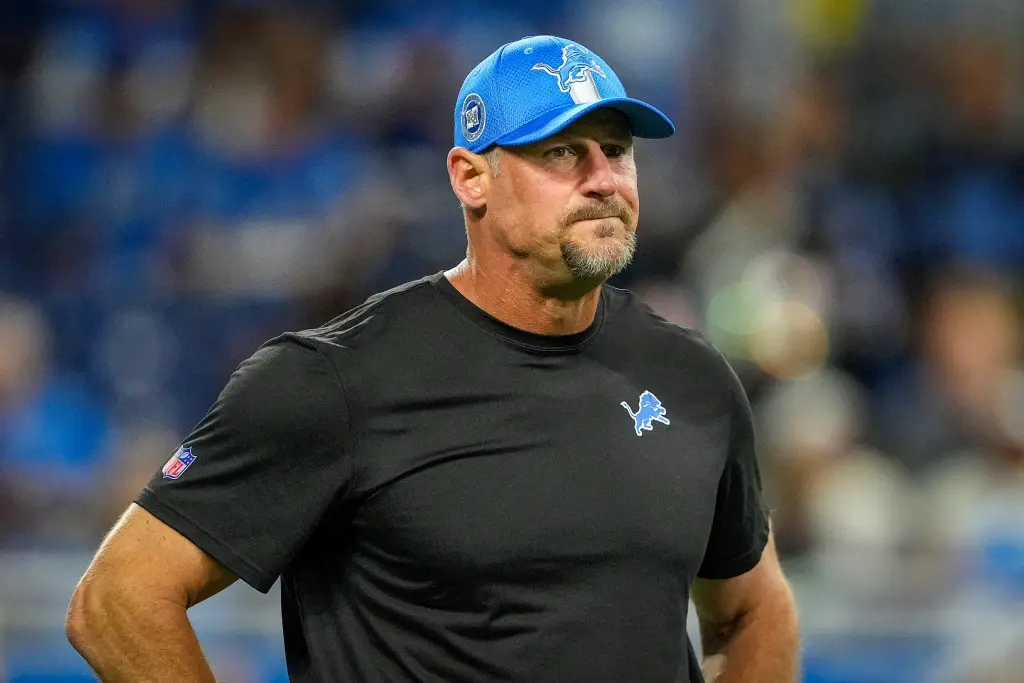
Campbell finishes another response about responsibility and personal conviction.
Then, in the imagined scene, Behar suddenly raises her voice.
“ENOUGH—CUT IT NOW, GET HIM OFF THIS STAGE!”
The words immediately change the atmosphere.
The audience stops applauding.
The hosts exchange uncertain looks.
A production assistant moves closer to the stage.
For a brief moment, nobody seems certain what should happen next.
But Campbell remains motionless.
His hands rest calmly in front of him.
His expression is serious.
He looks toward Behar without responding immediately.
The silence stretches.
Then Campbell slowly leans toward his microphone.
In the fictional dialogue, he delivers a simple response:
“I came here to have a conversation. I'm willing to listen, and I expect the same respect in return.”
The audience reacts.
A few people begin applauding.
Others remain silent.
But Campbell's response changes the emotional direction of the scene.
Rather than escalating the confrontation, he brings the discussion back to the importance of respectful disagreement.
WHY DAN CAMPBELL'S PERSONALITY MAKES THE SCENE SO COMPELLING
Dan Campbell has become one of the NFL's most recognizable head coaches because of his unusual combination of intensity, emotional honesty, and personal conviction.
A former NFL tight end, Campbell understands professional football from the perspective of both a player and a coach.
His coaching career has been shaped by a belief that successful teams require trust, accountability, and resilience.
When he became head coach of the Detroit Lions in 2021, the organization was searching for a stronger competitive identity.
Campbell quickly attracted attention through his passionate introductory press conference and his willingness to speak openly about the challenges facing the franchise.
His emotional speeches became widely discussed.
But behind the memorable sound bites was a consistent emphasis on teamwork and determination.
Campbell wanted his players to embrace difficult circumstances rather than fear them.
He encouraged physical toughness.
He demanded commitment.
And he repeatedly emphasized the importance of competing together.
Those characteristics help explain why an imagined confrontation involving Campbell could become such a compelling dramatic story.
He is widely associated with refusing to surrender when circumstances become uncomfortable.
THE DETROIT LIONS CONNECTION
For Detroit Lions fans, Campbell represents more than a football coach.
He has become closely associated with the team's determination to overcome years of disappointment.
Detroit supporters have endured difficult seasons, heartbreaking losses, and repeated rebuilding efforts.
Throughout those experiences, the fanbase has remained passionate.
Campbell's arrival helped introduce a renewed sense of belief.
His emotional connection with players and supporters became an important part of the team's identity.
Under his leadership, Detroit achieved a major breakthrough during the 2023 NFL season, winning its division and reaching the NFC Championship Game.
Those accomplishments strengthened his reputation as a coach capable of changing expectations.
But Campbell's influence extends beyond victories and losses.
His public personality reflects themes that resonate with many football supporters.
Loyalty.
Determination.
Personal responsibility.
And the willingness to continue fighting despite setbacks.
In the fictional television scene, those qualities become central to his response.
He does not attempt to win the confrontation through anger.
He attempts to maintain his composure under pressure.
THE OTHER HOSTS TRY TO RESTORE ORDER
Following Behar's imagined outburst, the atmosphere remains tense.
A fellow host attempts to redirect the conversation.
Another suggests that both sides deserve an opportunity to explain their positions.
Campbell nods.
He makes it clear that he is willing to continue the interview respectfully.
Behar, still visibly frustrated in the fictional scene, argues that the discussion has moved too far from its original purpose.
The exchange becomes less about football and more about communication.
Can two people disagree strongly without treating each other as enemies?
Does confidence necessarily mean refusing to listen?
And when does a passionate debate become an unnecessary confrontation?
These questions begin to dominate the imagined studio conversation.
Campbell explains that he has spent much of his professional life working with people who have different personalities and perspectives.
Successful teams, he suggests, do not require everyone to think identically.
They require people to respect shared responsibilities.
The fictional audience begins responding more positively as the discussion becomes calmer.
A SURPRISING LESSON ABOUT LEADERSHIP
One of the most interesting aspects of the imagined confrontation is the difference between intensity and aggression.
Campbell's public reputation is built partly on emotional energy.
His locker-room speeches often emphasize determination and physical commitment.
Yet effective leadership also requires restraint.
A coach who loses control during every disagreement may struggle to maintain the trust of his team.
A leader who listens carefully while defending important principles can create a different kind of confidence.
In the fictional interview, Campbell demonstrates that distinction.
He remains firm without becoming personally insulting.
He challenges the argument rather than attacking the individual.
And he refuses to allow frustration to determine his behavior.
The scene offers a broader lesson.
Strength is not always demonstrated through volume.
Sometimes the most powerful person in a difficult conversation is the one who remains calm.
THE AUDIENCE REACTS TO THE UNEXPECTED EXCHANGE
As the imagined broadcast continues, the fictional audience becomes increasingly engaged.
Some viewers appear impressed by Campbell's composure.
Others remain concerned about the tense nature of the discussion.
A few audience members exchange quiet comments.
The studio atmosphere gradually shifts from confrontation toward reflection.
One host asks Campbell whether he believes strong leaders should ever admit they are wrong.
He responds without hesitation.
In the imagined dialogue, Campbell acknowledges that accountability must apply to everyone, including the person in charge.
He explains that leadership requires learning from mistakes and making adjustments.
The response becomes another important moment in the fictional discussion.
Confidence and humility, the scene suggests, are not opposites.
A person can believe strongly in a principle while remaining willing to reconsider a decision.
That balance is relevant far beyond professional football.
It applies to workplaces, families, relationships, and public conversations.
WHAT HAPPENS WHEN THE CAMERAS STOP ROLLING?
In the imagined final minutes, the producers prepare to end the segment.
The atmosphere remains serious, but the earlier hostility has diminished.
Campbell thanks the hosts for inviting him.
He stands slowly and adjusts his jacket.
Rather than walking away angrily, he offers a polite acknowledgment to the panel.
The fictional audience applauds.
Behar remains seated, her expression thoughtful.
The cameras capture one final image of Campbell walking toward the studio exit.
There is no dramatic celebration.
No triumphant speech.
No attempt to turn the disagreement into a personal victory.
Instead, the imagined scene ends with a quiet demonstration of composure.
Campbell leaves the stage without abandoning his dignity.
And the audience is left considering the meaning of the exchange.
WHY THIS FICTIONAL STORY RESONATES BEYOND FOOTBALL
The central themes of the imagined confrontation are familiar to almost everyone.
People disagree.
Emotions become intense.
Conversations sometimes take unexpected turns.
And moments of frustration can make respectful communication difficult.
Public figures experience these pressures on a much larger stage.
Their words may be interpreted by millions of people.
Their expressions can become headlines.
And brief exchanges can be transformed into larger cultural debates.
But the fictional Campbell-Behar confrontation offers a reminder that disagreement does not have to destroy mutual respect.
People can defend their beliefs without humiliating others.
They can ask difficult questions without turning every conversation into a battle.
And they can remain confident while acknowledging that different perspectives deserve consideration.
These principles are particularly important in an era when public conversations frequently become polarized.
THE FINAL MESSAGE THAT LEAVES THE STUDIO SILENT
As the imagined confrontation concludes, one moment remains especially memorable.
Not Behar's raised voice.
Not the stunned reaction of the audience.
Not even the sudden tension that briefly overwhelms the studio.
The defining moment is Campbell's decision to remain calm.
He does not flinch.
He does not move.
He refuses to respond to anger with more anger.
And in doing so, the fictional version of the Detroit Lions coach illustrates a lesson that extends beyond the football field.
True strength is not always about winning an argument. Sometimes it is about maintaining your character when the conversation becomes difficult.
Dan Campbell's real-life coaching career has been defined by perseverance, emotional leadership, and a determination to build a competitive football culture.
This imagined television confrontation explores those qualities in an entirely fictional setting.
There is no verified evidence that Joy Behar demanded Campbell's removal from The View or that the described confrontation occurred.
But the story's central message remains meaningful.
Leadership requires courage.
Respect requires discipline.
And confidence is most impressive when it is accompanied by self-control.
For Detroit Lions supporters, Campbell's recognizable intensity has long symbolized a refusal to surrender.
In this fictional scenario, that determination takes a quieter form.
He remains seated.
He listens.
And when the moment arrives to respond, he chooses his words carefully.
Because sometimes the strongest statement a leader can make is refusing to lose control when everyone expects an explosion.
🏈🔥 WHAT DO YOU THINK — DID THE FICTIONAL DAN CAMPBELL HANDLE THE CONFRONTATION WITH CLASS, OR SHOULD HE HAVE WALKED OFF THE STAGE?
#DanCampbell #DetroitLions #OnePride #TheView #JoyBehar #NFL #FootballNews #CelebrityDrama #FictionalStory #LionsNation
 iated with the transportation industry, she had established her own professional identity before becoming widely recognized as Paul's partner.