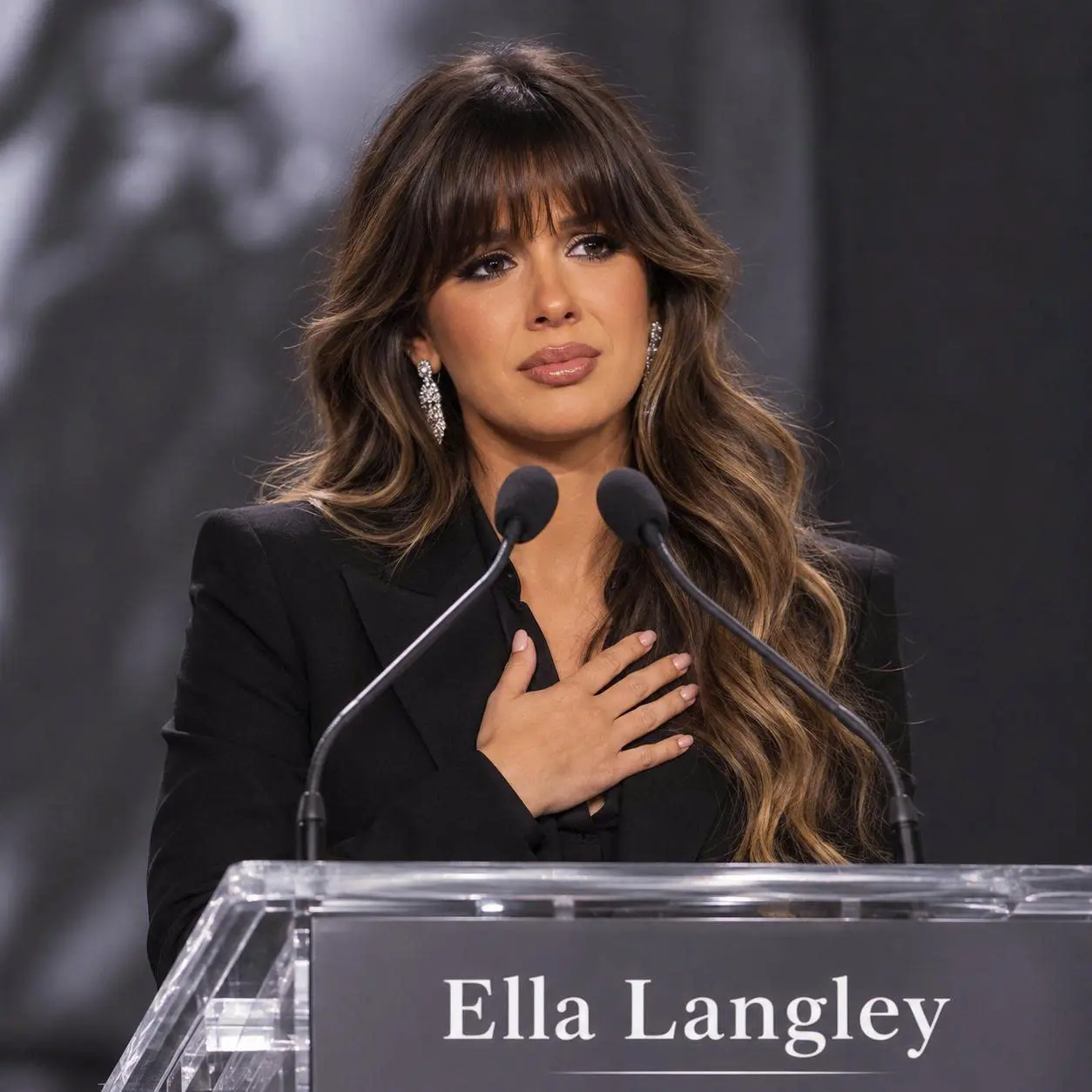
🚨💔😭 ELLA LANGLEY'S HEARTBREAKING ALABAMA MEMORIES — IN AN IMAGINED ANNOUNCEMENT, THE COUNTRY MUSIC STAR UNVEILS A MAJOR FOUNDATION FOR STRUGGLING CHILDREN, BUT ONE EMOTIONAL CHILDHOOD REFLECTION BRINGS HER TO TEARS! 🎤🤠❤️
Country music has always been about more than melodies and memorable lyrics. At its heart, the genre tells stories of family, hardship, resilience, heartbreak, and the places that shape who we become.
For rising country music star Ella Langley, those themes have become central to her growing connection with audiences across America.
Known for her distinctive Southern voice, emotionally honest songwriting, and powerful stage presence, the Alabama-born singer has built a career around music that feels deeply personal.
But imagine a moment when Ella steps away from the excitement of sold-out performances, award ceremonies, and Nashville's bright lights to focus on something much closer to home.
In this fictional scenario, Langley announces an ambitious charitable foundation dedicated to helping disadvantaged children overcome poverty, family hardship, emotional struggles, and limited access to educational opportunities.
The initiative would provide scholarships, music education, mentorship programs, and community support for young people growing up in underserved areas.
What begins as an uplifting announcement gradually becomes an emotional reflection on childhood, family, and the importance of never forgetting where you came from.
As Ella considers the challenges faced by young people in rural communities, her confident voice begins to tremble.
She pauses.
Her eyes fill with tears.
And when she recalls an imagined childhood memory, she becomes overwhelmed.
For a moment, the singer known for her fearless performances and heartfelt lyrics appears unable to continue speaking.
This is a fictional, inspirational scenario, not a verified announcement of a new Ella Langley foundation or a documented public breakdown.
Yet the imagined story explores a meaningful possibility: how a country artist whose career began with small-town dreams might use her growing influence to help children facing difficult circumstances.

Born and raised in Alabama, Ella Langley developed a love for country music that would eventually shape her professional life.
Her musical identity reflects the storytelling traditions of the American South, where songs often explore relationships, personal struggles, family connections, and the complicated emotions of everyday life.
Long before becoming a nationally recognized performer, Ella was a young aspiring musician working to develop her voice and songwriting skills.
Like many country artists, her path required persistence, sacrifice, and a willingness to pursue opportunities beyond the familiar surroundings of home.
She eventually established herself in Nashville, where she continued developing her career as a singer and songwriter.
Her music attracted growing attention for its combination of contemporary country production and traditional storytelling influences.
Songs such as You Look Like You Love Me, her collaboration with Riley Green, helped introduce her to a wider audience.
Her debut album, Hungover, further established her artistic identity and demonstrated her ability to connect with listeners through emotionally direct songwriting.
As her popularity increased, Ella became one of the notable emerging voices in modern country music.
But the imagined foundation announcement would shift the focus away from professional success.
Instead, it would explore the opportunities that many talented young people never receive.
In rural communities and economically disadvantaged areas, children may face obstacles that have little to do with their abilities.
Some families struggle to afford music lessons.
Others live far from educational programs or community centers.
Some young people have ambitions that seem impossible because they lack access to mentors who can help them understand how to pursue those dreams.
The fictional foundation would seek to address those challenges.

Picture a community gathering in Alabama.
Families, teachers, youth advocates, local musicians, and community leaders have assembled to hear about a new initiative focused on helping disadvantaged children.
The atmosphere is warm and welcoming.
Rather than an elaborate Nashville production, the fictional event takes place in a modest venue decorated with photographs of local schools, musical instruments, and handwritten messages from young aspiring artists.
Ella approaches the microphone.
She smiles at the audience.
In this imagined scene, she begins by talking about the importance of family, community, and the people who encourage children to believe in themselves.
She reflects on how meaningful it can be for a young person to have someone recognize their potential.
A teacher who encourages a student to sing.
A parent who makes sacrifices to support a child's interests.
A neighbor who offers transportation to music lessons.
Or a mentor who helps a teenager understand that their ambitions deserve to be taken seriously.
These seemingly ordinary acts of encouragement can influence the direction of a young person's life.
The fictional foundation would aim to create more of those opportunities.
One program would provide scholarships for students pursuing music education.
Another would offer instruments and lessons to children whose families cannot afford them.
A mentorship network would connect young people with experienced musicians, educators, and professionals from different industries.
Community partnerships would help provide safe spaces for after-school activities.
And family assistance initiatives would seek to reduce practical barriers that prevent children from participating in educational programs.
At first, Ella's fictional speech is filled with optimism.
She talks about the extraordinary talent that can be found in small towns and rural communities.
She emphasizes that success should not depend entirely on where someone is born or how much money their family has.
But then the conversation becomes more personal.
She begins reflecting on her own early years in Alabama.
She considers the importance of having people who encourage young artists to develop their abilities.
She imagines what might happen to a child with extraordinary musical talent who never receives access to an instrument.
And she thinks about students who abandon their ambitions because they believe their circumstances make success impossible.
Her voice becomes quieter.
In this fictional scene, Ella pauses before describing an imagined memory of a young person whose dreams were limited by financial hardship.
The memory is not presented as a documented incident from her real childhood.
Instead, it represents the experiences of children who have talent and determination but lack the resources needed to pursue their interests.
As the fictional reflection continues, Ella becomes visibly emotional.
Her eyes fill with tears.
She lowers her head.
For several seconds, she struggles to continue speaking.
The room falls silent.
The contrast is striking.
This is the same performer whose confident stage presence has helped her build a devoted following.
Yet in this imagined moment, she appears deeply affected by the thought of children whose potential may never be discovered.
Eventually, Ella gathers herself and returns to the microphone.
Her message becomes clear.
No child should believe that growing up in a small town makes their dreams less important.
No student should be denied opportunities simply because their family cannot afford additional resources.
And no young person should feel that their future has already been decided by circumstances beyond their control.
The fictional moment becomes the emotional centerpiece of the announcement.
Ella's imagined tears symbolize empathy rather than weakness.
They represent the importance of remembering that behind every successful artist are experiences, opportunities, and people who helped make that success possible.
But the fictional foundation would also recognize that inspiration alone is not enough.
Helping disadvantaged children requires practical assistance.
Music lessons cost money.
Instruments can be expensive.
Traveling to educational programs may be difficult for families living in rural areas.
And young people pursuing higher education may face substantial financial barriers.
The imagined initiative would therefore prioritize sustainable programs rather than one-time publicity events.
Scholarships could help students pursue academic or vocational education.
Instrument donation programs could expand access to music instruction.
Mentorship opportunities could introduce young people to different career pathways.
And partnerships with schools could help identify students who would benefit from additional support.
Such programs would require reliable funding, experienced staff, transparent management, and clear goals.
Celebrity involvement can attract attention and donations.
But lasting charitable impact depends on consistent implementation and meaningful collaboration with communities.
The fictional Ella Langley foundation would need to measure its success through the experiences of the children and families it serves.
How many students receive educational assistance?
How many young people gain access to instruments or lessons?
Are mentorship programs helping participants develop confidence?
And are families finding it easier to access community resources?
Those questions would matter far more than the number of people attending the announcement.
The imagined foundation would also recognize that not every child dreams of becoming a musician.
Some want to pursue medicine.
Others are interested in agriculture, engineering, teaching, sports, or skilled trades.
A meaningful youth initiative should support different ambitions rather than assume that every participant wants to follow the founder's career path.
For Ella, whose artistic identity is rooted in storytelling, that philosophy would carry particular significance.
Country music often celebrates ordinary people pursuing meaningful lives.
Its songs explore the relationships, sacrifices, and decisions that shape communities.
The fictional foundation would extend those themes beyond music.
It would recognize that helping a young person become a teacher, mechanic, nurse, or entrepreneur can be just as meaningful as helping someone become a professional singer.
Opportunity takes many forms.
And success should be defined by the goals and values of the individual.
The fictional initiative would therefore work with local educators and community organizations to identify the needs of different areas.
In some communities, music education might be a priority.
In others, transportation assistance or academic tutoring could make a greater difference.
Some families might benefit from access to technology.
Others could need support locating scholarships or vocational training programs.
A flexible approach would allow the foundation to respond to those differences.
As the imagined gathering approaches its conclusion, Ella returns to the microphone with renewed composure.
Her emotions have settled, but her message remains deeply personal.
She imagines a future in which more children from Alabama and other underserved communities have access to meaningful opportunities.
A future in which young people are encouraged to pursue their talents.
A future in which families receive support when financial hardship threatens their children's ambitions.
And a future in which small-town dreams are treated with the same respect as those born in major cities.
The audience responds with warm applause.
But the imagined story emphasizes that the foundation's true impact would be measured long after the event ended.
It would appear in classrooms.
In music lessons.
In scholarship applications.
In mentorship meetings.
And in the lives of young people who discover that their ambitions are worth pursuing.
For Ella Langley, whose real career reflects the importance of determination and artistic expression, this imagined foundation offers a reflection on the broader possibilities of success.
Fame can create influence.
Influence can attract resources.
And those resources, when used responsibly, can help expand opportunities for people who need them.
In the end, the most powerful part of this imagined Ella Langley announcement is not the tears, the emotional silence, or the attention of the cameras. It is the possibility that a child growing up in a struggling rural community might finally receive the encouragement, education, and support needed to pursue a brighter future. Ella's real journey from Alabama to the country music spotlight provides a meaningful backdrop for this fictional story about compassion, resilience, and helping the next generation believe in their dreams. 🤠❤️🎤
🚨💔😭 BREAKING NEWS — RISING COUNTRY MUSIC STAR ELLA LANGLEY UNVEILS A MAJOR NEW FOUNDATION TO HELP DISADVANTAGED CHILDREN ESCAPE POVERTY, FAMILY HARDSHIP, AND THE STRUGGLES OF RURAL LIFE — BUT WHILE REVISITING THE MOST DIFFICULT MOMENTS OF HER CHILDHOOD IN ALABAMA, SHE UNEXPECTEDLY BREAKS DOWN IN TEARS AS SHE RECALLS A HEARTBREAKING MEMORY THAT STILL HAUNTS HER YEARS LATER… 🎤🤠😢💔
👇 FULL STORY IN THE FIRST COMMENT!
#EllaLangley #EllaLangleyFans #CountryMusic #BreakingNews #CountryMusicNews #EmotionalMoment #CelebrityNews #Alabama #Nashville