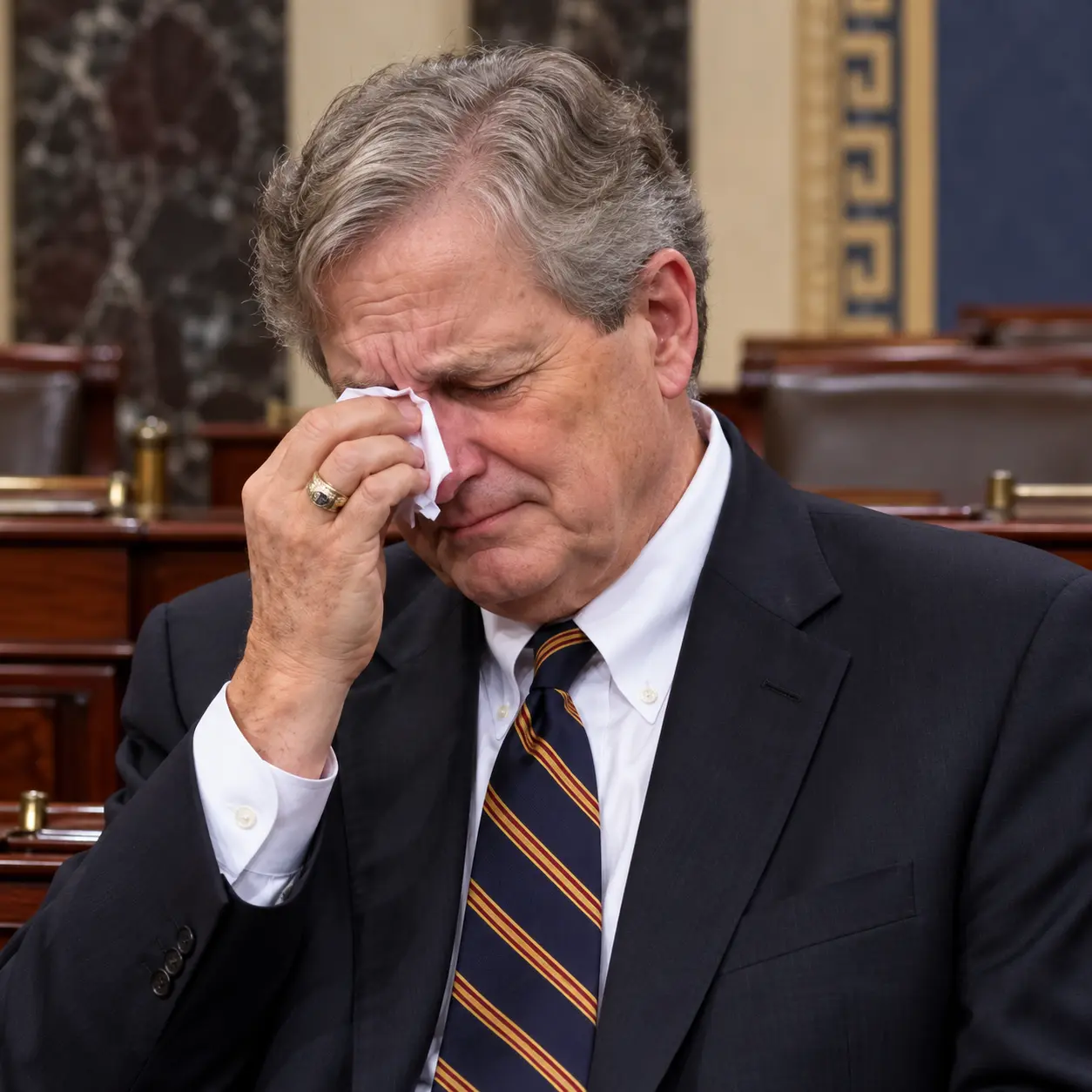
WASHINGTON — The Jeffrey Epstein controversy has returned to the center of America's political debate, and Louisiana Senator John Neely Kennedy has made his position clear: the public deserves answers about what happened, whether others participated in Epstein's crimes, and whether the justice system held everyone responsible.
But Kennedy's remarks have also raised a much larger question.
How much information must the government release before the American public can finally have confidence that the Epstein case has been thoroughly investigated?
The senator's comments are not merely a response to another Washington controversy. They reflect a continuing debate over transparency, accountability, the protection of victims, and the responsibilities of federal law enforcement.
And as additional records have become public, those questions have only grown more complicated.
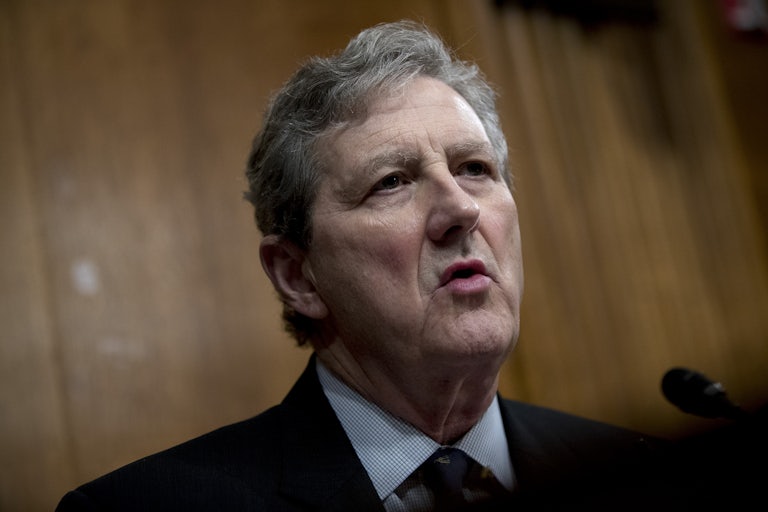
Kennedy's Words Put the Controversy Back in Focus
During a CNN interview on July 29, 2025, Kennedy described the Epstein controversy as a moral issue rather than simply a political dispute.
He condemned Epstein's conduct and argued that Americans deserved to know whether the convicted se.x offender had trafficked victims to anyone else.
Kennedy also questioned why other potential offenders had not been prosecuted, if evidence of their involvement existed.
His argument centered on a fundamental concern: whether the Justice Department had provided enough information to justify public confidence in its conclusions.
The senator was particularly critical of the idea that Americans should accept assurances from government officials without supporting evidence.
His position was that federal authorities needed to substantiate their conclusions rather than merely ask the public to trust them.
For a controversy surrounded by years of unanswered questions, that distinction was significant.
Kennedy was not claiming that every circulating allegation was true.
He was demanding that investigators explain what the evidence actually established.
A Senate Hearing Brings New Pressure
The issue resurfaced during a September 16, 2025, Senate hearing involving FBI Director Kash Patel.
Kennedy pressed Patel about the government's handling of Epstein-related investigative materials and asked whether the FBI would release all records it could legally make public.
Patel responded that the bureau would release information permitted under the law, while emphasizing the need to protect victims and comply with legal restrictions.
That exchange highlighted one of the central difficulties surrounding the Epstein files.
Public transparency is important, but the records also contain sensitive information involving victims, witnesses, and people who may never have been accused of wrongdoing.
A responsible disclosure process must distinguish between evidence relevant to accountability and information whose publication could cause further harm.
Kennedy's questioning nevertheless reflected a continuing concern that withholding information without sufficient explanation could deepen public distrust.
The hearing also reinforced a crucial point: releasing records and establishing criminal responsibility are not the same thing.
A person's name appearing in a document does not automatically mean that person committed a crime.
Investigative records must be evaluated in context, and allegations require supporting evidence.
The Question Kennedy Says Americans Want Answered
During another CNN interview in November 2025, Kennedy returned to the central issue.
He argued that Americans wanted to know whether Epstein had trafficked victims to other people, whether those individuals had been punished, and why prosecution had not occurred if evidence supported it.
The senator also suggested that the controversy would remain unresolved until the government answered those questions satisfactorily.
That argument carried particular weight because it shifted the discussion away from political speculation and toward specific matters that investigators could potentially address.
Who was involved?
What did investigators establish?
Were there prosecutable offenses?
And what prevented additional charges, if investigators identified evidence of other crimes?
These are not questions that can be answered responsibly through rumors or unverified lists circulating online.
They require investigative findings, documentary evidence, and careful legal analysis.
For victims and survivors, the stakes are especially serious.
The release of sensational material without adequate context can create confusion, expose private information, and distract from the underlying crimes.
The challenge for authorities is to provide meaningful transparency without repeating the harm experienced by those who were exploited.
Millions of Pages, but the Debate Continues
The controversy entered another phase following the passage of the Epstein Files Transparency Act in November 2025.
The legislation established requirements for the public release of covered Justice Department records, subject to legally permitted protections.
By early 2026, the Justice Department had released millions of additional pages of Epstein-related material.
But questions remained about records that had not been disclosed and the reasons certain information was withheld.
In a February 2, 2026, CNN interview, Kennedy reiterated his desire for the department to release the remaining records.
He said he believed the controversy would persist until the public received a fuller accounting of the available evidence.
His comments reflected a broader disagreement over whether the government's disclosures had gone far enough.
Some lawmakers emphasized the need for extensive public access to investigative material.
Others stressed that the release process must protect victims, respect legal restrictions, and avoid treating unverified allegations as established facts.
Those concerns are not necessarily incompatible.
The central question is whether the government can demonstrate that its decisions about disclosure are consistent, lawful, and adequately explained.
Why the Controversy Remains So Difficult
The Epstein case occupies an unusually sensitive place in American public life.
It involves serious crimes, failures of institutional accountability, influential social connections, and years of public scrutiny.
Those elements have contributed to persistent suspicion about whether every relevant fact has been examined.
But suspicion alone cannot establish wrongdoing.
The existence of photographs, correspondence, travel records, or social connections does not by itself demonstrate criminal conduct.
Similarly, an unanswered question does not prove that officials are deliberately concealing evidence.
Responsible reporting must separate confirmed facts from allegations, political arguments, and speculation.
That distinction matters especially when discussing people named in investigative documents.
It also matters when evaluating the government's response.
The public can reasonably demand an explanation of investigative decisions without assuming that every disputed decision proves a conspiracy.
And authorities can recognize legitimate privacy concerns without treating all demands for transparency as unreasonable.
What Makes Kennedy's Position Significant?
Kennedy's involvement is notable because he has repeatedly discussed the Epstein controversy in public interviews and congressional proceedings.
Rather than focusing exclusively on political personalities, his remarks have emphasized the need to understand whether other offenders existed and how the justice system handled the evidence.
His approach has also placed attention on the Justice Department's credibility.
For federal law enforcement, public trust depends partly on whether officials can explain their decisions in a way that withstands scrutiny.
That does not mean every investigative detail can or should be released without restriction.
It means the reasons for withholding material should be grounded in law and clearly communicated whenever possible.
Kennedy's statements are part of a broader bipartisan discussion about those obligations.
Lawmakers from both parties have sought greater access to Epstein-related records, although they have differed over the appropriate methods, scope, and political implications of disclosure.
The debate therefore extends beyond any single senator or administration.
It concerns the standards Americans expect when powerful institutions investigate serious wrongdoing.
The Question That Still Has No Simple Answer
Despite the volume of public discussion, the Epstein controversy cannot be reduced to one dramatic revelation.
The available record includes criminal proceedings, investigative materials, public statements, and continuing disputes over disclosure.
Each category requires careful interpretation.
The most important unanswered questions concern what the evidence establishes, what authorities can legally disclose, and whether additional investigative or institutional accountability is warranted.
Kennedy's public remarks have contributed to that discussion by insisting that government explanations should be supported by evidence.
But his comments should not be confused with proof that any particular uncharged individual committed a crime.
Nor do they establish that every circulating claim about the Epstein files is accurate.
The difference between demanding answers and asserting unsupported conclusions is essential.
What Happens Next?
The broader debate over the Epstein files is likely to depend on how federal authorities respond to continuing questions about disclosure, redactions, and the completeness of the public record.

Congressional oversight, independent review, and careful examination of released materials may all contribute to a clearer understanding of the case.
For Kennedy, the central issue expressed in his public remarks remains straightforward: Americans deserve an evidence-based explanation of what investigators discovered and how they handled possible wrongdoing.
For survivors, meaningful accountability also requires that their experiences remain at the center of the discussion.
And for the public, the challenge is to seek transparency without allowing speculation to replace facts.
The most important question is not whether Senator John Neely Kennedy has uncovered a secret connection to Jeffrey Epstein. There is no evidence presented here suggesting such a connection.
The question is whether the government has provided a sufficiently complete and credible account of its investigation.
Kennedy has repeatedly called for greater transparency.
The Justice Department has released substantial material.
Yet disagreement over what remains undisclosed continues.
And that leaves Washington confronting a question that cannot be settled by another headline alone:
When a case involves serious crimes, powerful institutions, and years of public distrust, what will it take for the truth to be documented clearly enough that victims receive justice and the public can evaluate the government's actions?
For now, that remains the central issue behind Kennedy's remarks — and one of the most consequential questions surrounding the Epstein controversy.