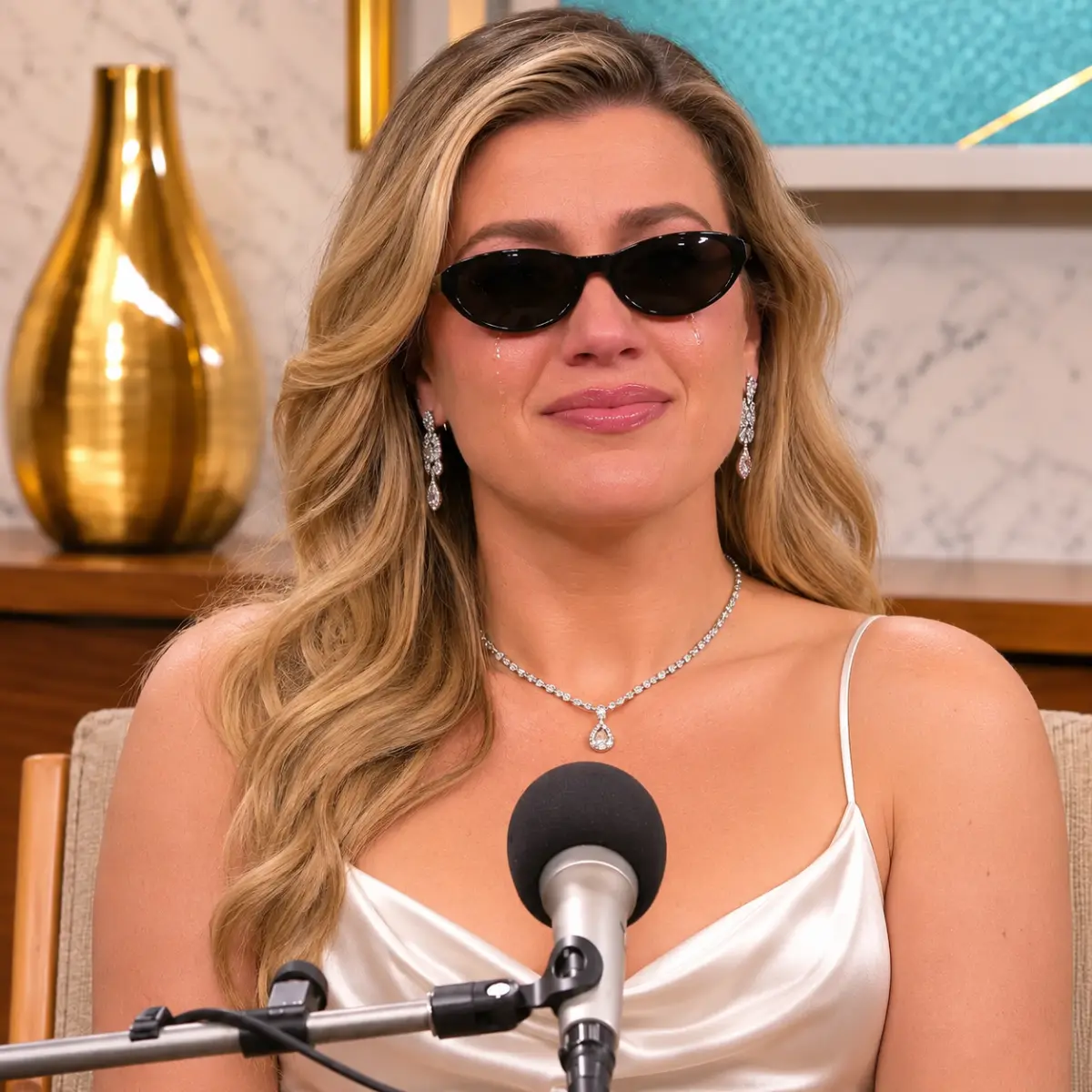
The entertainment world has always known Kelly Clarkson as a performer capable of transforming an ordinary song into an unforgettable emotional experience. From the earliest days of her career, her remarkable voice, unfiltered personality, and willingness to speak openly about life's difficulties have helped her build a connection with audiences that few artists ever achieve. But imagine a moment when the Grammy-winning superstar steps before the cameras, not to promote another chart-topping single, but to reveal a decision so personal that even the people closest to her are left struggling to find the right words.
In this imagined entertainment story, the revelation begins inside an intimate New York recording studio, where Clarkson has invited a small group of musicians, producers, and longtime collaborators to hear an announcement about her future. The invitation contains almost no details, leaving guests to speculate about a possible new album, an international tour, or perhaps a major television opportunity. Yet as the evening unfolds, it becomes increasingly clear that something far more meaningful is taking shape behind the scenes.
The first indication arrives when Clarkson enters the room carrying a small notebook rather than the prepared statement everyone expects. Wearing a simple black outfit, she greets the assembled guests warmly before taking a seat beside a piano. There are no elaborate stage decorations, no dramatic introduction, and no carefully choreographed entrance. Instead, the atmosphere feels surprisingly personal, almost as though the audience has been invited into a private conversation rather than a major entertainment announcement.
Then she begins speaking.

For several minutes, Clarkson reflects on the extraordinary journey that transformed her from an aspiring singer into an internationally recognized star. She describes the excitement of discovering her voice, the overwhelming experience of becoming famous, and the countless moments when music provided comfort during difficult chapters of her life. Her remarks carry an unmistakable sense of gratitude, but beneath that gratitude is a deeper question about what it means to continue growing after achieving nearly everything a young performer once dreamed possible.
The audience listens carefully as she reveals that she has spent months reconsidering the direction of her creative life. Rather than simply pursuing another commercial milestone, she wants to explore a project that connects music with the personal stories of people who rarely receive public attention. Her vision involves a collection of original songs inspired by experiences of resilience, family, forgiveness, and unexpected new beginnings.
But there is a surprising condition attached to the project.
Clarkson explains that she does not want to be the only voice telling these stories. Instead, she hopes to invite emerging artists, independent musicians, and ordinary people with extraordinary experiences to participate in the songwriting process. Each contribution would help shape a musical collection built around the idea that every person carries a story worth hearing, even when the world has never learned their name.
The room becomes noticeably quieter as she describes why the idea matters so deeply to her.
In the imagined speech, Clarkson acknowledges that the entertainment industry often celebrates visible success while overlooking the quieter struggles that shape a person's character. She speaks about parents balancing demanding responsibilities, young performers questioning their abilities, and individuals who must rebuild their confidence after unexpected setbacks. These experiences, she suggests, deserve the same artistic attention traditionally reserved for romance, heartbreak, and glamorous celebrity lifestyles.
Then comes the announcement that changes everything.
Clarkson reveals that the project will not begin with a conventional album launch. Instead, she plans to organize a series of intimate performances in which the stories behind the songs become just as important as the music itself. Audiences would hear the experiences that inspired each composition before listening to the finished performance, creating a setting where storytelling and music become inseparable.
Several guests appear visibly moved by the concept. One young songwriter, attending the gathering after receiving an unexpected invitation, struggles to contain her emotions as Clarkson explains that artistic talent should never be limited by someone's financial circumstances or industry connections. Other musicians begin discussing how such a project could encourage collaboration between established performers and newcomers who have never experienced a professional recording environment.
Yet the most unexpected moment arrives when Clarkson opens the notebook she has been holding throughout the evening.
Inside are handwritten fragments of lyrics, unfinished melodies, and reflections collected during months of private creative work. She explains that these pages represent a side of her artistic process that audiences rarely see, where ideas remain imperfect and emotional honesty matters more than polished presentation. Instead of hiding those unfinished thoughts, she wants them to become part of the project's creative foundation.
She then sits at the piano and performs a brief original melody composed specifically for the occasion. The song begins softly, almost hesitantly, before building into the kind of powerful vocal moment that has long defined her performances. But rather than ending with an elaborate flourish, she allows the final note to fade naturally into silence.
Nobody immediately applauds.
For a few extraordinary seconds, the entire room remains still, absorbing the meaning of what they have just witnessed. Then the applause begins, gradually building until several guests rise from their seats. Clarkson smiles, visibly touched by the reaction, but quickly reminds everyone that the project is still in its earliest stages.
She does not promise instant success, record-breaking sales, or a spectacular international rollout. Instead, she speaks about the importance of creating something that can grow naturally, guided by genuine human experiences rather than commercial expectations. For an artist whose career has included enormous professional achievements, the decision represents a different definition of ambition.
And just when everyone believes the announcement has concluded, Clarkson reveals one final detail.

The first song in the proposed collection will not be about fame, romance, or the extraordinary life of a celebrity. It will be dedicated to the people who continue showing up for others during difficult times, even when their kindness goes unnoticed.
In this imagined storyline, that final revelation becomes the emotional heart of the evening. The real surprise is not that Kelly Clarkson is preparing another musical chapter, but that she wants to use her extraordinary voice to make room for countless others.