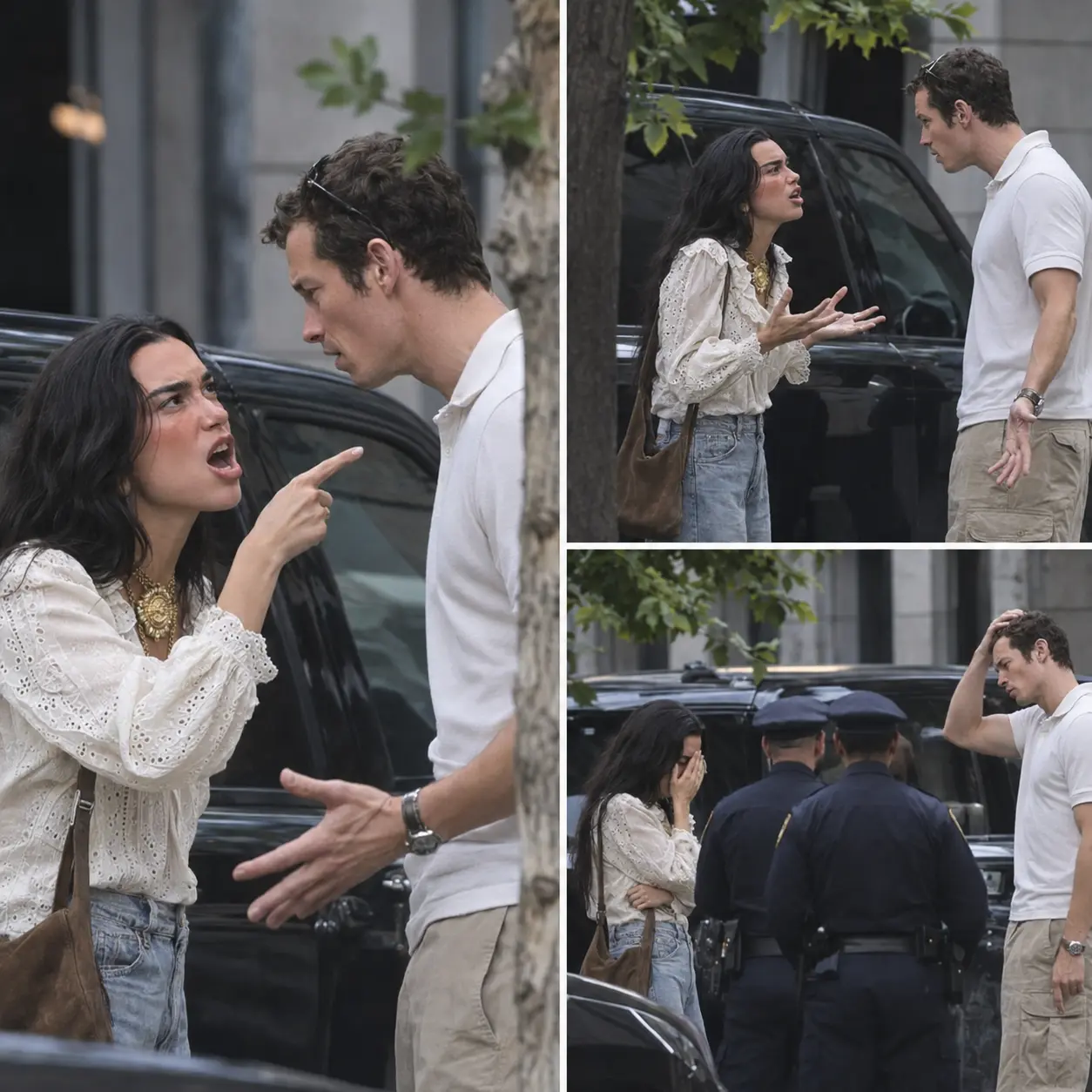
FICTIONAL
🚨💔 😭🔥😱
NEW YORK CITY — What was supposed to be an entertaining late-night television appearance turned into an unforgettable moment of tension, heartbreak, and controversy in this fictional scenario involving R&B superstar Chris Brown and television host Jimmy Fallon.
During an imagined appearance on The Tonight Show Starring Jimmy Fallon, Brown arrives expecting to discuss his music, creative projects, and the experiences that have shaped his career.
Instead, the conversation takes an unexpectedly personal turn when Fallon asks a question that Brown considers deeply insensitive.
Within seconds, the singer's expression changes.
His eyes fill with tears, his voice begins to tremble, and the atmosphere inside the studio becomes painfully uncomfortable.
Then, in a dramatic moment that leaves the fictional audience stunned, Brown stands up and walks off the set.
But the most explosive development comes hours later, when the singer sends Fallon a seven-word ultimatum that changes the entire conversation.
A Friendly Interview Takes an Unexpected Turn
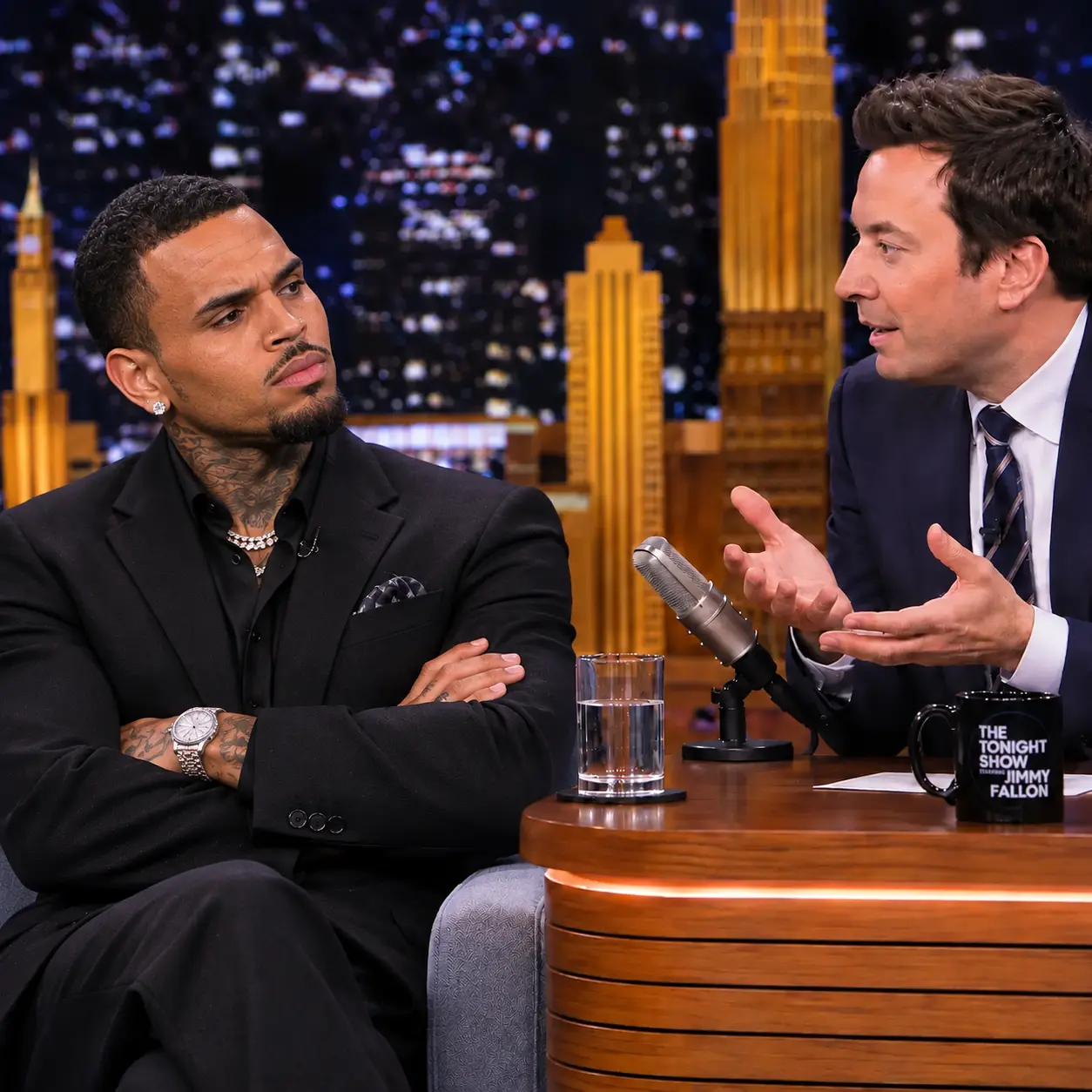
The imagined episode begins with the familiar energy of a late-night television broadcast.
The audience cheers as Jimmy Fallon introduces Chris Brown.
Wearing a stylish black jacket, tailored trousers, and understated jewelry, the singer walks onto the stage with a relaxed smile.
He shakes Fallon's hand before sitting down.
The interview initially focuses on music.
Fallon asks about Brown's creative process, the challenges of performing, and the discipline required to maintain a successful entertainment career.
Brown speaks enthusiastically about songwriting and his passion for dance.
He explains that music has always provided him with an important outlet for personal expression.
For several minutes, the conversation remains lighthearted.
The audience laughs at Fallon's jokes, and Brown appears comfortable discussing his professional achievements.
Nobody expects what happens next.
The Question That Changes Everything
As the fictional interview continues, Fallon begins discussing the pressures of fame.
He asks Brown how public criticism has affected his personal and professional life.
Brown initially responds calmly.
He acknowledges that living under constant attention can be difficult and that public figures must accept responsibility for their decisions.
However, Fallon then introduces a more personal question.
In this imagined exchange, the host asks whether Brown believes that some of the most painful chapters of his past will always overshadow his attempts to move forward.
The question immediately changes the atmosphere.
Brown stops smiling.
He looks toward Fallon before lowering his eyes.
For several seconds, he says nothing.
Then he responds.
"That's a complicated thing to ask somebody in front of millions of people," Brown says in the fictional conversation.
Fallon attempts to explain that he wants to explore the relationship between personal growth and public perception.
But Brown appears increasingly uncomfortable.
Chris Brown Struggles to Control His Emotions
In the fictional scene, Brown explains that personal growth is not something that can be summarized through a television interview.
He says that people often focus on the most controversial moments of a person's life without considering the complexity of change.
"Everybody has things they wish they could do differently," he says.
"But growing means taking responsibility and continuing to work on yourself."
His voice becomes quieter.
He pauses and looks toward the studio audience.
The atmosphere is noticeably different from the cheerful mood that filled the room only minutes earlier.
Brown continues speaking.
He explains that constant public judgment can make it difficult to discuss personal experiences without feeling that every word will be interpreted as part of another controversy.
As he speaks, his eyes begin to fill with tears.
The fictional audience falls silent.
Jimmy Fallon Attempts to Ease the Tension
Recognizing Brown's discomfort, Fallon tries to soften the conversation.
He explains that his intention was not to embarrass the singer.
Instead, he says he hoped to discuss the lessons people learn from difficult experiences.
But Brown shakes his head.
"There's a time and a place for certain conversations," he responds.
"And sometimes people need to understand that."
Fallon apologizes for making him uncomfortable.
However, the singer remains visibly emotional.
He takes a deep breath.
Then he looks directly at the host.
"I came here to talk about music," Brown says.
"I didn't come here to have my most difficult experiences turned into entertainment."
The audience remains completely quiet.
The Moment Chris Brown Walks Off the Set
In this imagined storyline, Brown suddenly stands from his chair.
Fallon looks surprised.
For a moment, neither man speaks.
Brown adjusts his jacket and turns toward the audience.
"I'm sorry, everybody," he says.
"But I can't continue this conversation."
He then walks toward the backstage entrance.
Fallon attempts to say something, but Brown continues moving.
Within seconds, the singer disappears behind the curtain.
The fictional studio audience watches in disbelief.
What began as an ordinary celebrity interview has ended in an unexpected walkout.
Chaos Behind the Scenes
Backstage, members of the fictional production team attempt to understand what happened.
Some believe Brown may return after a brief break.
Others suspect that the interview is over.
In the imagined narrative, Brown enters a private dressing room and asks for a few minutes alone.
He is frustrated by the direction of the conversation.
More importantly, he feels disappointed that an appearance intended to celebrate his music became focused on deeply personal subjects.
A member of his professional team eventually joins him.
They discuss whether he should return to the stage.
Brown declines.
He believes continuing the interview would only create more tension.
Instead, he decides to leave the studio quietly.
Jimmy Fallon Addresses the Audience
Back on the fictional set, Fallon faces an unusually difficult moment.
The audience is still processing the sudden departure.
Fallon takes a breath before speaking.
"I want to say that I never intended to make Chris uncomfortable," he says in the imagined broadcast.
"Sometimes a conversation goes somewhere you didn't expect."
He pauses.
"And when that happens, you have to recognize the other person's feelings."
The host acknowledges that the interview did not unfold as planned.
He then moves the program forward.
But the emotional atmosphere remains.
A Fictional Controversy Divides Viewers
As the imagined incident becomes widely discussed, audiences begin debating what happened.
Some viewers sympathize with Brown.
They believe he had every right to establish boundaries during an uncomfortable interview.
Others argue that celebrities should expect challenging questions when discussing their public lives.
A third group focuses on Fallon's responsibility as an interviewer.
They question whether sensitive topics should be introduced without ensuring that a guest is comfortable discussing them.
The fictional controversy becomes part of a larger conversation about television journalism, celebrity culture, and the importance of respectful communication.
The Hours After the Interview
In the imagined story, Brown spends the following hours reflecting on the incident.
He considers whether leaving the stage was the right decision.
He also thinks about the difference between discussing personal growth and feeling publicly confronted.
The singer understands that difficult conversations can sometimes be necessary.
But he believes they should be approached with preparation, empathy, and mutual respect.
Eventually, Brown decides that he wants Fallon to understand exactly why the interview upset him.
Rather than making a lengthy public statement, he chooses to send a short private message.
The message contains only seven words.
But its meaning is unmistakable.
The Explosive Seven-Word Ultimatum
In this fictional narrative, Brown sends Fallon the following message:
"Apologize publicly, or never interview me again."
Seven words.
The message is direct, emotional, and uncompromising.
Brown wants the host to acknowledge that the conversation crossed a personal boundary.
He does not demand that difficult subjects disappear from television.
Instead, he insists that guests should be treated with consideration when discussing emotionally sensitive experiences.
The imagined ultimatum becomes the defining moment of the controversy.
Jimmy Fallon's Difficult Decision
When Fallon receives the fictional message, he is surprised by its intensity.
He reads the words carefully.
In this imagined storyline, Fallon begins considering whether his approach to the interview was appropriate.
He recognizes that an interviewer may intend to ask a meaningful question while still causing unintended distress.
He also understands that an apology can be important when someone feels hurt.
However, Fallon does not immediately issue a public response.
Instead, he consults with his fictional production team and reflects on how the conversation unfolded.
The delay creates further uncertainty.
Will Fallon apologize?
Will Brown reconsider his ultimatum?
Or will the incident permanently damage their professional relationship?
The Human Side of Celebrity Controversies
Beyond the imagined television drama, the story raises a broader question about how society discusses the personal experiences of famous entertainers.
Public figures often face intense scrutiny.
Their successes receive widespread attention.
Their mistakes can remain subjects of discussion for years.
But meaningful conversations about accountability and personal growth require more than sensational questions.
They require honesty, context, and a willingness to listen.
In the fictional narrative, Brown's emotional response illustrates how complicated those conversations can become when conducted in front of an audience.
The story does not suggest that public figures should be exempt from difficult questions.
Instead, it explores the importance of asking those questions responsibly.
Could the Two Stars Reconcile?
As the fictional controversy continues, fans begin wondering whether Brown and Fallon might eventually resolve their disagreement.
Some believe a sincere apology could open the door to reconciliation.
Others think the emotional impact of the interview may make another television appearance unlikely.
In the imagined storyline, Brown remains firm about his expectations.
He wants the situation acknowledged before considering another appearance.
Fallon, meanwhile, reflects on the importance of building trust with guests.
Neither man immediately announces a resolution.
The uncertainty becomes part of the story's emotional tension.
A Lesson About Respect, Responsibility, and Communication
The fictional incident illustrates how quickly a conversation can change when expectations are misunderstood.
An interviewer may believe a question is thoughtful.
A guest may experience that same question as intrusive.
Both perspectives can exist simultaneously.
But when discomfort becomes apparent, the way people respond can determine whether a difficult moment becomes a lasting conflict.
In this imagined scenario, Brown chooses to leave rather than continue a conversation he finds distressing.
Fallon must then decide how to respond to the consequences.
The situation becomes a reminder that respectful communication requires awareness of both intention and impact.
The Final Message That Leaves Everyone Speechless
Near the end of the fictional story, Brown reflects on the evening.
He knows that his sudden departure will attract attention.
He understands that people will have different opinions about his reaction.
But he also believes that personal boundaries matter.
Meanwhile, Fallon considers the seven-word message that has become the center of the imagined controversy.
"Apologize publicly, or never interview me again."
The words are brief.
Yet they represent a difficult question about accountability, respect, and the possibility of reconciliation.
In this fictional television drama, there is no immediate happy ending.
Instead, both men are left considering how a few uncomfortable minutes can affect a professional relationship.
The imagined confrontation between Chris Brown and Jimmy Fallon ultimately becomes more than a sensational late-night television moment. It becomes a story about emotional vulnerability, the responsibilities of public figures, and the importance of treating difficult conversations with care.
And as the fictional controversy continues, one question remains unanswered:
Will a sincere apology be enough to repair the relationship, or have seven words permanently changed everything?